Russian Military Satellites Maneuver Toward Finnish-American Surveillance Craft
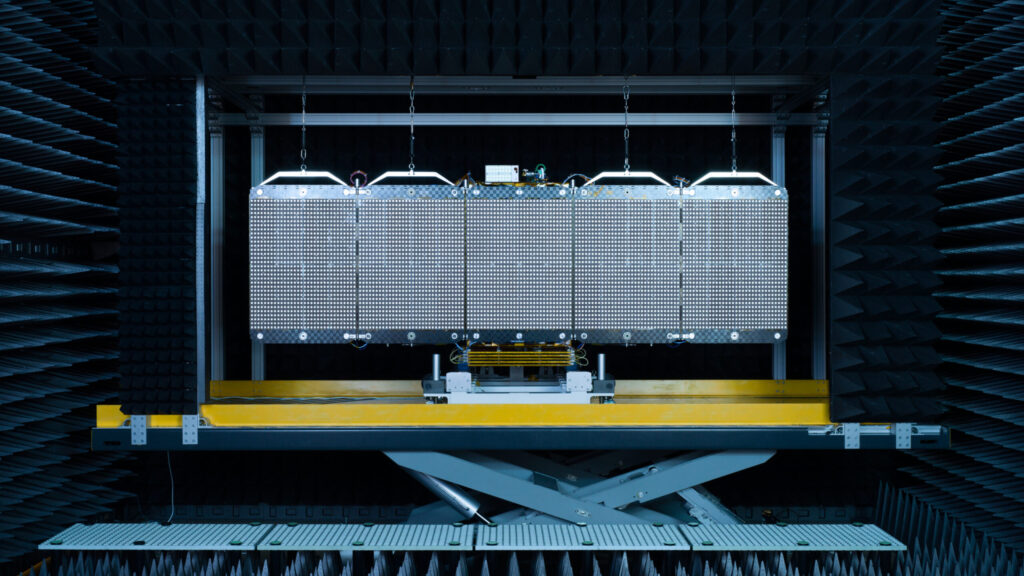
Table of Contents
Precision Maneuvers in Low-Earth Orbit
At least four Russian military satellites have shifted their orbital paths to match those of a Finnish-American radar surveillance satellite, sparking fresh concerns over Russian aggression in the space domain. The movement was flagged via open-source orbital tracking data and highlighted by Greg Gillinger, a retired Air Force space intelligence officer and founder of Integrity ISR.
The satellites in question—designated Kosmos 2610 through 2613—were launched on April 16 via a Soyuz-2.1b rocket from the Plesetsk Cosmodrome. According to Gillinger’s analysis, the spacecraft recently adjusted their inclinations by less than a degree. While the change seems marginal, orbital mechanics dictate that such “plane change” maneuvers are incredibly fuel-intensive. The velocity change required for this specific adjustment is roughly equivalent to the energy needed to raise a satellite’s altitude by more than 100 miles.
The target of these maneuvers appears to be ICEYE-X36, a commercial radar imaging platform operated by the Finnish-American firm ICEYE. Unlike traditional optical satellites, ICEYE’s Synthetic Aperture Radar (SAR) allows for high-resolution imaging through clouds and darkness, making it an indispensable tool for military intelligence. The company has been a critical partner for the Ukrainian military, providing the resolution necessary to identify targets as small as 16 centimeters—roughly the size of a grapefruit.
The Geometry of a Threat
Current data suggests that the cross-track distance between the Russian Kosmos satellites and ICEYE-X36 now ranges from 22 kilometers down to as little as 500 meters. Both are operating in a polar orbit at an altitude of approximately 340 miles. Gillinger notes that Russian operators are now positioned to close the gap further using only minor adjustments to satellite eccentricity and average altitudes. A fifth satellite from the same April launch also appears to be executing similar maneuvers.
While the specific capabilities of the Kosmos 2600-series remain opaque, the behavior mimics a known Russian pattern. In the past, Russian military craft have moved into “co-planar” orbits with high-value U.S. intelligence assets, such as the National Reconnaissance Office’s Keyhole-class spy satellites. This process is widely viewed as the prerequisite for Rendezvous Proximity Operations (RPO), which can be used for intelligence gathering, electronic interference, or kinetic strikes.
Saber-Rattling or Strategic Strike?
There is a debate among space security experts as to whether this is a genuine threat or a form of “orbital theater.” Some retired U.S. military officials suggest Russia may simply be probing Western reactions, similar to how they fly strategic bombers near NATO airspace to test response times.
However, the fuel expenditure involved in these maneuvers suggests a level of intent that goes beyond simple observation. Typical Earth-observation or communications satellites are not equipped for high-energy plane changes. The fact that Russia is spending its limited fuel reserves to match the orbit of a commercial craft suggests a specific tactical interest in the ICEYE platform.
From a strategic standpoint, taking out a single satellite like ICEYE-X36 would not blind Ukraine or Western allies. ICEYE operates a large constellation of similar radar satellites, ensuring that the loss of one unit does not result in a total loss of coverage. Nevertheless, the ability to maneuver within striking distance of a commercial partner of the U.S. government sends a clear message about Russia’s perceived capabilities in low-Earth orbit.
ICEYE has not commented on the specific movements of the Kosmos satellites but recently emphasized its commitment to Europe’s security. John Cartwright, senior vice president of data product at ICEYE, previously stated that the company remains dedicated to providing reliable, near-real-time space-based intelligence to support Ukraine’s defense.