Russian Military Satellites Maneuver Into Striking Distance of ICEYE Surveillance Craft
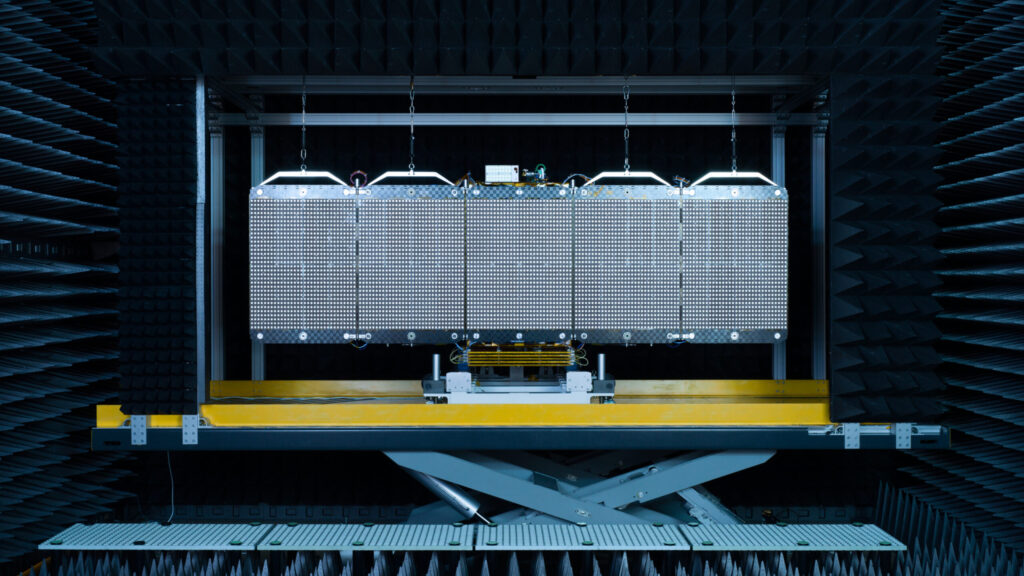
Table of Contents
High-Stakes Shadowing in Low-Earth Orbit
A quiet but calculated escalation is unfolding 340 miles above the Earth’s surface. Recent orbital tracking data indicates that at least four Russian military satellites have shifted their orbits to match that of ICEYE-X36, a high-resolution radar surveillance satellite operated by the Finnish-American company ICEYE.
The maneuvers, identified by Greg Gillinger, a retired Air Force space intelligence officer and founder of Integrity ISR, involve the Kosmos 2610 through 2613 satellites. These craft were launched together on April 16 via a Soyuz-2.1b rocket from the Plesetsk Cosmodrome. While the adjustments to their orbital inclinations appear marginal—less than a degree—the physics of spaceflight suggests a much more aggressive intent.
In orbital mechanics, a “plane change” is one of the most fuel-intensive maneuvers a spacecraft can perform. According to Gillinger, the velocity change required for this shift is equivalent to the energy needed to raise a satellite’s altitude by more than 100 miles. This expenditure of fuel suggests that the Russian operators are prioritizing proximity over mission longevity.
Targeting the All-Weather Eye
The focus of these maneuvers is ICEYE-X36, part of a commercial constellation providing Synthetic Aperture Radar (SAR) imagery to the U.S. military, European governments, and most notably, the Ukrainian armed forces. Unlike traditional optical satellites, SAR can penetrate cloud cover and operate in total darkness, providing a critical intelligence edge in the ongoing conflict in Ukraine.
The proximity is now startlingly close. Gillinger reports that the cross-track distance between the Russian satellites and ICEYE-X36 ranges from as little as 500 meters to roughly 22 kilometers. With only minor adjustments to eccentricity and altitude, the Kosmos satellites could effectively close the gap.
While a fifth satellite from the same launch appears to be following suit, the specific capabilities of these Kosmos units remain opaque. Some analysts suggest this could be a form of orbital “saber-rattling,” mirroring the way Russian strategic bombers frequently probe NATO airspace. However, the technical precision of the maneuver points toward something more targeted.
The Mechanics of Orbital Intimidation
The strategy of moving into a “co-planar” orbit is a recognized precursor to Rendezvous Proximity Operations (RPO). By matching the orbital plane of a target, a satellite is positioned to approach, inspect, or potentially disable another craft, either kinetically or through electronic interference.
This pattern mimics previous Russian operations targeting Keyhole-class spy satellites operated by the U.S. National Reconnaissance Office (NRO). Because typical Earth observation or communications satellites do not possess the propulsion capabilities for such high-energy maneuvers, the Kosmos fleet’s behavior strongly suggests a specialized military or anti-satellite (ASAT) purpose.
Strategic Impact and Response
From a strategic standpoint, disabling a single satellite like ICEYE-X36 would provide little relief to Russia. ICEYE operates a vast constellation of similar radar imaging platforms, meaning the flow of data to Ukraine would likely remain uninterrupted. The company’s newest satellites can capture images with a resolution of 16 centimeters—roughly the size of a grapefruit—making them formidable tools for battlefield intelligence.
In a statement regarding the company’s role in the region, John Cartwright, senior vice president of data product at ICEYE, emphasized the firm’s commitment to European security and the delivery of “decision-ready data” to Ukrainian defense teams.
As the U.S. Space Force continues to monitor Russian activity—including a mysterious military satellite recently spotted in geosynchronous orbit 22,000 miles above the equator—the incident with ICEYE-X36 serves as a reminder that the vacuum of space is becoming a new theater for geopolitical friction.