Russia targets university students with lucrative drone pilot contracts as manpower crisis deepens
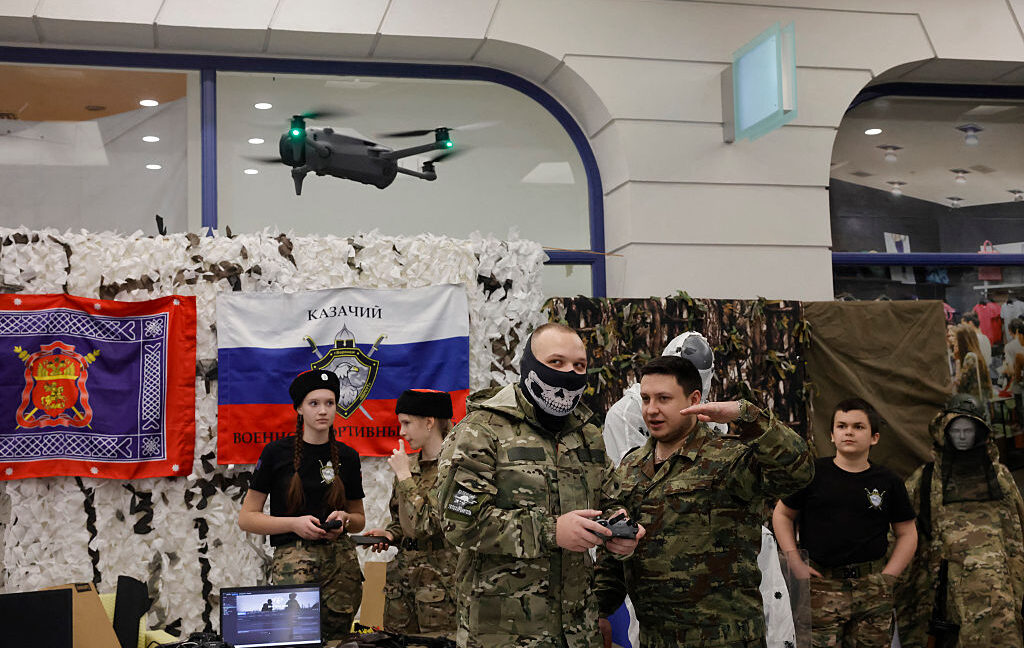
Table of Contents
A high-stakes gamble on student talent
The Russian government is aggressively targeting university students to fill a critical gap in its electronic warfare capabilities, offering a combination of free tuition and signing bonuses that can reach $70,000 for those willing to serve as drone pilots for one year. The recruitment drive, which leans heavily on the technical appetites of a generation raised on gaming and robotics, is an attempt to professionalize a force that has historically relied on improvised tactics and raw attrition.
Pamphlets distributed at institutions like the Bauman Moscow State Technical University outline a deal that looks more like a corporate scholarship than a military draft. Beyond the immediate cash incentives, the state is dangling tax holidays, loan forgiveness, and in some cases, grants of land. According to the independent magazine Groza, at least 270 academic institutions have begun promoting these military contracts, signaling a systemic shift in how Moscow is sourcing technical talent for the frontline.
The target demographic is a pool of roughly 2 million men currently enrolled in higher education. The Russian Defense Ministry isn’t just looking for any student; they are specifically hunting for those with backgrounds in radio engineering, electronics, model aircraft, and general computer literacy. It is a move that mirrors the structure of Ukraine’s Unmanned Systems Force, which became a standalone military branch in June 2024, though Russia’s approach is driven by a more desperate need to scale up to a projected goal of 168,000 operators by 2026.
The ‘Kill Zone’ reality
Recruiters have been selling these roles as a safe alternative to the brutal infantry assaults that have defined the war’s recent phases, suggesting that drone operators can avoid the high-casualty ‘meat grinder’ of trench warfare. However, the technical nature of the role does not provide the immunity promised in the brochures. Military analysts and commanders on the ground note that the proliferation of surveillance and precision artillery has created a ‘kill zone’ extending up to 25 kilometers from the front lines.
This gap between recruitment promises and battlefield reality was highlighted by the death of 23-year-old Valery Averin. The BBC identified Averin as one of the first casualties of this new academic recruitment wave. After only three months of drone training, Averin was killed in a mortar attack near the occupied city of Luhansk. His adoptive mother, Oksana Afanasyeva, described the tragedy as a waste of a civilian who had never served in the army and was thrust into an assault role despite his specialized training.
Brain drain vs. Battlefield need
The decision to pull from the university population creates a precarious paradox for the Russian state. While the military needs operators now, the country is already grappling with a massive intellectual exodus. Data indicates that roughly 24 percent of top Russian software developers active on GitHub left the country within the first year of the invasion.
By converting the next generation of engineers and programmers into disposable military assets, Russia risks further depleting the very workforce required to sustain its domestic tech sector. This desperation is evident in other sectors as well; the space corporation Roscosmos has previously recruited its own staff for militias, and the military has organized specialized regiments by stripping personnel from the Navy and Aerospace Forces.
The inefficiency of this system is occasionally exposed by the military’s own internal chaos. In late 2024, reports surfaced—sparking a government investigation—that specialized drone units were being disbanded by commanders who then ordered those technical specialists to participate in frontal infantry assaults. This suggests that even the most highly trained operators are not safe from the military’s propensity for attrition-based tactics.
Stalled offensives and tech shifts
The shift toward drone-centric warfare comes as Russia’s traditional armored assaults have largely failed, forcing troops to advance on foot, motorcycles, or horseback to avoid Ukrainian drone strikes. Recent assessments indicate that the 2026 spring-summer offensive has mostly stalled, with recruitment rates reportedly dipping below the replacement rate for the first time since the conflict began.
Compounding these issues is the loss of critical infrastructure. The decision by SpaceX to restrict Russian forces’ access to Starlink terminals has crippled some remote operational capabilities, while Ukrainian forces have scaled their use of medium-range drones to devastate supply lines and ammunition depots well behind the front.