Rivian R2 Sets Sights on Tesla Model Y With Surprising EPA Efficiency Gains
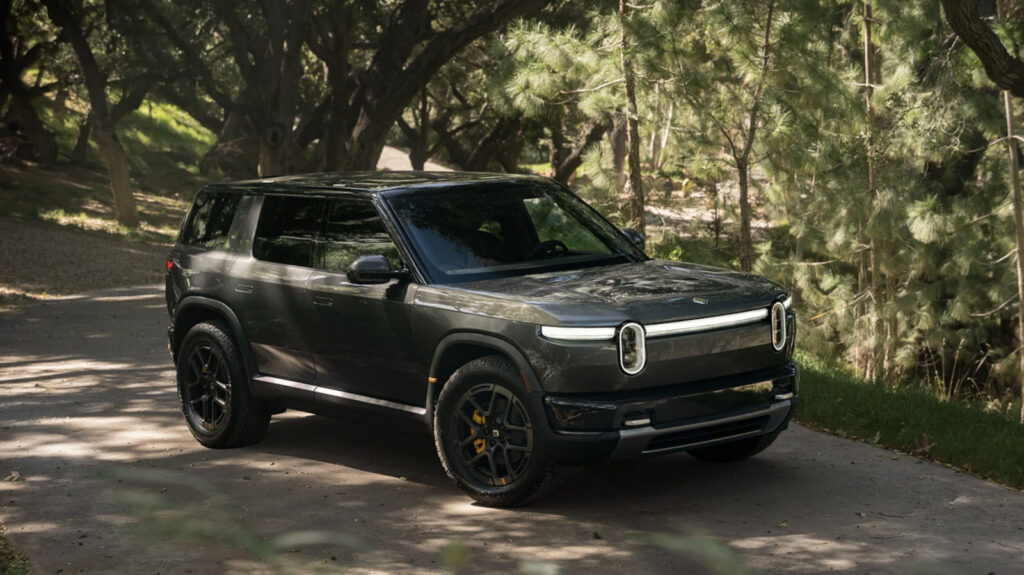
Table of Contents
The R2 Enters the Fray
Rivian is officially moving from the high-priced luxury niche into the brutal heart of the mass-market electric SUV segment. Starting June 9, the company will begin issuing order invitations, hosting demo drives, and executing the first customer deliveries for the R2 in the United States. The launch comes at a critical juncture for Rivian as it attempts to scale production and prove that its design philosophy can translate to a more affordable, compact footprint without sacrificing the utility that defines the brand.
While the launch date provides the timeline, the real story lies in the data recently uploaded to the U.S. Department of Energy’s Fuel Economy website. The EPA’s final ratings for the R2 reveal a surprising competitive edge over the industry benchmark: the 2026 Tesla Model Y.
Weight vs. Aerodynamics: The Efficiency Paradox
On paper, the Rivian R2 should struggle to keep pace with Tesla’s obsessive focus on drag coefficients and weight reduction. The R2 is a physically larger, taller vehicle with a more rugged, boxy silhouette—characteristics that typically act as a brake on electric range. More strikingly, the R2 is approximately 800 lbs heavier than the Model Y.
Despite this weight penalty, the numbers tell a different story. The Rivian R2 Performance all-wheel-drive variant, equipped with 21-inch wheels, has secured an EPA range of 330 miles. For comparison, the 2026 Tesla Model Y AWD is rated at 306 miles. Even more impressive is the efficiency parity; both vehicles are clocking a combined MPGe (Miles Per Gallon Equivalent) of 105.
This suggests that Rivian has made significant strides in powertrain optimization and battery chemistry to offset the vehicle’s bulk. While Tesla has long dominated the efficiency narrative, the R2 demonstrates that a “lifestyle” vehicle with a high roofline and rugged aesthetic can actually outperform a streamlined crossover in total range.
The Wheel Trade-off
It is worth noting that this efficiency isn’t universal across all configurations. For buyers prioritizing off-road capability over maximum highway distance, the 20-inch all-terrain wheel package introduces a noticeable dip. That specific configuration drops the EPA range to 307 miles and lowers the combined efficiency to 99 MPGe. It’s a standard trade-off in the EV world, where rotating mass and rolling resistance can drastically alter the real-world range.
The Logistics of the Rollout
Rivian is managing the R2 launch with a tiered approach to avoid the delivery bottlenecks that have plagued other EV startups. Prospective buyers can currently save their preferred configurations on the official website, but the actual path to ownership is segmented.
Existing R1 owners who have placed reservations are being given priority with accelerated delivery windows. However, Rivian is also introducing a randomization element, stating they will bring a “randomly selected group of reservation holders” into early delivery batches to ensure a diverse spread of early adopters.
Once a customer receives an invitation and completes their order, the lead time to delivery is estimated between two to six weeks. This relatively tight window suggests that Rivian is confident in its current inventory and logistics pipeline as it pivots toward this high-volume model.
The R2 is not just a new product for Rivian; it is a survival strategy. By targeting the space occupied by the Model Y, Rivian is moving from a supplemental vehicle (the “second car” for wealthy outdoors enthusiasts) to a primary family vehicle. If the 330-mile range holds up in real-world mixed driving, Rivian may have successfully neutralized one of Tesla’s most enduring competitive advantages.


