Really Right Stuff Moves Manufacturing to Utah to Slash Prices on New ‘Core Line’ Carbon Tripods
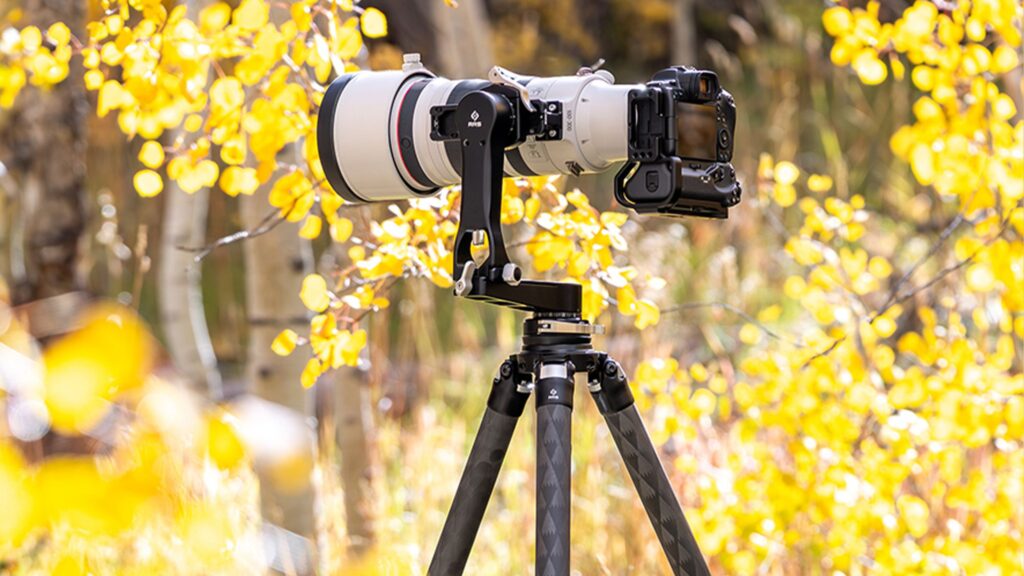
Table of Contents
Vertical integration as a pricing strategy
In the high-end world of camera support, Really Right Stuff (RRS) has long been viewed as the gold standard—and priced accordingly. For professionals accustomed to the brand’s precision-engineered plates and legs, the cost of entry has often been a significant barrier. That is changing with the introduction of the Core Line, a new series of carbon fiber tripods that RRS claims are the most affordable they have ever produced.
The price drop isn’t the result of cheaper materials, but rather a shift in the supply chain. The Benchmark and Benchmark Inverted models are the first tripod series produced entirely at the company’s facility in Lehi, Utah. By managing the process from raw fiber to finished legs, RRS has effectively cut out middle-man dependencies, allowing them to offer these supports at prices up to 32% lower than comparable in-house alternatives.
The Benchmark: Built for the heavy lifters
The flagship of the new range, the Benchmark, is designed specifically for photographers who aren’t compromising on gear weight. While many ‘affordable’ carbon tripods sacrifice stability for weight, the Benchmark supports a staggering 75 lb (34 kg). This makes it an ideal candidate for those mounting cinema rigs, large-format cameras, or heavy telephoto lenses that would cause lesser tripods to flex or vibrate.
Technically, the Benchmark utilizes a four-section carbon fiber build. To accommodate diverse terrain, RRS has included four leg-angle positions (24, 44, 64, and 84 degrees). A few thoughtful quality-of-life additions stand out: weather-sealed twist locks designed to prevent over-twisting and magnetic pull tabs. The latter is a crucial detail for adventure photographers who often have to adjust gear while wearing thick gloves in freezing conditions.
In terms of footprint, the Benchmark reaches a maximum height of 69.7 inches (177 cm) and can collapse down to 4.2 inches (10.7 cm). While it weighs a modest 3.8 lb (1.7 kg), its folded length of 23.6 inches (60 cm) puts it in a different category than ‘travel’ tripods. It is a tool for stability and reach, not for slipping into a carry-on bag.
The Inverted approach
For users who prioritize a different kind of agility, RRS has launched the Benchmark Inverted. While it shares the same high-grade carbon construction as its sibling, it employs a three-section design with an inverted leg system. This allows the tripod to be extended or collapsed from the top, a feature that enables photographers to make height adjustments without having to physically move their position or shift the center of gravity of their camera setup.
The Inverted model is slightly more streamlined, with a load capacity of 40 lb (18 kg) and a weight of 3.6 lb (1.6 kg). It reaches a maximum height of 61.1 inches (155.2 cm) and folds to 26.5 inches (67.3 cm). Like the standard Benchmark, the folded length remains the primary trade-off; at over two feet when collapsed, it will likely require a dedicated tripod bag or a very large hiking pack.
Market positioning and availability
By moving production to Utah, RRS is attempting to capture a broader segment of the prosumer market. The Core Line is currently available for preorder via the official RRS website. The Benchmark Inverted starts at $795, while the flagship Benchmark starts at $945. In international markets, these prices translate to approximately 701€ and 589€ respectively.
This move signals a broader trend in the photography industry where high-end manufacturers are seeking more control over their production pipelines to combat rising logistics costs and fluctuating international tariffs. For the end user, the result is a professional-grade tool that retains the ‘Made in USA’ pedigree without the extreme price premium usually associated with boutique support systems.