Precision Strikes or Intelligence Failure? The Technical Toll of the IDF’s Campaign Against Hamas Command
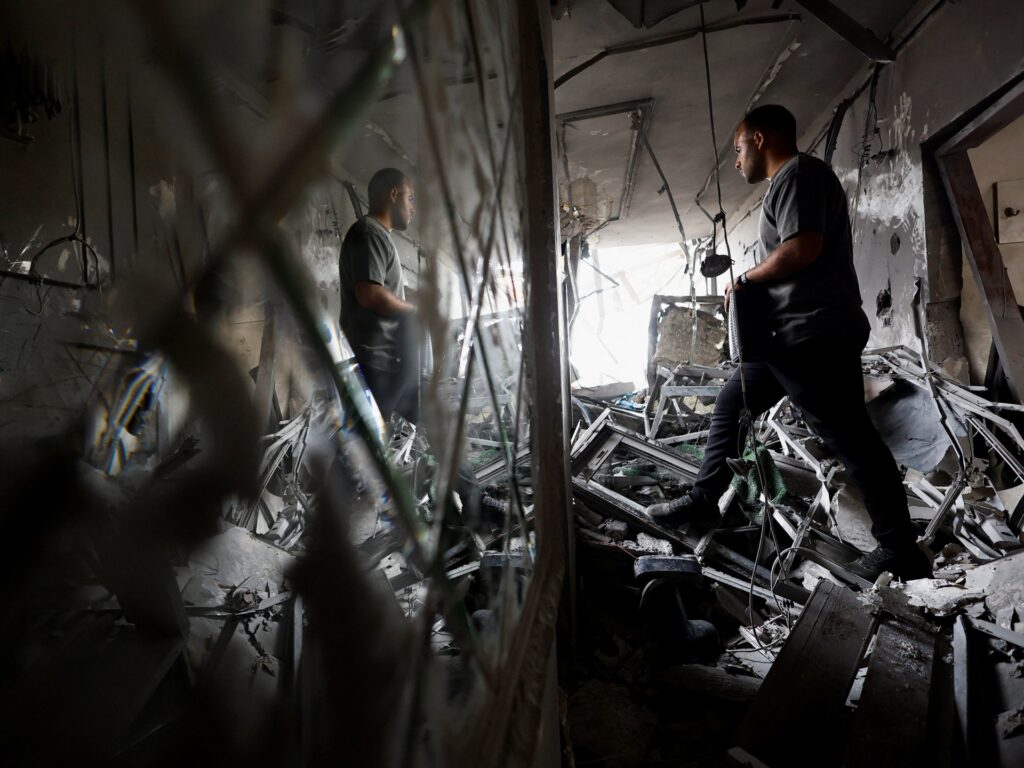
Table of Contents
The Intelligence Loop: Tracking Mohammed Odeh
The Israeli Defence Forces (IDF) have confirmed the elimination of Mohammed Odeh, the presumed head of Hamas’s military wing in Gaza, in a targeted airstrike within Gaza City. While the political fallout of the strike is immediate, the operational reality reveals a sophisticated intelligence loop that has become the hallmark of the current conflict: a relentless cycle of signals intelligence (SIGINT) and human intelligence (HUMINT) designed to map the invisible architecture of Hamas’s command and control.
According to the Israeli army, the operation was the culmination of “months of intelligence monitoring.” In the context of modern urban warfare, this typically implies the use of high-resolution drone surveillance combined with the interception of encrypted communications. By tracking the movements of Odeh’s operatives, the IDF likely employed a technique known as ‘pattern of life’ analysis—using AI-driven data processing to identify the specific window of vulnerability when a high-value target emerges from the subterranean tunnel networks into the open air.
The timing of the strike, occurring just before the Eid al-Adha holiday, underscores the brutal efficiency of this technical approach. As residents converged on the Remal neighborhood for holiday shopping, the IDF’s precision-guided munitions were deployed to hit a specific coordinate. While the military objective was the elimination of a commander, the collateral reality—reported by Al Jazeera as six deaths and 20 injuries in a densely populated market area—highlights the persistent gap between technical precision and humanitarian outcome.
The Attrition of Leadership Networks
Odeh’s death is not an isolated event but part of a systematic decapitation strategy. He reportedly assumed leadership of the Qassam Brigades following the death of Izz al-Din al-Haddad earlier this month. This rapid succession of leadership—from Mohammed Deif and Yahya Sinwar to Mohammed Sinwar and now Odeh—suggests that the IDF has successfully breached the operational security (OPSEC) of Hamas’s upper echelon.
From a technical standpoint, the repeated success of these strikes suggests that the IDF has gained a significant advantage in bypassing the encrypted communication channels Hamas previously relied upon. Whether through the compromise of hardware, the use of advanced decryption tools, or the infiltration of the group’s digital network, the ‘fog of war’ for Hamas leadership has become dangerously transparent.
Collateral Damage and the Signal-to-Noise Ratio
The strike in Remal brings the tension of the fragile ceasefire into sharp focus. For the IDF, the “signal” was the presence of Mohammed Odeh, a man they claim played a pivotal role in the planning of the October 7 attacks. However, the “noise” of the operation resulted in the destruction of a busy commercial hub. This tension illustrates the core dilemma of AI-assisted targeting: the ability to identify a target with 99% accuracy does not eliminate the 1% risk of catastrophic collateral damage in a city as densely packed as Gaza.
As the cumulative death toll reaches 72,803 according to the Gaza Ministry of Health, the reliance on remote-strike technology continues to be a point of international contention. The transition from traditional ground maneuvers to intelligence-led air strikes allows the IDF to minimize its own casualties while maintaining a lethal presence over the strip, but it transforms the urban landscape into a grid of target coordinates.
With Odeh’s removal, the IDF claims to have eliminated one of the last senior commanders involved in the original October 7 orchestration. Yet, as history in this region shows, the removal of a node in a decentralized military network often leads to the emergence of new, more elusive leaders, continuing the cycle of high-tech pursuit and urban devastation.


