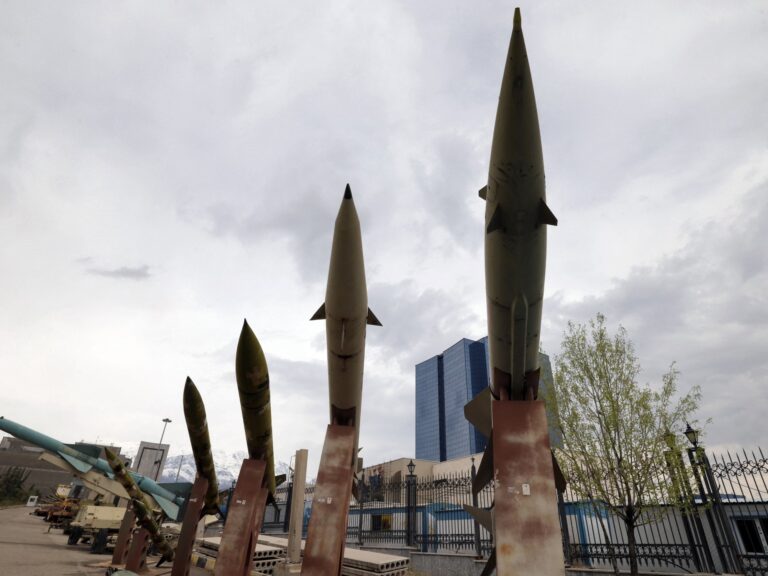
Precision Strikes and Signal Jams: The Technological Front of the US-Iran Escalation
Table of Contents
Kinetic Exchange Amid Diplomatic Static
On day 94 of the conflict, the operational theater between the United States and Iran has shifted from strategic posturing to a high-frequency exchange of precision strikes. The U.S. military confirmed it targeted several Iranian military installations, while the Islamic Revolutionary Guard Corps (IRGC) reported retaliatory strikes against a U.S. base. This volatility comes as President Donald Trump suggests via Truth Social that Tehran is eager to reach a deal, creating a surreal dichotomy where kinetic warfare and diplomatic overtures are happening in parallel.
While the headlines focus on the politics, the actual mechanics of these exchanges reveal a deepening reliance on autonomous targeting and integrated air defense systems. The interception of missiles by Kuwaiti forces suggests a regional synchronization of radar data, likely utilizing shared intelligence feeds to identify and neutralize incoming projectiles before they reach high-value targets.
The Precision Gap and IRGC Strategy
For the IRGC, the strategy has consistently relied on asymmetric capabilities. Their recent targeting of U.S. assets demonstrates an evolved use of loitering munitions and precision-guided missiles designed to bypass traditional Aegis-style radar umbrellas. By employing ‘swarm’ tactics—launching multiple low-cost drones alongside high-velocity missiles—Iran attempts to saturate U.S. interceptor capacity, forcing a resource-heavy response to relatively inexpensive threats.
Conversely, the U.S. strikes on Iranian sites are characterized by a reliance on B-2 stealth bombers and long-range cruise missiles. The goal here isn’t just physical destruction, but the degradation of Iran’s command-and-control (C2) infrastructure. By knocking out specific communication nodes, the U.S. aims to isolate IRGC field commanders from their central leadership in Tehran, effectively ‘blinding’ the adversary’s ability to coordinate a large-scale counter-offensive.
Electronic Warfare: The Invisible Battlefield
Beyond the explosions, a silent war of electronic warfare (EW) is dominating the landscape. Reports from the region indicate heavy signal jamming and GPS spoofing, designed to throw off the guidance systems of incoming munitions. When Kuwait intercepted missiles, it wasn’t merely a matter of kinetic interception; it involved the successful filtration of electronic noise to maintain a lock on targets.
This EW layer is where the conflict’s technological trajectory is most evident. The use of AI-driven signal processing allows both sides to distinguish between decoy signatures and actual warheads in real-time. As the IRGC integrates more advanced telemetry from non-Western sources, the U.S. is forced to iterate its software-defined radios and encryption protocols on the fly to maintain tactical superiority.
The Diplomatic Paradox
President Trump’s assertion that Iran is “eager to make a deal” suggests that the economic and technological cost of this attrition war may be reaching a breaking point for Tehran. The Iranian military-industrial complex, while resilient, struggles to replace high-end semiconductors and precision components lost in U.S. strikes due to international sanctions.
If the current strikes are intended as ‘negotiation levers,’ they are operating on a dangerous edge. The transition from a tactical strike to a full-scale regional outage is now a matter of a few failed software patches or a single miscalculated radar ping. As Araghchi dismisses deal talks as ‘speculation,’ the only verifiable language remains the exchange of munitions and the constant humming of electronic jammer arrays across the Gulf.