Powell Sounds Alarm on Fed Independence as Trump Era ‘Stress Tests’ Institutions
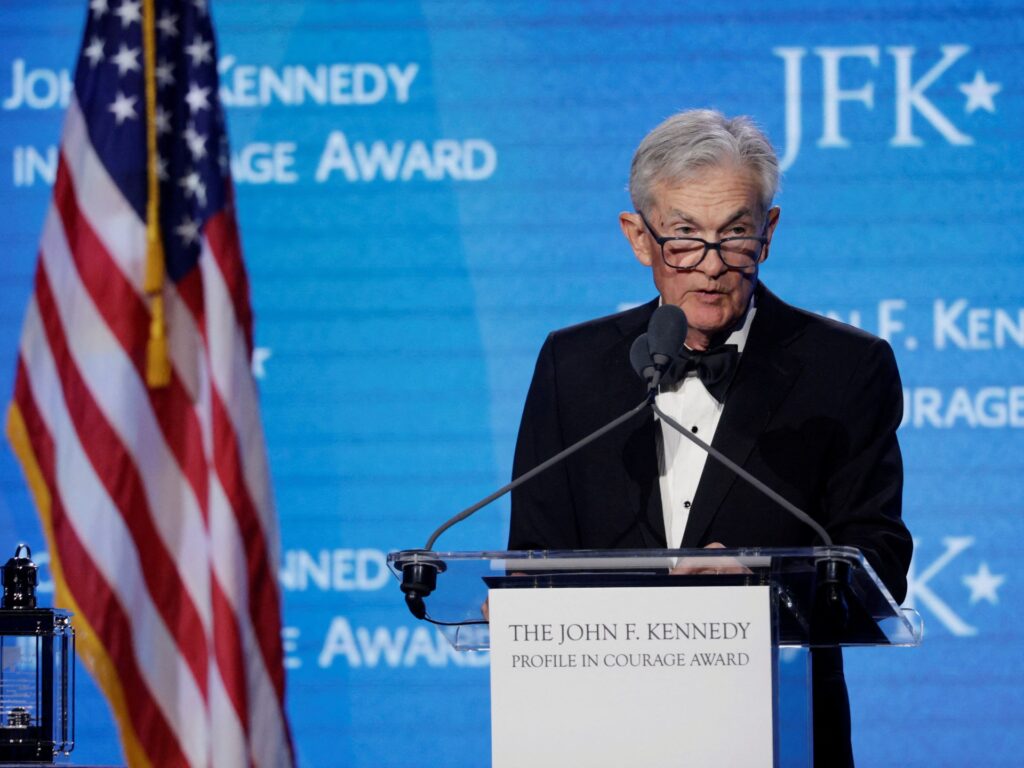
Table of Contents
A ‘Stress Test’ for Central Banking
Jerome Powell, the recently departed Chair of the US Federal Reserve, has issued a stark warning against the politicization of monetary policy, characterizing the current era as a systemic “stress test” for the institutions that anchor the American economy. Speaking at an awards ceremony in Boston on Sunday, Powell argued that the firewall between the White House and the central bank is not merely a bureaucratic preference, but a critical safeguard for global financial stability.
Powell, who accepted the 2026 John F Kennedy Profile in Courage Award, framed the independence of the Fed as a cornerstone of the US economic engine. He noted that the US Congress intentionally insulated the central bank from short-term political whims to ensure that decisions regarding interest rates and inflation are driven by data, not election cycles. This norm, he pointed out, is mirrored across nearly all advanced economies, serving as a global standard for maintaining market confidence.
The Precedent of Policy Purges
The core of Powell’s concern lies in the potential for a precedent-setting shift in how Fed governors are treated. While he did not name President Donald Trump explicitly during his remarks, the context was unmistakable. Trump has maintained a sustained campaign of pressure against the central bank, frequently demanding more aggressive interest rate cuts and threatening the dismissal of officials who resisted his directives.
“If any administration finds a way to remove Fed officials over policy differences, then future administrations will do so as well,” Powell stated. He warned that such a move would trigger a collapse in public faith, effectively signaling that the central bank no longer operates in the interest of all Americans, but rather as an arm of the executive branch.
This loss of credibility, according to Powell, would have immediate and tangible consequences for the broader economy. The Fed’s ability to stabilize markets and control inflation relies heavily on the belief that its mandates are insulated from partisan interference. Without that trust, the mechanism for supporting American families and businesses becomes volatile.
Legal Battles and Executive Overreach
The tension between the executive branch and the Federal Reserve has already manifested in high-stakes legal skirmishes. The administration recently ordered the removal of Fed Governor Lisa Cook, citing unproven claims of mortgage fraud. However, the US Supreme Court has intervened, ruling that Cook may retain her seat while the court reviews the legality of the firing.
Under the Federal Reserve Act, a president cannot simply fire a governor for disagreeing on policy; they must demonstrate “cause,” which is legally interpreted as malfeasance or neglect of duty. The attempt to remove Cook, coupled with a short-lived criminal investigation into Powell’s own testimony regarding headquarters renovations—launched by Trump ally Jeanine Pirro—suggests a strategy of using administrative and legal pressure to force policy compliance.
Defending the Rule of Law
Beyond the technicalities of monetary policy, Powell used the platform to offer a broader defense of democratic governance. Drawing on the words of John Adams, Powell reminded the audience that the US is intended to be “a government of laws and not of men.”
He argued that while partisan differences are a healthy and essential part of a thriving democracy, they must not erode the foundational respect for the rule of law. By remaining as one of the seven members of the Fed’s Board of Governors after stepping down as chair last month, Powell continues to occupy a vantage point from which to witness the ongoing friction between independent regulatory bodies and the current administration’s approach to governance.