Polaroid Refines the Micro-Instant Experience with Go Gen 3
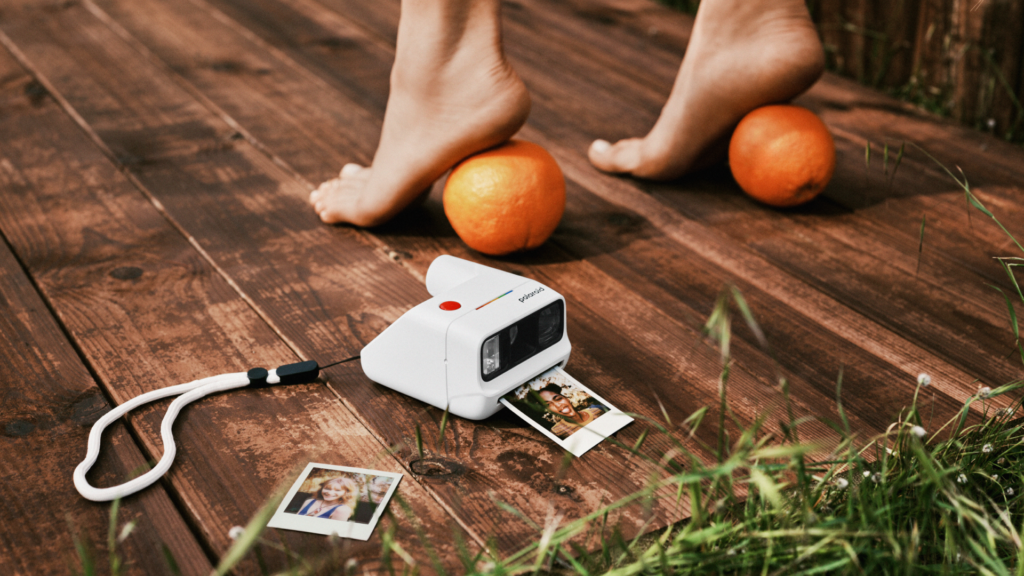
Table of Contents
The Iterative Path to a Better Pocket Print
Polaroid has long occupied a specific niche in the analog revival: the balance between nostalgic chemistry and modern portability. With the release of the Polaroid Go Gen 3, the company is doubling down on its smallest form factor, opting for optical refinements over a total redesign. While the Gen 2 established the Go as a viable, albeit niche, entry point for instant photography, the Gen 3 addresses the most frequent criticism of the line—image softness.
The core of the update lies in the lens assembly. Polaroid has shifted the focal length from a 34mm equivalent to a 42mm equivalent. In the world of analog photography, this subtle shift significantly changes the perspective of the shot. The longer focal length provides a tighter crop, which is particularly beneficial for portraits, reducing the wide-angle distortion often seen in ultra-compact cameras. However, users should note that this comes with a trade-off: framing selfies will require a bit more arm extension than with the previous generation.
Optical Shifts and Lighting Dynamics
Beyond the focal length, the aperture settings have been recalibrated. The Gen 2 operated with fixed apertures of f/9 and f/32; the Gen 3 moves these to f/14 and f/32. While a higher f-stop generally means less light hitting the film, Polaroid has compensated for this by integrating a more robust flash system. This increased power allows the camera to maintain an f/14 aperture for improved sharpness without sacrificing exposure quality in dim environments.
This hardware synergy also allows for a faster maximum shutter speed. The Go Gen 3 can now reach 1/500 sec, up from the 1/300 sec limit on the Gen 2. For a camera that relies heavily on a flash, the ability to freeze motion more effectively is a welcome addition, reducing the likelihood of blur in candid party shots. Interestingly, these power draws haven’t impacted the battery’s endurance, which remains rated for approximately 120 shots, or roughly eight packs of Go film.
The Physical Trade-off
Precision optics and a more powerful flash require a slightly larger footprint. While the Go series remains the smallest in Polaroid’s lineup, the Gen 3 is marginally larger than its predecessor. It now measures 106.5 x 83.8 x 64.6mm, a slight increase from the 105 x 84 x 62mm dimensions of the Gen 2. The weight has also ticked upward to 251.9g (body only), compared to the previous 239g.
Despite the slight growth in size, the ergonomics remain centered around spontaneity. The device retains the selfie mirror and the self-timer, while the double-exposure feature continues to be a favorite for those looking to experiment with abstract analog art. It still utilizes the proprietary Polaroid Go film, which produces prints small enough to be tucked into a smartphone case or a wallet.
Positioning in a Crowded Instant Market
The Polaroid Go Gen 3 enters a market dominated by the Fujifilm Instax Mini 13, which remains the global benchmark for reliability and film availability. However, the appeal of the Go isn’t just about technical specs; it’s about the specific aesthetic of the Polaroid square frame and the chemistry of the print.
Priced at $89.99, the Gen 3 is positioned as an accessible gateway into analog photography. It is available in five colorways: black, white, and two-tone variations of purple, teal, and light blue. For those who found the original Go a bit too simplistic or the image quality too soft, the Gen 3 represents a calculated step toward making micro-analog photography a more precise experience.


