Polaroid Refines Its Miniature Footprint with the Go Gen 3
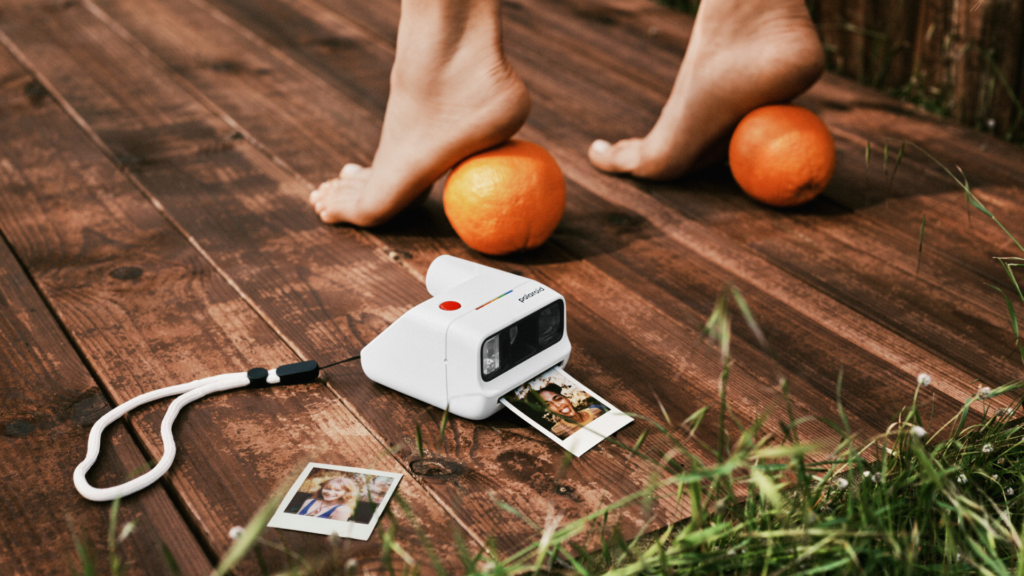
Table of Contents
A Strategic Shift in Focal Length
Polaroid has long dominated the niche of ‘pocketable’ analog photography, but the latest iteration of its smallest offering, the Polaroid Go Gen 3, suggests the company is moving away from mere miniaturization toward actual optical performance. While the previous generation focused on fitting the hardware into the smallest possible chassis, the Gen 3 introduces a revamped lens system that prioritizes image quality over raw dimensions.
The most significant technical change is the move to a 42mm equivalent focal length, up from the 34mm found in the Gen 2. In practical terms, this shift offers a tighter field of view, which is generally more flattering for portraits and reduces the wide-angle distortion often seen in ultra-compact lenses. However, this comes with a trade-off: users will find the frame tighter for selfies, requiring a bit more arm extension to capture a full group shot.
Accompanying the new focal length are updated aperture settings. The Gen 3 replaces the old f/9 and f/32 options with f/14 and f/32. While a narrower maximum aperture typically complicates low-light shooting, Polaroid has countered this by overhauling the internal flash system.
Powering the Optics
The redesigned flash is not just about brightness, but about exposure consistency. By increasing the flash’s power, Polaroid has enabled the camera to stop down to f/14 while still maintaining a viable exposure, which directly contributes to the improved sharpness of the final prints. This increased power also allows the shutter speed to push up to 1/500 sec, compared to the 1/300 sec limit of its predecessor, giving users slightly better control over motion blur in bright environments.
Interestingly, this increase in power hasn’t compromised the device’s endurance. The battery life remains consistent, capable of powering approximately 120 shots, or roughly eight packs of the proprietary Go film.
Physical Dimensions and Form Factor
The pursuit of better optics has resulted in a slight increase in the camera’s footprint. The Go Gen 3 measures 106.5 x 83.8 x 64.6mm, a modest increase from the 105 x 84 x 62mm of the Gen 2. The weight has also ticked up to 251.9g (without film), up from 239g. While it may technically relinquish its title as the absolute smallest in the lineup by a few millimeters, it remains significantly more portable than the standard Polaroid Now or the larger Instax options.
The Analog Experience in a Digital Era
Despite the hardware tweaks, the Go Gen 3 retains the core features that have made the series a staple at social gatherings. The camera continues to support double-exposures, a self-timer, and includes a dedicated selfie mirror to help frame those tighter 42mm shots. The film remains the same micro-sized Polaroid Go format, producing prints small enough to be tucked into a phone case or wallet.
In a market currently dominated by the Fujifilm Instax Mini 13, Polaroid is leaning into the ‘experience’ of analog photography. Where Instax often wins on ubiquity and cost, the Polaroid Go appeals to the aesthetic of the classic square format, shrunk down for a modern generation. The Gen 3 is less of a reinvention and more of a professional polish—fixing the softness of previous versions to make the miniature format a viable tool for more than just novelty.
The Polaroid Go Gen 3 is available now for $89.99, offered in five colorways: black, white, teal, light blue, and a two-tone purple option.


