Poco Quietly Debuts the Pad C1: A Budget-Focused Tablet Attempting to Bridge the Mid-Range Gap
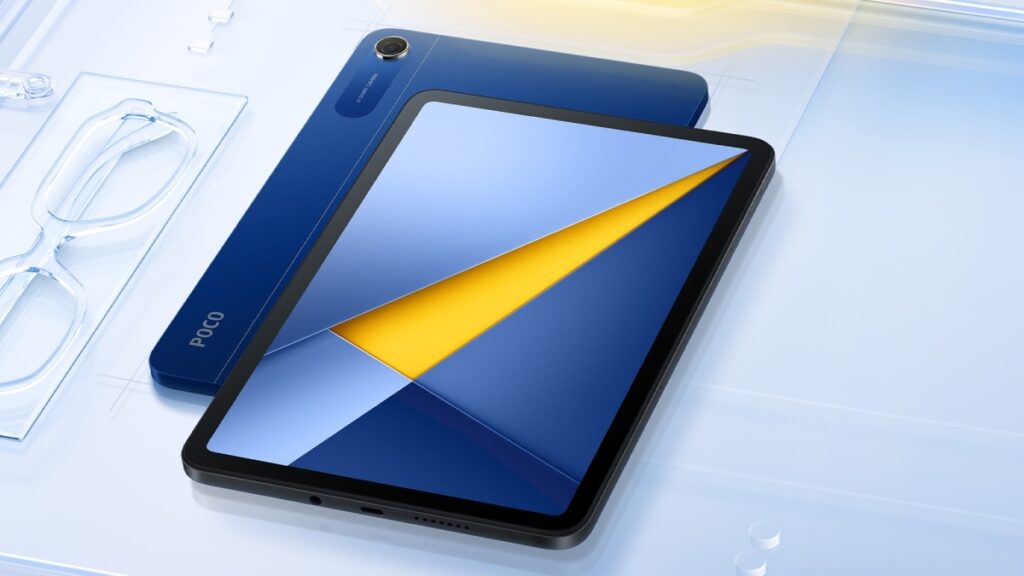
Table of Contents
A Strategic Pivot Toward the Budget Tier
Poco has officially pulled back the curtain on the Poco Pad C1, a new addition to its tablet lineup that signals a clear move toward the entry-level and mid-range segments. While the company has previously focused on high-performance handsets, the Pad C1 aims to capture the “student and casual media consumer” market—a space currently dominated by budget offerings from Samsung and Lenovo.
The device arrives with a design language that feels surprisingly premium for its intended price bracket. Eschewing the plastic builds common in budget tablets, the Pad C1 features a metal unibody chassis. This choice not only improves durability but gives the device a structural rigidity usually reserved for the higher-end Poco Pad series. It is available in two muted tones: Blue and Grey.
Display and Multimedia Performance
At the center of the experience is a 9.7-inch 2K display. While the screen size is smaller than the current industry trend of 11-inch-plus slabs, the inclusion of a 120Hz refresh rate is a notable win for this tier. High refresh rates on budget tablets are often sacrificed to save cost, but the Pad C1 ensures that scrolling through HyperOS and navigating the UI remains fluid.
To support the visual experience, Poco has integrated stereo speakers, though the company has kept specific audio certifications quiet. Given the 2K resolution and the high refresh rate, the Pad C1 is clearly positioned as a media consumption machine, designed for streaming and light productivity rather than heavy-duty workstation tasks.
Under the Hood: The Snapdragon Trade-off
The most telling detail about the Pad C1’s positioning is its chipset. Powering the device is the Snapdragon 6s 4G Gen 2. By opting for a 4G-capable chip rather than a 5G SoC, Poco has likely shaved significant costs off the final retail price. For the average user, this means the tablet is optimized for Wi-Fi environments, with cellular connectivity taking a backseat to affordability.
Memory configurations are modest, with the device launching in two variants: a base 4GB RAM and 64GB storage model, and a stepped-up 6GB RAM and 128GB storage version. To mitigate the limited internal storage, Poco has included a microSD slot supporting up to 2TB of expandable storage, making it a viable option for those who store large libraries of offline video or documents.
Software and Ecosystem Integration
Running the show is Xiaomi’s HyperOS, which is designed to create a more seamless handoff between Xiaomi, Poco, and Redmi devices. The integration of AI face unlock provides a modern security touch, though it lacks the biometric depth of an in-display fingerprint sensor. Connectivity remains standard with a USB Type-C port for charging and data transfer.
Powering all this is a 7,600mAh battery. While not the largest in the category, the efficiency of the Snapdragon 6s chipset combined with the moderately sized screen suggests a battery life that should comfortably last through a full day of intermittent use.
Market Position and Availability
Despite the detailed specifications appearing on the official Poco website and in accompanying product documentation, the company has remained tight-lipped regarding pricing and regional availability. Historically, Poco uses these “soft reveals” to gauge interest before a coordinated global rollout.
The Pad C1 doesn’t attempt to disrupt the high-end tablet market; instead, it fills a critical void for users who need a reliable, well-built screen for education or entertainment without paying a premium for 5G or high-end processing power. The industry will be watching closely to see if Poco prices this aggressively enough to challenge the dominance of the entry-level Tab A series from Samsung.


