Peak Design’s New 2-in-1 Travel Backpack Attempts to Solve the ‘Carry-On vs. Daypack’ Dilemma
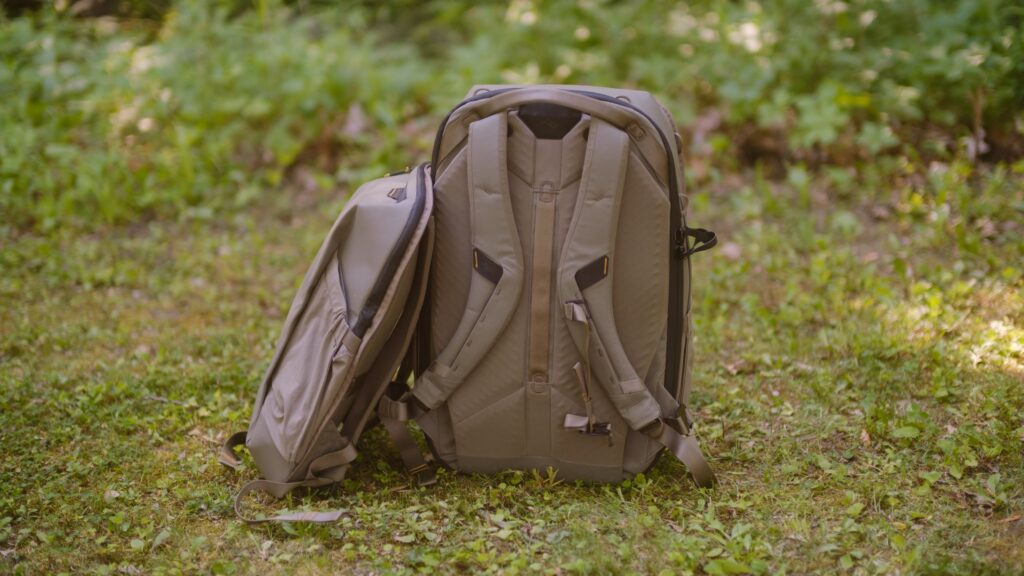
Table of Contents
The Perpetual Travel Conflict: Max Capacity vs. Mobility
For traveling photographers, the packing process is usually a compromise. You either opt for a high-capacity carry-on that avoids checked-bag risks but proves cumbersome during city exploration, or you pack a lean daypack and risk leaving essential glass behind. Peak Design is attempting to eliminate this binary choice with the Travel Backpack 2-in-1, a modular system that fuses a high-volume main chassis with a detachable front pack.
The premise is straightforward: a single, cohesive unit that slides into most airline overhead bins, which can be surgically split into two separate bags once you hit the ground. While the concept of modular bags isn’t new, the execution here focuses on redundancy and versatility, ensuring that neither the main pack nor the detachable daypack feels like a ‘secondary’ accessory.
Engineering a Modular Ecosystem
When zipped together, the system offers a total capacity of 40L. However, the real value lies in the separation. The main pack stands alone at 34L, while the detachable front pack provides a 16L minimalist carry. Interestingly, Peak Design has mirrored several critical features across both units. Both the main and the daypack can house a 16-inch laptop, and both feature dual side pockets capable of holding water bottles or compact tripods. This means that when you zip off the daypack for a quick excursion, you aren’t losing your tech protection or your hydration options.
The ergonomics vary based on the load. The main pack features a substantial, padded waist belt—essential for distributing the weight of a full camera kit—which can be tucked away when not in use to maintain a clean profile. The daypack, conversely, uses a lighter strap system and lacks a waist belt, reflecting its intended use as a light-duty carry for essentials like a Kindle, a GoPro, or a change of clothes.
The Camera Gear Equation
It is important to note that the Travel Backpack 2-in-1 is not a dedicated camera bag out of the box; it is a shell. To make it gear-ready, users must integrate a Camera Cube. Using the Large Cube ($120), the main compartment is fully utilized, allowing for a significant payload: two mirrorless bodies, two telephoto lenses, three primes, a pancake lens, and a flash.
The interior design addresses a common pain point for photographers: the ‘rattle’ of small lenses. Peak Design has implemented a divider system that can collapse to create a shelf, preventing smaller pancake lenses from shifting during transit. One minor engineering quirk is the remaining inch of vertical clearance between the Large Cube and the bag’s top edge, though the included clips keep the cube from shifting.
Access and Utility
Unlike some of Peak Design’s other offerings, the main compartment relies entirely on a clamshell rear-panel zip. While this eliminates the convenience of side-access, it maximizes internal volume and allows for the inclusion of four external pockets—a surprising amount of utility for a bag of this size.
However, the bag isn’t without its omissions. For a product aimed at professionals, the lack of a dedicated, secure interior pocket for SD cards is a noticeable oversight. It highlights the inherent tension in designing a hybrid bag that must appeal to both the general traveler and the specialized photographer.
Value Proposition
At a retail price of $399 (USD), the Travel Backpack 2-in-1 is a premium investment, especially when the necessary Camera Cubes are purchased separately. You are paying for the engineering of the detachment system and the ability to scale your carry based on the environment.
For those who find themselves constantly switching between a large travel bag and a small daypack, the 2-in-1 provides a streamlined workflow. It transforms the logistical headache of ‘which bag do I take?’ into a simple decision of whether to unzip the front panel.