Nvidia’s RTX Spark: The High-Stakes Gamble to Finally Break Apple’s Silicon Dominance
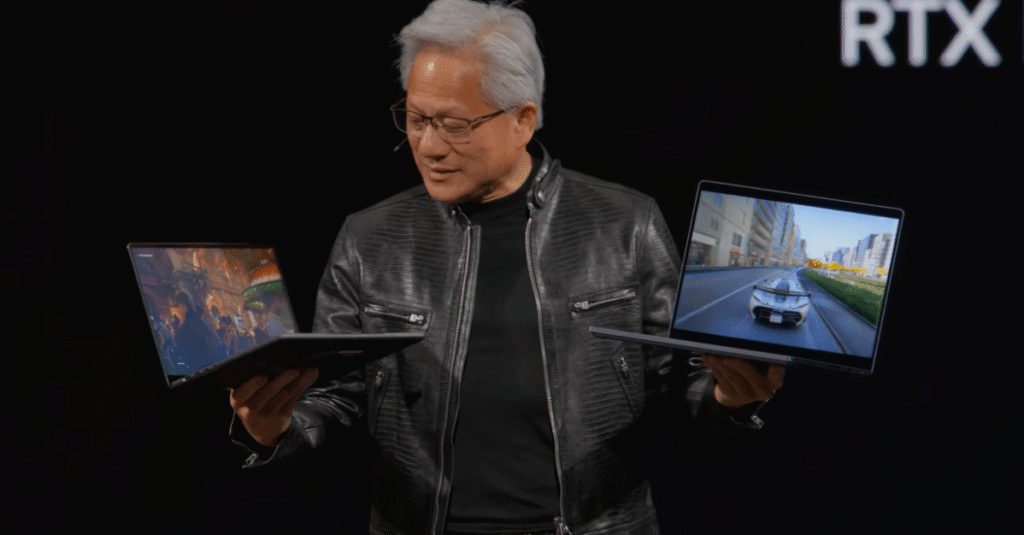
Table of Contents
The Arrival of the ‘Superchip’
For years, the Windows ecosystem has chased the ghost of Apple’s 2020 M1 launch. The industry has seen a revolving door of attempts to marry high-end performance with genuine battery longevity, with Qualcomm’s recent Arm-based efforts providing the standby time but often falling short on raw graphical horsepower. Now, Nvidia is stepping into the fray with the RTX Spark, a move that signals a fundamental shift in how the company views the consumer PC market.
The RTX Spark isn’t just another processor; it is what Nvidia calls a ‘superchip.’ In a recent keynote dominated by the push toward autonomous AI agents, CEO Jensen Huang positioned the Spark as the essential hardware for the next era of computing. Technically, the chip is a laptop-optimized derivative of the GB10 found in Nvidia’s DGX Spark mini-PCs. The specs are staggering: 20 CPU cores, 6,144 GPU CUDA cores, and a massive 128GB of unified LPDDR5X memory. For context, that integrated graphics capability is claimed to rival a standalone RTX 5070 Laptop GPU, though Nvidia has been conspicuously quiet about independent benchmarks.
Bridging the Arm Gap
The strategic goal here is clear: target the MacBook Pro’s stronghold. By utilizing an Arm architecture and unified memory, Nvidia is attempting to solve the ‘efficiency tax’ that has plagued x86 Windows laptops for decades. If successful, the RTX Spark could finally give Windows users a machine that doesn’t require a brick-sized power adapter to maintain peak performance.
Microsoft is leaning heavily into this partnership. The upcoming Surface Laptop Ultra is already being billed as the company’s most powerful device to date. However, the hardware is only half the battle. For Windows on Arm to succeed where previous iterations stalled, the software ecosystem must follow. In a significant win for the platform, Microsoft and Nvidia have reportedly secured commitments from Riot Games to port anti-cheat software for titles like Valorant and League of Legends to Arm, alongside ongoing work with Easy Anti-Cheat and Denuvo. This addresses the primary grievance of the Windows gaming community: the incompatibility of kernel-level security software on non-x86 chips.
The Price of Power
While the technical ambition is impressive, the economic reality is daunting. Nvidia isn’t aiming for the entry-level market. The RTX Spark is targeting the ‘Ultra’ and ‘Pro’ tiers, with a lineup for the fall that includes the Dell XPS 16, Asus ProArt P14 and P16, Lenovo Yoga Pro 9n, and HP’s OmniBook Ultra. These machines typically carry price tags starting between $2,000 and $2,500.
The cost is largely driven by that 128GB of unified memory. To see a comparison in the current x86 market, the AMD Strix Halo APU—the closest equivalent—appears in devices like the Asus ROG Flow Z13 with an MSRP of $3,300. When you factor in high-end chassis materials and Mini LED touchscreens, the RTX Spark laptops risk becoming niche luxury items rather than industry disruptors.
A Different Kind of ‘Moment’
The danger for Nvidia is that they are attempting to replicate Apple’s success while skipping the most important part of the strategy. When Apple transitioned to the M1, they didn’t start with the M1 Ultra; they started with the MacBook Air and the Mac Mini. By putting the new silicon in affordable, high-volume devices, Apple created an immediate incentive for developers to optimize their software for Arm.
Nvidia, by contrast, is leading with a high-end ‘superchip’ during a period of volatile consumer spending. While the RTX Spark may technically outperform everything in its class, its success won’t be measured by benchmarks, but by whether users are willing to pay a massive premium for it. With Intel, AMD, and Qualcomm all offering viable paths forward, Nvidia is betting that raw power and AI integration will be enough to justify the cost.


