Nvidia Doubles Down on Taiwan with $150 Billion Annual Spend and New ‘Constellation’ Campus
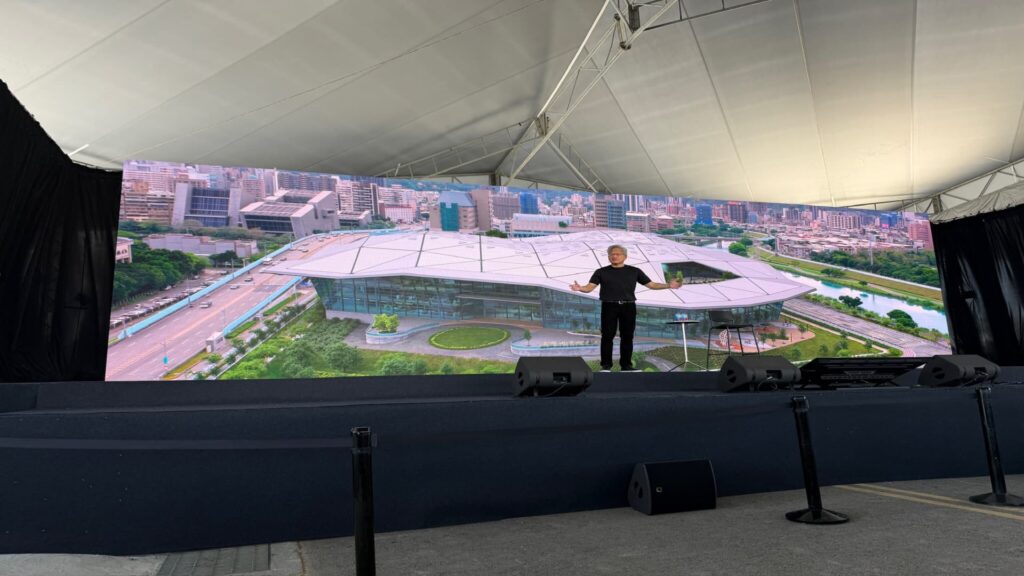
Table of Contents
A Massive Pivot Toward the ‘Epicenter’
Nvidia is aggressively scaling its physical and financial footprint in Taiwan, transitioning from a primary customer of the region’s foundries to a deeply embedded operational force. During a visit to Taipei on Wednesday, CEO Jensen Huang revealed that the chipmaker’s annual spending in Taiwan is projected to hit $150 billion—a staggering leap from the $10 billion to $15 billion range the company maintained just five years ago.
This capital injection isn’t just about purchasing silicon; it is a strategic hedge and a growth play. The announcement sent the Taiwan Stock Exchange (Taiex) climbing 1.7% to a record close, signaling investor confidence in the symbiotic relationship between the AI chip designer and the island’s manufacturing ecosystem.
The ‘Constellation’ Strategy
Central to this expansion is the announcement of “Constellation,” a new office complex in northern Taipei. Scheduled to open by 2030, the campus is designed to house 4,000 employees, which would effectively quadruple Nvidia’s current headcount in the region. By establishing a massive talent hub on the ground, Nvidia is moving beyond a transactional relationship with its suppliers and toward a co-located R&D model.
The move comes as Nvidia’s dominance in the AI accelerator market forces a reorganization of its supply chain. While the company is simultaneously pledging $500 billion toward AI infrastructure in the U.S. over the next four years—roughly $125 billion annually—the Taipei investment suggests that for the immediate future, the technical gravity of the semiconductor world remains firmly in Taiwan.
Market Ripples and the TSMC Shift
The financial markets reacted swiftly to Huang’s roadmap. Shares of the three largest entities on the Taiex index saw significant gains: MediaTek surged 8.8%, Delta Electronics rose 7.2%, and TSMC closed 1.3% higher. The relationship between Nvidia and TSMC is particularly critical; industry analysts expect Nvidia to overtake Apple as TSMC’s largest customer this year, reflecting the shift in global demand from consumer electronics to generative AI compute.
The scale of this spending is difficult to overstate. A $150 billion annual outlay exceeds Nvidia’s total revenue for a single quarter (which hit a record $81.6 billion in the period ending April 26). It represents a bet not just on current demand, but on what Huang calls “physical AI”—the integration of AI with hardware to transform the global manufacturing process.
Geopolitical Friction and the China Void
The aggressive pivot to Taiwan serves as a stark contrast to Nvidia’s deteriorating relationship with mainland China. Regulatory hurdles and U.S. export restrictions have gutted Nvidia’s growth in the Chinese market, with revenues from mainland China and Hong Kong halving in the latest quarter. Conversely, revenue from Taiwan surged by more than 50% over the previous year.
This divergence was reflected in the stock market’s performance. While Taipei celebrated, mainland Chinese chip players saw a bloodbath. Shares of SMIC tumbled, while Cambricon and Hygon dropped 5% and 7% respectively. This sell-off occurred despite recent claims from Huawei regarding its “LogicFolding” engineering, which the telecom giant hopes will allow it to produce advanced semiconductors for smartphones and data centers by 2030.
Despite contrarian views from some venture capitalists—such as Chamath Palihapitiya, who suggested that U.S.-based Neuralink advances could diminish Taiwan’s importance within 18 months—Jensen Huang’s actions suggest the opposite. By anchoring billions of dollars and thousands of employees in Taipei, Nvidia is signaling that the “epicenter of the AI revolution” isn’t moving anytime soon.


