North Korea Claims AI-Guided Cruise Missiles and New Nuclear Warheads in Latest Weaponry Tests
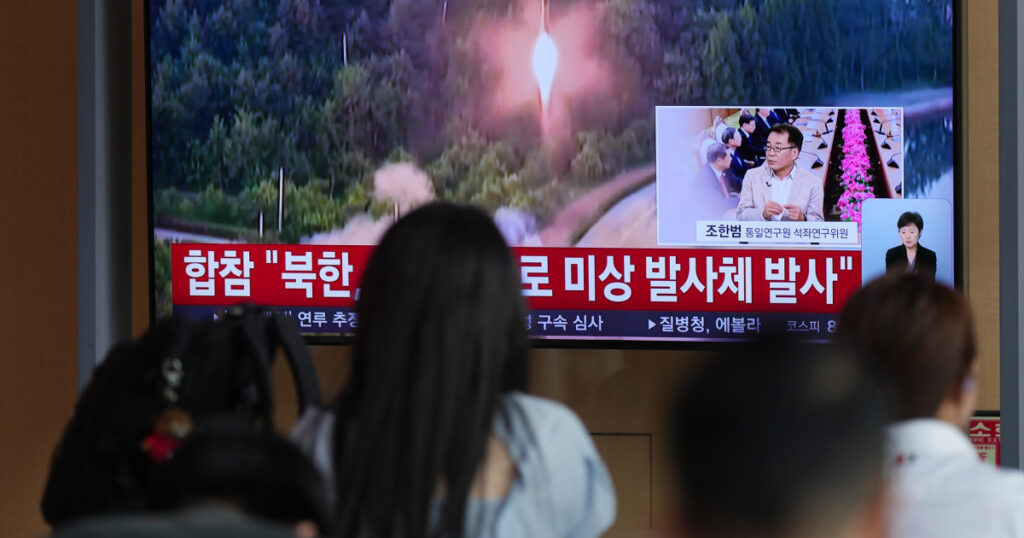
Table of Contents
The Integration of AI in Pyongyang’s Arsenal
North Korean state media has revealed a significant shift in the regime’s military strategy, claiming that recent weapons tests involved the integration of artificial intelligence (AI) into cruise missile systems. According to the Korean Central News Agency (KCNA), Kim Jong Un supervised a series of launches on Tuesday that aimed to validate new warhead designs and advanced navigation technologies designed specifically for battlefield nuclear application.
While South Korea’s Joint Chiefs of Staff initially reported the detection of projectiles—including at least one close-range ballistic missile that traveled roughly 80 kilometers toward western waters—the official report from Pyongyang provides a more granular, and more concerning, technical breakdown. The regime claims these tests included nuclear-capable cruise missiles guided by AI technology and 240-millimeter rocket artillery featuring what they describe as “ultra-precision” navigation systems.
The mention of AI-guided systems marks a pivot in how the North Korean military views its tactical capabilities. By moving toward autonomous or semi-autonomous guidance, Pyongyang is attempting to solve the persistent problem of interceptability. Cruise missiles, which fly at lower altitudes and can maneuver to avoid radar detection, become significantly more lethal when paired with AI that can adjust flight paths in real-time to evade South Korean and U.S. air defense grids.
Tactical Shift toward ‘Impregnable’ Frontlines
The strategic intent behind these tests is not merely prestige, but a specific operational goal: the deployment of these systems to front-line units facing South Korea. Kim Jong Un has expressed particular satisfaction with the performance of these cruise missiles, signaling an intent to integrate them into long-range artillery units stationed near the border.
This development aligns with a broader mandate to transform the frontier into what state media calls an “impregnable fortress.” By equipping front-line troops with precision-guided, nuclear-capable assets, Kim is effectively shortening the decision-making window for adversaries and increasing the risk of rapid escalation in the event of a conflict.
The Geopolitical Technology Exchange
The sudden leap in North Korea’s precision guidance and AI integration cannot be viewed in a vacuum. Pyongyang’s military modernization has accelerated since the collapse of diplomacy with the United States in 2019, but the current trajectory suggests a deepening technical synergy with Russia.
With thousands of North Korean troops now deployed to support Russia’s war in Ukraine and massive shipments of conventional munitions flowing from Pyongyang to Moscow, there is significant speculation among defense analysts regarding a “quid pro quo.” The exchange of conventional weaponry for Russian expertise in hypersonic technology, satellite surveillance, or AI-driven electronic warfare would provide North Korea with the exact technical building blocks needed for the “ultra-precision” systems claimed in this latest round of tests.
While Washington has seen various attempts to revive diplomatic channels, the current technical trajectory of the KPA (Korean People’s Army) suggests that Pyongyang is prioritizing technical autonomy and military deterrence over negotiations. The insistence that the U.S. abandon nuclear disarmament as a precondition for talks reflects a regime that now believes its technological edge—specifically in tactical nuclear delivery—gives it a position of strength.
Technical Implications for Regional Defense
For South Korea and the U.S., the claim of AI-guided cruise missiles necessitates a reevaluation of current interceptor capabilities. Traditional ballistic missile defense (BMD) is designed for the predictable arcs of rockets; however, AI-guided cruise missiles can change altitude and direction mid-flight, making them far more difficult to track and neutralize. The introduction of “ultra-precision” navigation further minimizes the margin of error, potentially allowing North Korea to target specific high-value infrastructure with pinpoint accuracy, regardless of the payload used.