NASA’s Deep Space Network: Solving the Communication Crunch Before Artemis III
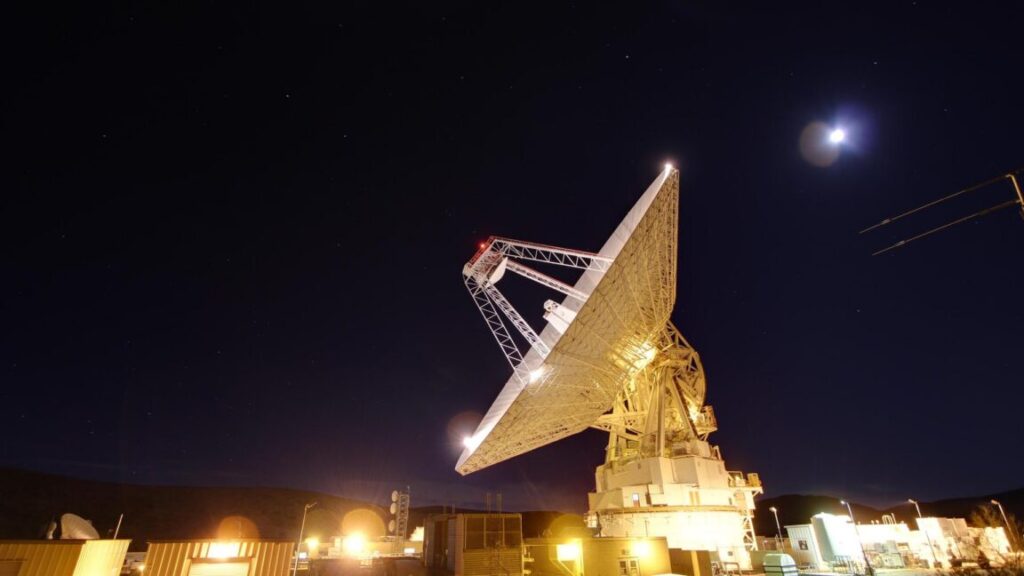
Table of Contents
The Invisible Tether: Why the Deep Space Network Nearly Snapped
When the Orion spacecraft ventured around the Moon during Artemis I, it wasn’t just the hardware of the capsule that was pushed to its limits; it was the invisible tether connecting it to Earth. The Deep Space Network (DSN), a global array of massive radio antennas, found itself in a state of operational crisis. As NASA attempted to balance the high-bandwidth demands of a lunar mission with 40 other robotic science missions, the system began to buckle.
The result was a cascading series of communication delays. Data downlinks for high-profile assets—including the James Webb Space Telescope and the Mars rovers—were throttled or delayed. The ‘data-hungry’ nature of the Artemis I mission essentially created a traffic jam in deep space, proving that NASA’s current infrastructure was ill-equipped for the return to the Moon.
- Operational Strain: Artemis I pushed the DSN beyond its limits, causing data delays for Mars rovers and the James Webb Space Telescope.
- Technical Fixes: NASA replaced a critical failed subsystem (the Private Cloud Appliance) and overhauled scheduling processes before Artemis II.
- Capacity Crisis: With 40 active missions and 40 more projected in the next decade, the DSN faces permanent ‘asset contention.’
- Future Infrastructure: NASA is pivoting toward Lunar Exploration Ground Sites (LEGS) and optical (laser) communications to offload the DSN.
The Artemis II Pivot: Process Over Hardware
The launch of Artemis II represented a high-stakes stress test. With a crew of four astronauts aboard, the appetite for telemetry and biometric data was significantly higher than the uncrewed Artemis I. However, NASA managed to navigate the mission without the same level of systemic failure. This wasn’t due to a sudden increase in antenna count, but rather a strategic shift in coordination and scheduling.
Greg Heckler, deputy program manager for capability development in NASA’s Space Communications and Navigation Program, noted that the agency implemented new processes focused on how missions are onboarded and how time on the antennas is allocated. By reducing the number of secondary payloads (CubeSats) and shortening the mission duration to roughly nine days—down from Artemis I’s 25 days—NASA effectively lowered the cumulative ‘data load’ on the network.
The Private Cloud Appliance Failure
Beyond the scheduling, a specific hardware failure during Artemis I provided a critical lesson. The Private Cloud Appliance (PCA), a subsystem essential for managing network operations, crashed under the pressure. This failure was high-visibility and served as the catalyst for NASA to secure additional funding via the ‘Moon to Mars’ program to install a modernized subsystem ahead of the Artemis II launch.
The Architecture of the Deep Space Network
To understand why the DSN is so prone to contention, one must look at its physical constraints. The DSN consists of three complexes—located in Goldstone (California), Madrid (Spain), and Canberra (Australia)—positioned roughly 120 degrees apart to ensure that as the Earth rotates, at least one station always has a line of sight to a distant spacecraft.
The network relies on different antenna sizes, most notably the 70-meter (230-foot) dishes. These are the ‘heavy lifters’ used for the most distant probes. However, these assets are fragile and prone to mechanical failure. Last year, a 70-meter antenna at Goldstone ‘over-rotated’ while tracking the Juno spacecraft at Jupiter, damaging critical cables and water lines. When one of only three such massive dishes goes offline, the remaining network must shoulder the burden, further intensifying the contention for time slots.
The Looming ‘Data Tsunami’: Nancy Grace Roman and Beyond
The current strain is not a temporary spike; it is a preview of a permanent shift in astronomical data scales. The upcoming Nancy Grace Roman Space Telescope, scheduled for launch in August, is expected to produce a volume of data that dwarfs previous astrophysics missions. According to NASA projections, the Roman telescope will return more data through the DSN than all of NASA’s previous astrophysics missions combined.
This creates a paradox: NASA is launching more sophisticated sensors that can see further and more clearly, but the ‘pipe’ used to send that data back to Earth is remaining relatively static. With 40 active missions currently operating beyond their original design lives, the DSN is supporting ‘legacy’ spacecraft that were never intended to be on the network for this long, yet continue to consume valuable bandwidth.
What This Means: The Transition to a Lunar Economy
The limitations of the DSN signal a fundamental shift in how humans will inhabit space. We are moving from an era of centralized government control (where NASA manages every bit of data) to a decentralized lunar infrastructure.
If NASA continues to rely solely on the DSN, the ‘asset contention’ will eventually lead to mission failures or unacceptable data gaps. To prevent this, the agency is implementing several strategic pivots:
- Lunar Exploration Ground Sites (LEGS): By building dedicated ground antennas specifically for lunar missions, NASA can offload the lunar traffic from the DSN, leaving the global array free to support deep-space probes in the outer solar system.
- Commercial Relay Satellites: Much like how GPS or Starlink works on Earth, companies are developing relay satellites to orbit the Moon. This allows landers on the lunar far side to send data ‘up’ to a satellite, which then beams it ‘down’ to Earth, eliminating the need for a constant direct line of sight to a DSN station.
- Optical Communications: The transition from radio waves to lasers. NASA successfully tested a laser communications terminal on the Orion spacecraft during Artemis II. Lasers offer significantly higher bandwidth, potentially turning the ‘straw’ of radio communications into a ‘firehose’ of data.
The New Onboarding Protocol: Feasibility Over Optimism
In the past, missions were often added to the DSN based on scientific priority. Today, Greg Heckler indicates that NASA has shifted to a feasibility-study-first model. No new mission is onboarded without a rigorous analysis of whether the network can actually support the commitment without jeopardizing existing missions.
This is a move toward ‘Data Realism.’ NASA is now auditing older missions to see if they are consuming more bandwidth than their original paperwork suggested. By tightening the accounting of every single kilobit, the agency is attempting to squeeze every possible drop of efficiency out of the existing hardware while the next generation of infrastructure is built.
Comparing Communication Methods
| Method | Current Tech | Future Tech (LEGS/Optical) | Primary Advantage |
|---|---|---|---|
| Radio (RF) | DSN 70m Antennas | Dedicated Lunar Sites | Proven reliability over distance |
| Optical (Laser) | Experimental/Limited | Laser Terminals on Orion | Massively higher bandwidth |
| Relay | Direct-to-Earth | Lunar Orbit Satellites | Continuous coverage (Far Side) |
Frequently Asked Questions
What exactly is the Deep Space Network?
The Deep Space Network (DSN) is a collection of giant radio antennas located in California, Spain, and Australia. It acts as the primary communications system for NASA’s robotic and human missions to the Moon, Mars, and beyond, allowing scientists to send commands to spacecraft and receive data and images in return.
Why did Artemis I cause problems for other missions?
Artemis I required an extraordinary amount of bandwidth for telemetry and safety monitoring. Because the DSN has a finite number of antennas and time slots, prioritizing the Orion capsule meant that other missions, like the Mars rovers and the James Webb Space Telescope, had their data transmission windows reduced or delayed.
Will astronauts on the Moon always rely on the DSN?
No. While the DSN will remain vital for long-range communication, NASA is building the Lunar Exploration Ground Sites (LEGS) and partnering with commercial companies to create a lunar-specific network and relay satellites to ensure more stable and higher-capacity connectivity.
What is a ‘Private Cloud Appliance’ and why did its failure matter?
The Private Cloud Appliance (PCA) is a computing subsystem that helps manage the network’s data and scheduling. When it failed during Artemis I, it hindered the network’s ability to efficiently handle the surge in data, leading to the systemic instability mentioned by NASA officials.
How does laser communication differ from radio communication?
Radio waves are great for long-distance reliability but have limited data speeds. Laser (optical) communications use light to transmit data, which allows for much higher bandwidth—similar to how fiber-optic cables replaced phone lines on Earth—enabling high-definition video and larger data sets to be sent from space.