NASA Weighs Hubble Orbit Rescue as Commercial ‘Reboost’ Tech Hits the Pad
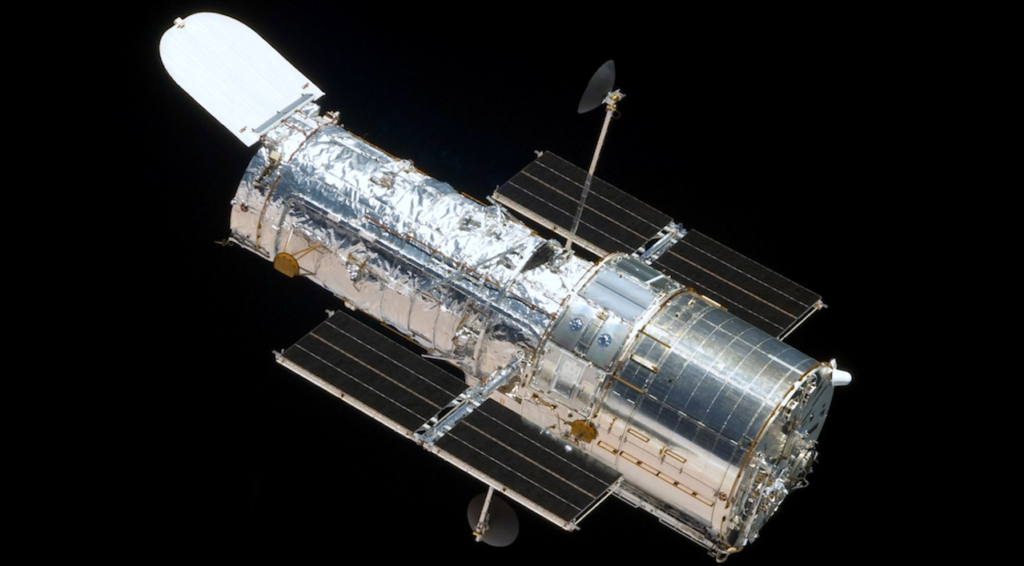
Table of Contents
A High-Stakes Gamble in Virginia
NASA is preparing for a high-risk, high-reward experiment in orbital maintenance that could determine the fate of one of the most iconic instruments in scientific history. The Link servicing spacecraft, developed by Katalyst Space, has officially arrived at the Wallops Flight Facility in Virginia, marking the final step before its integration with a Northrop Grumman Pegasus XL rocket for a launch expected later this month.
The immediate target isn’t Hubble, but the Neil Gehrels Swift Observatory. A gamma-ray observatory critical for detecting cosmic explosions, Swift is currently fighting a losing battle against atmospheric drag. Because it orbits in the lower reaches of Earth’s atmosphere, the friction is gradually pulling the craft downward. The Link mission, funded by a $30 million contract awarded last September, aims to rendezvous with and physically attach to Swift to push it back into a higher, stable orbit.
The mission is an anomaly in NASA’s typical risk-averse planning. Swift was never designed to be serviced in orbit, and Katalyst is attempting to move from a boardroom concept to a launch pad in just one year. Shawn Domagal-Goldman, director of NASA’s astrophysics division, admitted during a June 1 meeting of the Astronomy and Astrophysics Advisory Committee that the effort is a “long-odds” venture.
The Hubble Connection
While the Swift mission is the immediate focus, the broader strategic goal is the Hubble Space Telescope. Like Swift, Hubble is suffering from a decaying orbit. Current models provided by Jennifer Lotz, director of the Space Telescope Science Institute, suggest a median reentry date of 2033 if no action is taken. The success of the Link spacecraft would provide a proven commercial blueprint for saving Hubble from a fiery descent.
Domagal-Goldman noted that the emergence of commercial servicing options has shifted the cost-benefit analysis. “These reboost things are now not just available to us as an agency, but the costs are lower than I think I anticipated,” he stated, suggesting that the return on investment (ROI) for extending Hubble’s life is becoming more enticing.
The Financial Hurdle: Operational Overhead
However, a successful orbital push is only half the battle. The primary obstacle to saving Hubble isn’t the physics of the reboost, but the bureaucracy of the budget. In fiscal year 2025, NASA spent $98.8 million on Hubble’s operations—a figure eclipsed only by the James Webb Space Telescope.
The telescope is an artifact of a different technological era, requiring specialized maintenance and a level of human oversight that is increasingly expensive. NASA’s Science Mission Directorate is currently under pressure to streamline the costs of legacy missions to free up capital for next-generation projects. Domagal-Goldman was explicit: NASA is open to a Hubble reboost, but only if the agency can find a way to drastically reduce the telescope’s annual operating costs.
Bridging the Gap to the 2040s
The urgency of this decision is tied to NASA’s long-term roadmap. The agency is currently developing the Habitable Worlds Observatory, a massive optical and ultraviolet telescope intended to search for signs of life on distant planets. However, that project isn’t slated for launch until the 2040s.
If NASA can successfully lower Hubble’s overhead and execute a commercial reboost, the telescope could serve as a vital scientific bridge, maintaining our window into the deep universe for another decade or more. Without it, the agency faces a significant gap in ultraviolet observation capabilities between the death of Hubble and the birth of its successor.
For now, all eyes are on the Wallops Flight Facility. If Katalyst Space can successfully nudge the Swift Observatory back into its proper place, it will signal to the commercial space sector that there is a viable market for “orbital tugs,” potentially extending the life of several other aging NASA assets.