NASA Confirms Russian Segment of ISS is Leaking Atmosphere Again
Table of Contents
A Persistent Problem in Orbit
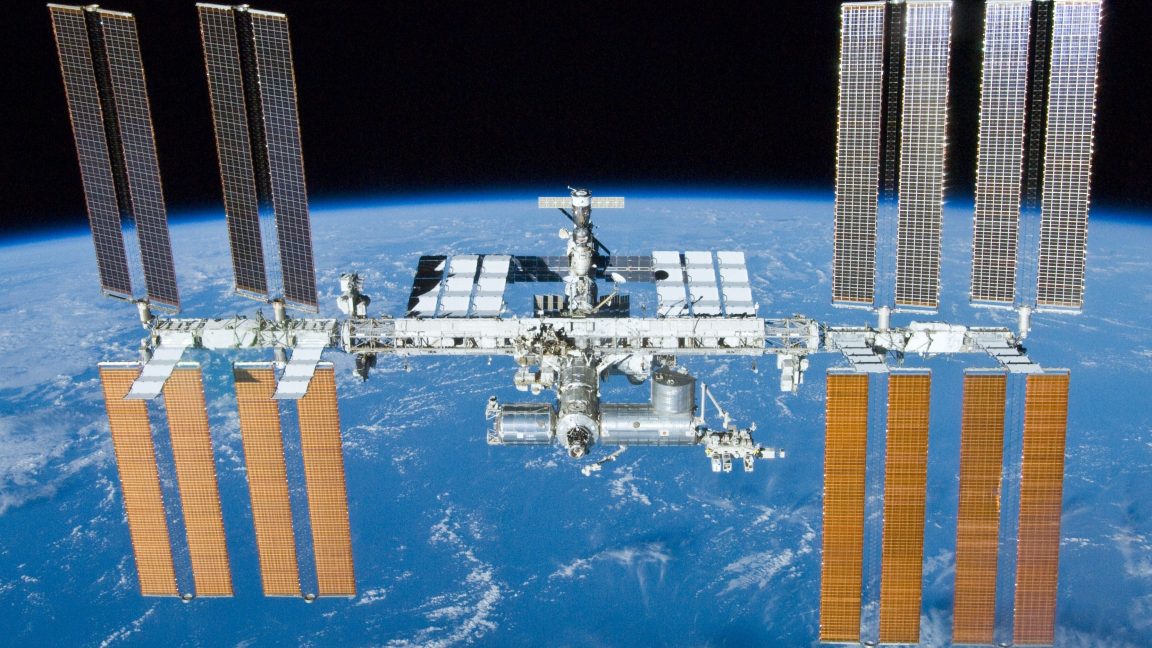
NASA has confirmed that the Russian segment of the International Space Station (ISS) is once again losing atmosphere to the vacuum of space. The leak, which centers on a small Russian module used as a docking transfer tunnel, is a recurring headache for engineers that the agency had hoped was finally resolved earlier this year.
The issue stems from the PrK module, a transfer tunnel connected to the Zvezda Service Module. For over five years, teams from both NASA and Roscosmos have been chasing microscopic structural cracks in the module’s hull. These fissures are notoriously difficult to locate and even harder to seal permanently in the harsh environment of low Earth orbit.
In January, there was a brief moment of optimism. NASA reported that after a series of targeted inspections and the application of specialized sealants, the pressure within the PrK segment had reached a “stable configuration.” For the space community, it seemed like a victory over a stubborn engineering flaw.
The Leak Returns
That stability didn’t last. According to NASA, the leak resurfaced three weeks ago. The problem became evident on May 1, shortly after Russian cosmonauts finished unloading cargo from the Progress 95 spacecraft. Roscosmos technicians noticed a gradual drop in pressure within the PrK module, signaling that the sealants had failed or new cracks had emerged.
“Teams performed data analysis, which indicated a loss of about one pound per day,” NASA spokesman Josh Finch stated. He noted that Roscosmos has since allowed the pressure in the transfer tunnel to decrease gradually while monitoring the rate of loss. To manage the situation, the area is being maintained at a lower pressure with occasional repressurizations as needed.
While NASA emphasizes that there are no immediate impacts on station operations or the safety of the crew currently on board, the persistence of the leak is fueling a deeper debate about the aging infrastructure of the orbital laboratory.
The Risk Matrix and the 2030 Deadline
Publicly, NASA has tended to downplay the severity of these leaks. However, internal documents tell a more urgent story. The agency utilizes a 5×5 “risk matrix” to evaluate threats to spaceflight; internal reports suggest the Russian leaks have been flagged as a “5” for both likelihood and consequence. In closed-door meetings, the potential for “catastrophic failure” has been a point of genuine discussion.
For years, Roscosmos managed the issue by simply keeping the hatch to the PrK module closed, isolating the leak from the rest of the station. This stopgap measure was intended to carry the ISS through its planned retirement in 2030.
But the timeline is shifting. NASA and the U.S. Congress are currently exploring options to extend the station’s lifespan to 2032 or beyond. With some modules now approaching three decades in space, the reappearance of structural cracking raises a fundamental question: is it physically viable to keep the ISS pressurized for another several years?
The Push for Commercial Alternatives
The dilemma is compounded by NASA’s struggle to transition to a commercial model for orbital habitats. The agency’s current strategy involves funding the development of private space stations, where NASA would act as one of several anchor tenants. However, this transition has been rocky, with some private firms expressing frustration over NASA’s desire to keep the ISS operational longer than originally planned.
Phil McAlister, the former director of commercial spaceflight at NASA, argues that the returning leaks are a clear signal that the era of the ISS is ending. He suggests that the agency would be better served by pivoting fully to modern, cost-effective private platforms rather than attempting to patch up a 30-year-old structure.
“This further confirms the wisdom of the current policy of retiring the ISS in 2030 and replacing it with more modern, more cost-effective, and safer commercial platforms,” McAlister said.