Moscow Outsources Air Defense: Russian Banks Now Authorized to Shoot Down Drones
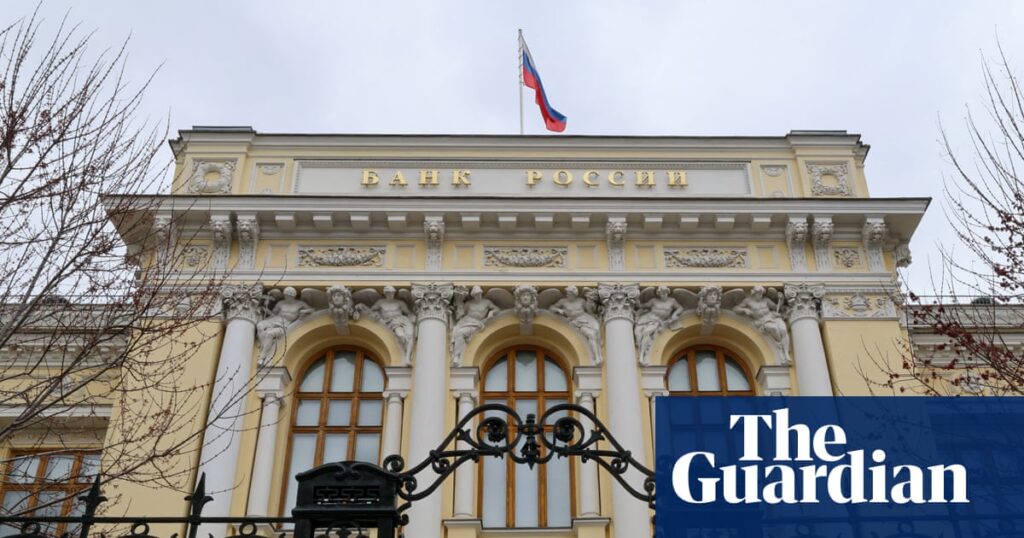
Table of Contents
Privatizing the Perimeter
The Kremlin is shifting the burden of national security onto the balance sheets of its financial sector. In a move that highlights the increasing strain on Russia’s centralized military infrastructure, the Russian parliament has passed a law authorizing commercial banks and the federal reserve to operate their own air defense systems to counter Ukrainian drone incursions.
The legislation allows institutions like Sberbank—Russia’s largest lender—to arm their own staff and deploy countermeasures against unmanned aerial vehicles (UAVs) without the direct involvement of special forces. Crucially, the cost of procuring and maintaining these systems will be borne by the banks themselves, not the state. Anatoly Aksakov, head of the State Duma’s financial committee, confirmed the shift in funding and operational responsibility via the RBC news outlet.
The Gap in the Shield
This pivot to privatized defense is a symptom of a broader strategic failure in Moscow’s air defense posture. As Kyiv continues to scale its long-range drone campaign, targeting oil refineries, ammunition depots, and military electronics factories, Russia has been forced to cluster its high-end surface-to-air missile (SAM) batteries around Moscow and other high-priority administrative hubs.
This clustering has left vast swathes of the Russian interior and critical economic infrastructure—including the banking hubs that facilitate war financing—effectively undefended. By allowing the business lobby to step in, the Kremlin is attempting to plug these gaps. Alexander Shokhin, head of Russia’s most influential business lobby, recently informed Vladimir Putin that Russian companies are not only prepared but eager to purchase heavier weapons and electronic jamming systems to protect their assets.
The Tech of Desperation: Electronic Warfare and Kinetic Defense
While the specific hardware being deployed by banks remains classified, the move likely involves a mix of signal jammers (electronic warfare) and short-range kinetic interceptors. Electronic warfare (EW) is the preferred method for protecting urban financial centers, as it can disrupt the GPS and radio-frequency links of drones without the risk of bringing down a missile over a populated city center.
However, the transition from state-run military defense to corporate-managed security introduces significant operational risks. The integration of private security forces operating heavy weaponry within civilian financial districts creates a chaotic air-traffic environment and raises questions about the training and oversight of the “armed staff” mentioned in the legislation.
Geopolitical Friction and the Kyiv Threat
The domestic security crisis in Russia coincides with a sharp escalation in rhetoric toward foreign diplomats. Russia recently announced a “systematic” strike campaign targeting decision-making centers in Kyiv, accompanied by an urgent warning for foreign citizens and diplomats to evacuate the city. This move has been widely characterized by Ukraine as “blackmail,” and has drawn condemnation from nearly 50 countries at the United Nations.
The EU and several Asian allies, including Japan and South Korea, have issued joint statements refusing to be intimidated by these threats. Germany and Norway have already summoned Russian ambassadors to deliver formal reprimands, signaling a hardening of diplomatic ties as Russia attempts to leverage the safety of foreign embassies to pressure Kyiv.
The Logistics of Endurance
As Russia privatizes its defense, Ukraine is securing its supply chain through unconventional procurement. The Czech Republic has emerged as a central hub for artillery munitions, with the defense ministry announcing contracts to deliver approximately one million rounds in 2026. This follows a trajectory of 1.5 million rounds delivered in 2024 and 1.8 million the previous year.
The initiative is funded through a complex mechanism involving the yields of frozen Russian assets provided by the European Commission, totaling nearly €1 billion this year. Despite political shifts in Prague—including the entry of anti-Ukrainian partners into government under Prime Minister Andrej Babis—President Petr Pavel has ensured the project remains operational, maintaining the flow of large-caliber ammunition essential for Ukraine’s counter-battery operations.