Microsoft’s High-Stakes Bet on Snapdragon X2: Analyzing the New Surface Pro and Laptop Pricing
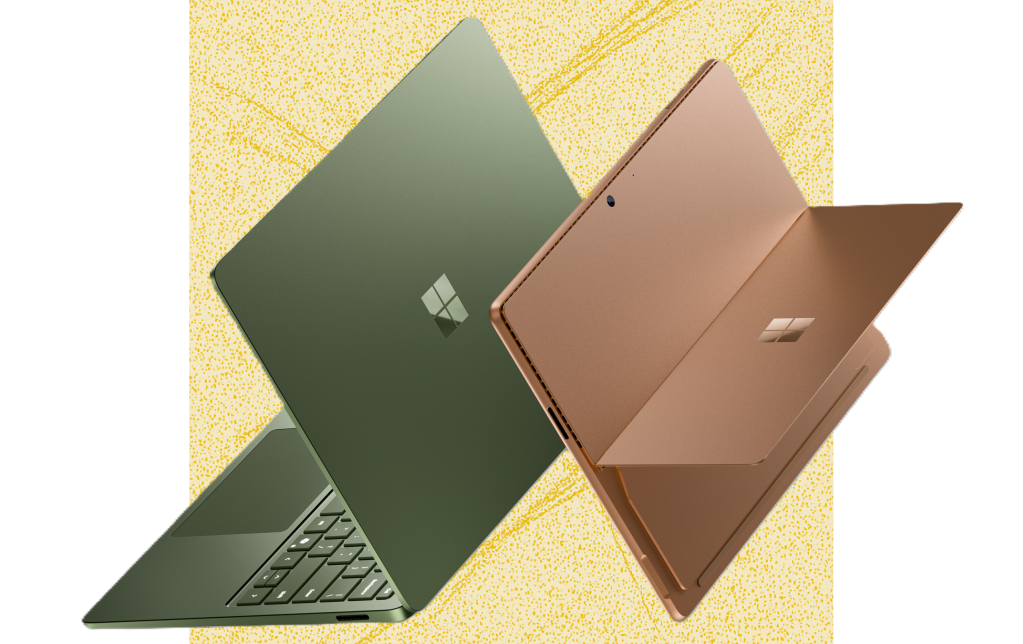
Table of Contents
A Calculated Pivot Toward the Premium Tier
For years, the central criticism of the Microsoft Surface line has been a perceived imbalance: high costs paired with hardware that occasionally lagged behind the cutting edge of the broader PC market. With the launch of the Surface Laptop 8 and Surface Pro 12, Microsoft isn’t trying to silence those critics with lower prices. Instead, they are leaning into the ‘premium’ label, positioning these devices as the definitive flagship experience for the Windows-on-ARM era.
The numbers tell a clear story of a shifting strategy. The new 13-inch Surface Pro 12 starts at $1,499, a significant jump from the $999 entry point of the 2024 Surface Pro 11th Edition. Similarly, the Surface Laptop 8—available in 13.8-inch and 15-inch configurations—now starts at $1,599, whereas its predecessor, the Laptop 7, debuted at $999. This isn’t just a price hike; it’s a statement of intent. Microsoft is no longer competing with budget Chromebooks or entry-level laptops; it is targeting the professional tier where margins are higher and performance expectations are absolute.
- Aggressive Pricing: Entry points for the Pro and Laptop lines have increased by $500 to $600 compared to 2024 models.
- Snapdragon X2 Integration: The new lineup utilizes the Snapdragon X2 Plus (10-core) and X2 Elite (12-core), focusing on efficiency over the extreme 18-core variants.
- Display Upgrades: The 15-inch Laptop now features a higher pixel density (262 PPI) and improved brightness (600 nits).
- Hardware Refinements: While chassis designs remain largely unchanged, storage ceilings have risen to 2TB on the Laptop 8.
The Silicon Shift: Snapdragon X2 Performance and Trade-offs
At the heart of these machines is the Qualcomm Snapdragon X2 platform. However, it is important to note that Microsoft is not utilizing the absolute top-end of the Qualcomm stack. While the industry has seen the 18-core X2 Elite and X2 Elite Extreme, the Surface Laptop 8 and Pro 12 opt for the 10-core X2 Plus and 12-core X2 Elite.
This decision suggests a priority on thermal management and battery longevity over raw peak benchmarks. Microsoft claims a 58% improvement in graphics performance over the previous generation. However, this metric requires context. In internal testing of other X2-powered devices, such as the Asus ZenBook A16, we found that while peak performance is impressive, sustained loads can trigger thermal throttling—a risk that persists for Surface devices given their slim, fan-constrained profiles. If the thermal architecture remains identical to the previous generation, the ‘58% gain’ may only be realized in short bursts rather than prolonged creative workloads.
Memory and Storage Flexibility
Where Microsoft is making up for the price hike is in the baseline specifications. The Surface Laptop 8 is no longer constrained by the 1TB storage ceiling of the 2024 models, now offering removable PCIe Gen 4 SSD options up to 2TB. Memory configurations are equally robust, spanning 16GB, 24GB, 32GB, and 64GB. This move targets the ‘power user’ who has previously migrated to MacBook Pros for the ability to handle massive datasets and high-resolution video editing without swapping files.
The Surface Pro 12: Iteration Over Innovation
If the Laptop 8 feels like a refinement, the Surface Pro 12 feels like a placeholder. Aside from the processor swap and the removal of the ‘Sapphire’ color option (leaving Dune, Platinum, and Black), very little has changed. The OLED display remains a high-end option, but the fundamental chassis is a carry-over.
The value proposition here is heavily dependent on the accessories. Microsoft is currently bundling the Pro Keyboard for free through June 30, a necessary incentive given the $1,499 starting price. It’s worth noting the distinction between the standard Pro Keyboard and the Pro Flex keyboard; the latter allows for detached, wireless operation, effectively turning the Surface Pro into a true tablet-first device. The former requires a physical connection to function, a limitation that feels increasingly dated in a ‘premium’ product.
Visuals and Input: The MIPI Camera Advantage
One area where Microsoft continues to lead is the integrated webcam. By leveraging MIPI (Mobile Industry Processor Interface) cameras—a technology borrowed from the smartphone world—Surface devices can transmit larger volumes of data more quickly than traditional laptop sensors. This prevents the heavy compression often seen in 1080p webcams, resulting in a cleaner, more natural image.
Interestingly, the Surface Pro 12 pushes this further with 1440p resolution, while the Laptops stick to 1080p. This suggests Microsoft views the Pro as the primary tool for high-stakes executive communication and remote presentations, where image clarity is paramount.
What This Means for the Windows Ecosystem
The decision to price these devices so aggressively has two primary implications for the market. First, Microsoft is attempting to ‘anchor’ the value of Windows-on-ARM. By creating a high-priced, high-performance flagship, they make mid-tier ARM laptops from OEMs (like Dell, HP, or Lenovo) look like bargains, accelerating the adoption of Qualcomm silicon across the board.
Second, it indicates a willingness to leave the ‘budget’ segment to partners. Brett Ostrum, Corporate VP of Surface Devices, hinted at upcoming ‘incremental news’ regarding lower price point devices. This suggests a tiered strategy: Surface as the ‘Halo’ product (the gold standard) and OEM partners as the volume drivers for the mass market.
Battery Life: Theory vs. Reality
Microsoft claims up to 20 hours of battery life for the 13.8-inch Laptop. However, real-world usage rarely mirrors laboratory claims. In our testing of the Snapdragon X2 Elite Extreme in the Asus ZenBook A16, we clocked approximately 13 hours of continuous video streaming. While 13 hours is still exceptional by x86 standards, it highlights a gap between marketing projections and user experience. For the professional, the ’20-hour’ claim should be viewed as a best-case scenario under light productivity, not a guaranteed runtime for heavy multitasking.
Comparison: Surface Laptop 8 vs. Previous Generation
| Feature | Surface Laptop 7 (2024) | Surface Laptop 8 (2026) |
|---|---|---|
| Entry Price | $999 | $1,599 |
| Processor | Snapdragon X Series | Snapdragon X2 Plus/Elite |
| Max Storage | 1TB | 2TB (PCIe Gen 4) |
| Display (15″) | Standard Resolution | 262 PPI / 600 Nits |
| Graphics Claim | Baseline | +58% over Gen 1 |
Frequently Asked Questions
Is the Surface Laptop 8 worth the $600 price increase over the Laptop 7?
For most users, the jump from $999 to $1,599 is steep. The value lies in the 2TB storage ceiling, the improved 15-inch display, and the X2 processor’s efficiency. If you are a power user requiring 32GB+ of RAM and high-speed storage, the upgrade is justifiable. For casual browsing and office work, the Laptop 7 remains a more pragmatic choice.
What is a MIPI camera and why does it matter for my webcam?
MIPI cameras are high-speed interfaces originally designed for mobile phones. Unlike traditional laptop cameras that compress data to fit through narrow bandwidths, MIPI allows the sensor to send more raw data to the processor. This results in better dynamic range, less noise, and a sharper image, especially in suboptimal lighting.
Can the Surface Pro 12 run all my Windows apps?
Because it uses the Snapdragon X2 (ARM architecture), it relies on the Prism emulation layer to run traditional x86 apps. While most apps work seamlessly, some high-end gaming or specialized industrial software may still experience performance hits or compatibility issues. Check the official Windows-on-ARM compatibility list before purchasing.
How does the battery life actually compare to a MacBook Air?
The Snapdragon X2 brings Windows closer than ever to Apple’s M-series efficiency. While Microsoft claims 20 hours, real-world tests suggest 13-15 hours of active use. This puts it in the same ballpark as the MacBook Air, though Apple still holds a slight edge in standby time and consistent power draw across different apps.
Should I buy the Pro Keyboard or the Pro Flex Keyboard?
If you frequently use your Surface Pro as a tablet (detached from the keyboard), the Pro Flex is the superior choice due to its wireless capabilities. If you primarily use it as a laptop replacement and want to save money, the standard Pro Keyboard (which is often bundled for free) is sufficient, provided you don’t mind the physical tether.
The ARM Gamble
Ultimately, the Surface Laptop 8 and Pro 12 are not just computers; they are instruments of a larger corporate strategy. By moving all-in on Qualcomm, Microsoft is trying to break the x86 hegemony that has defined the PC for decades. If they can convince the market that a $1,599 ARM laptop is the new standard for productivity, they will have successfully pivoted the entire ecosystem toward a future of instant-on wake times and multi-day battery life.
Whether the consumer is willing to pay that ‘premium’ for the privilege remains the biggest question mark of 2026.