Microsoft Unleashes Surface Laptop Ultra: A High-Stakes Bet on NVIDIA-Powered Arm Silicon
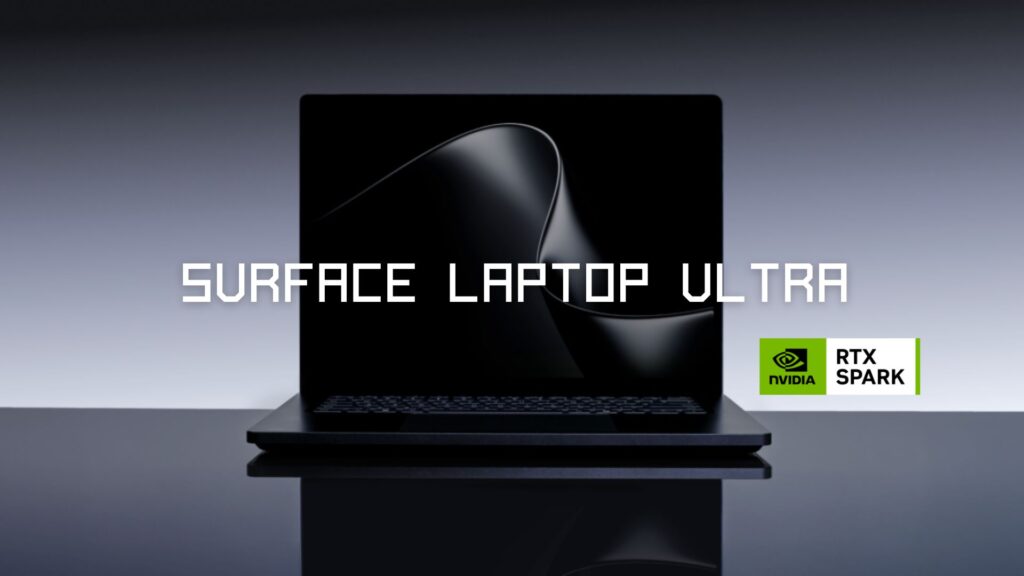
Table of Contents
A Pivot Toward Professional Power
For years, Microsoft’s Surface line has balanced portability with productivity, but it has largely avoided the ‘ultra-performance’ arena, leaving that territory to the MacBook Pro and high-end x86 workstations. That changed this week at Computex 2026, where Microsoft unveiled the Surface Laptop Ultra. This isn’t just another iterative refresh; it is a fundamental architectural shift that leverages a deep partnership with NVIDIA to bring workstation-class compute to a portable Arm-based chassis.
The Surface Laptop Ultra represents Microsoft’s most aggressive attempt to date to capture the professional creator and developer market. By moving away from the traditional x86 reliance and embracing an Arm-centric approach powered by NVIDIA silicon, Microsoft is attempting to solve the perennial struggle of Windows laptops: balancing raw power with thermal efficiency and battery life.
The RTX Spark: Silicon Strategy
At the core of the machine is the NVIDIA RTX Spark platform. This custom silicon—previously whispered about in leak circles as the N1X—combines a 20-core NVIDIA Grace CPU (co-developed with MediaTek) with a high-performance Blackwell-based RTX GPU. The two are tethered by the NVLink-C2C chip-to-chip interconnect, which allows for the kind of data throughput usually reserved for server racks.
The most significant leap here is the unified memory architecture. The Ultra can be configured with up to 128GB of unified memory, allowing the system to dynamically shift resources between the CPU and GPU. This is a strategic move to support the rise of local Large Language Models (LLMs). According to Microsoft, this configuration allows the device to run 120-billion-parameter AI models entirely on-device, delivering roughly one petaflop of AI compute. By removing the bottleneck between discrete VRAM and system RAM, the device can handle massive 3D scenes and compile cycles that would typically crash a standard consumer laptop.
Display and Industrial Design
The hardware is wrapped in a chassis weighing under 4.5 pounds, available in Platinum and Nightfall. To manage the heat generated by the Blackwell GPU, Microsoft has integrated a prominent dual-fan cooling system designed to mitigate the thermal throttling that has plagued previous high-performance Surface attempts.
The visual centerpiece is a 15-inch mini-LED PixelSense Ultra touchscreen. With a resolution of 2880 x 1920 (262 PPI) and a peak HDR brightness of 2,000 nits, it is the most capable display Microsoft has ever put in a laptop, clearly aimed at HDR video editors and colorists who previously viewed the MacBook Pro’s Liquid Retina XDR as the gold standard.
Microsoft has also played catch-up on connectivity, eschewing the ‘dongle life’ in favor of a full HDMI port, USB-C, USB-A, and a dedicated SD card reader—a necessary inclusion for the target demographic of field photographers and videographers.
Windows 11: Optimized for Arm
Hardware of this scale is useless without an OS that can utilize it. Microsoft has introduced a new workload profile scheduling system within Windows 11, specifically tuned to distribute tasks across the 20 Grace cores. To handle the memory demands of the RTX Spark, the OS now features significantly higher limits on the total system memory accessible by the GPU, with more efficient page size management in shared memory regions.
Compatibility remains the biggest hurdle for any Arm transition. Microsoft is relying on the Prism emulation layer, which has been optimized for this specific microarchitecture. By utilizing AVX and AVX2 instruction set extensions, Prism aims to make the transition from x86 apps nearly transparent for the user.
Security is also being handled through a new partnership with NVIDIA to bring the OpenShell runtime to Windows. This creates sandboxed containment primitives for local AI agents like Hermes and OpenClaw, ensuring that autonomous AI tools cannot interfere with the core operating system’s stability.
Gaming and Availability
While aimed at pros, the Surface Laptop Ultra is a formidable gaming machine. The 6,144 CUDA cores and fifth-generation Tensor Cores (FP4 precision) allow for 1440p gaming at over 100 FPS. Crucially, Microsoft has worked with Epic and BattlEye to ensure native anti-cheat support, while Riot Games has confirmed native Arm versions of League of Legends and Valorant.
The Surface Laptop Ultra is expected to hit stores in Fall 2026. While official pricing hasn’t been disclosed, industry analysts expect a premium entry point, exacerbated by ongoing global RAM supply constraints and the high cost of the Blackwell-integrated silicon.


