Microsoft Unearths the Roots of the PC Era with Earliest Known DOS Source Code
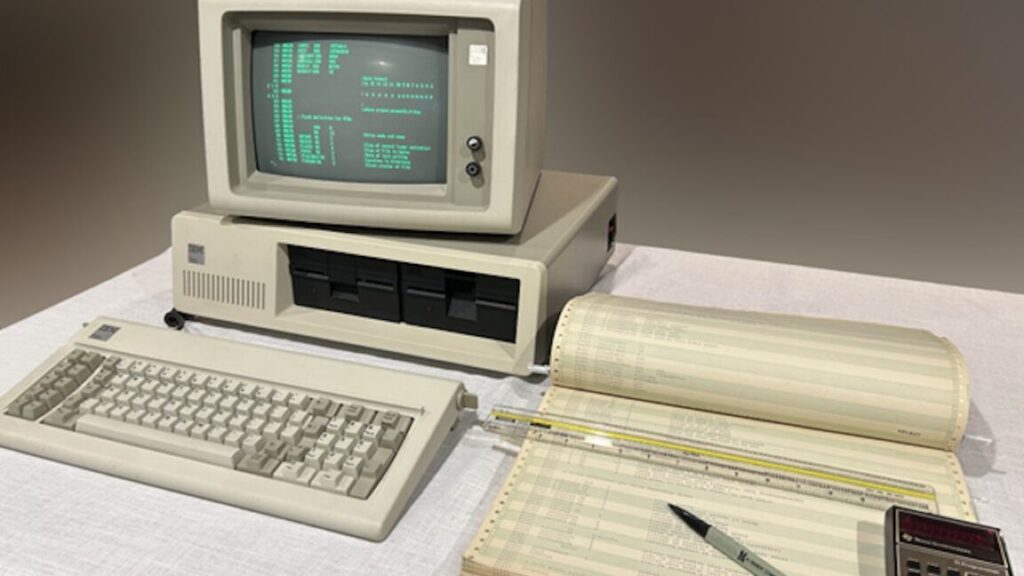
Table of Contents
The digital archaeology of a tech empire
Microsoft has spent the last few decades periodically revisiting its origins, occasionally releasing slices of the software that built its consumer PC empire. This week, the company went further back than ever before, publishing what it describes as the earliest DOS source code discovered to date. The release isn’t just a dump of old files; it is a piece of digital archaeology that predates the very branding of MS-DOS.
The release includes the source for the 86-DOS 1.00 kernel, several development snapshots of the PC-DOS 1.00 kernel, and early versions of ubiquitous utilities like CHKDSK. For most modern users, these are names associated with the clunky, command-line interface of the 1980s, but for historians and developers, this is the blueprint of the modern computing era.
From ‘Quick and Dirty’ to Industry Standard
To understand why this specific code is significant, one has to look at the frantic scramble of the early 1980s. The operating system didn’t start at Microsoft. It began with programmer Tim Paterson, who created 86-DOS (originally dubbed QDOS, for “Quick and Dirty Operating System”) for an Intel 8086-based computer kit sold by Seattle Computer Products.
At the time, Microsoft was under immense pressure to deliver an operating system for the IBM PC 5150, which was then still in development. Rather than building from scratch, Microsoft licensed 86-DOS and brought Paterson on board to continue the work, eventually purchasing the rights to the software outright. This strategic move allowed Microsoft to license the software to IBM as PC-DOS while maintaining the right to sell it to other manufacturers as MS-DOS. This dual-licensing strategy essentially guaranteed that as IBM clones flooded the market throughout the ’80s and ’90s, Microsoft’s software became the universal language of the personal computer.
The struggle against paper and ink
Perhaps the most surprising aspect of this release is that the code didn’t exist on a disk or a server. It existed on paper. Because the code is so old, it had not been preserved in a digital format, meaning the “DOS Disassembly Group”—a team of historians and preservationists led by Yufeng Gao and Rich Cini—had to manually transcribe and scan the code from physical printouts provided by Paterson himself.
The process was an exercise in frustration. According to Microsoft representatives Stacey Haffner and Scott Hanselman, modern Optical Character Recognition (OCR) software struggled significantly with the quality and age of the printouts, requiring a level of human intervention and verification that turned a simple upload into a painstaking recovery project.
A growing archive of legacy code
This release is part of a broader, albeit sporadic, effort by Microsoft to open-source its legacy software. In 2014 and 2018, the company released MS-DOS versions 1.25 and 2.0, followed more recently in 2024 by the release of MS-DOS 4.0. All of these are now hosted in the same GitHub repository, creating a chronological map of how the company’s early software evolved.
The company has also open-sourced other oddities from its catalog, including the original Zork games and the 1995 Microsoft 3D Movie Maker, though the latter’s promised modernization has largely stalled. There is also an open-source remake of the old MS-DOS Editor; while it isn’t a 1:1 replica of the original EDIT.COM, it serves as a functional homage to the era.
This latest discovery follows a trend of early 86-DOS artifacts resurfacing. Only two years ago, the earliest known version of 86-DOS was rediscovered and uploaded to the Internet Archive, suggesting that as the pioneers of the industry age, more of the “lost” code that shaped the modern world may still be waiting in old filing cabinets or forgotten drives.