Lumio Vision 9 Review: Does the BOSS Processor Actually Fix the Smart TV Lag?
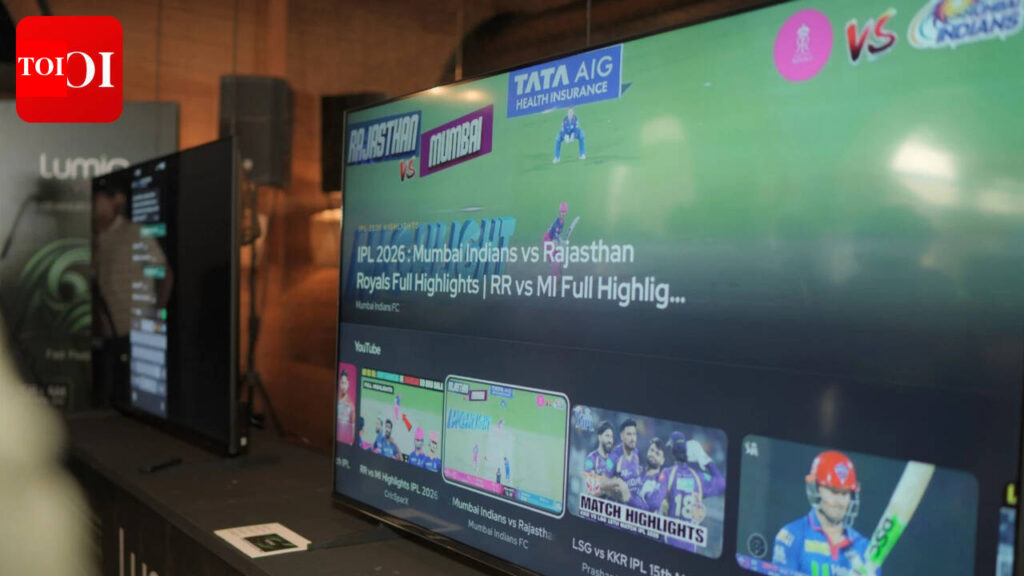
Table of Contents
The Quest for a Lag-Free Interface
For most of us, the experience of owning a mid-range smart TV is a exercise in patience. You press a button on the remote, and there is a perceptible, agonizing half-second gap before the menu reacts. Lumio is betting that users are tired of this compromise. The Vision 9, specifically the 55-inch model retailing at Rs 54,999, is the company’s third attempt to solve the ‘interface lag’ problem that plagues the mid-tier market.
On paper, the Vision 9 fits the expected profile for 2026: a Quantum Dot (QD) mini-LED panel, Google TV running on Android 14, and a handful of high-bandwidth ports. But the real story here isn’t the panel—it’s the silicon. Lumio has integrated what they call the BOSS processor, a dedicated chipset designed specifically to decouple the UI navigation from the background app processing.
Performance in the Wild
After a week of rigorous testing, the ‘speed-first’ claim isn’t just marketing fluff. Navigating the Google TV home screen feels remarkably fluid. While most TVs in this price bracket struggle when switching between heavy apps like Netflix and Disney+, the Vision 9 handles the transition with a snappiness usually reserved for flagship OLEDs from Sony or Samsung. The BOSS processor seems to prioritize input latency, ensuring that the remote’s signals are processed almost instantaneously.
The QD mini-LED panel delivers the punch we’ve come to expect from this tech. Black levels are significantly deeper than standard LED-LCDs, though there is some noticeable blooming around high-contrast white text on black backgrounds—a common trait of mini-LEDs with limited dimming zones. However, the color accuracy and peak brightness make it an excellent choice for bright living rooms where glare is a constant battle.
Gaming and Connectivity
Lumio hasn’t skimped on the connectivity. The inclusion of three HDMI 2.1 ports is a strategic win, positioning the Vision 9 as a viable companion for the PlayStation 5 and Xbox Series X. In our tests, the 4K/120Hz support worked seamlessly, and the low-latency mode effectively reduced input lag to a point where competitive gaming feels viable.
The choice of Android 14 for the software base is also a smart move. It brings better memory management and a more refined permissions system, which, combined with the BOSS processor, prevents the systemic slowdown that usually happens after a few months of app installations.
The Trade-offs
No device at this price point is without flaws. While the interface is fast, the built-in audio is mediocre. The downward-firing speakers lack bass and tend to flatten dialogue during action-heavy scenes. Any serious buyer will need to budget for a dedicated soundbar to match the visual quality of the mini-LED panel.
Furthermore, while the BOSS processor handles the UI brilliantly, the actual app load times are only marginally faster than the competition. The speed is in the navigation, not necessarily in how fast a 4K stream buffers. It is a subtle but important distinction: Lumio has fixed the feeling of the TV, but the laws of network bandwidth and app optimization still apply.