Lenovo Doubles Down on Local AI with ThinkStation P4 Workstation Launch
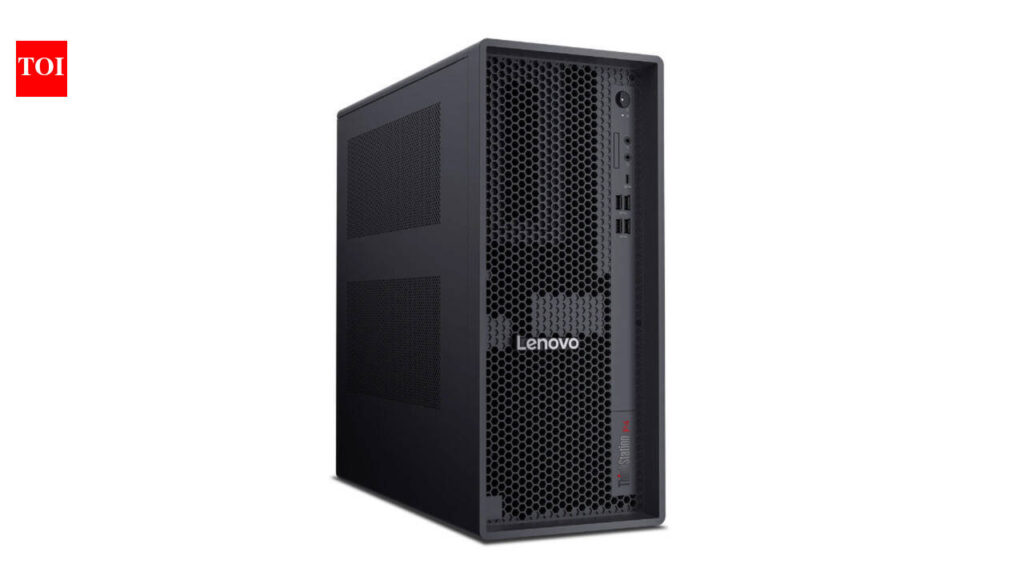
Table of Contents
A Shift Toward the Edge
Lenovo has officially expanded its professional computing lineup with the debut of the ThinkStation P4. While the workstation market has traditionally been defined by massive towers and server-room footprints, the P4 represents a tactical pivot toward ‘edge AI’—the growing demand for high-compute power located physically close to the developer rather than tucked away in a cloud instance.
The P4 arrives at a time when the industry is grappling with the cost and latency of cloud-based AI. By prioritizing a compact chassis that doesn’t sacrifice thermal headroom, Lenovo is targeting a specific demographic: data scientists, 3D animators, and software engineers who need to run local Large Language Models (LLMs) or complex simulations without the recurring subscription costs of AWS or Azure.
Hardware Specifications and Thermal Management
Under the hood, the ThinkStation P4 is built around the latest Intel Xeon W processors, providing the multi-core throughput necessary for heavy multitasking and parallel processing. However, the real story here is the GPU integration. Lenovo has optimized the P4 to support NVIDIA RTX Ada Generation GPUs, which are specifically engineered for professional workloads like CAD and AI training.
One of the primary hurdles for compact workstations is thermal throttling. To combat this, the P4 utilizes a redesigned airflow architecture that pushes air more efficiently across the VRMs and memory slots. This ensures that when the system is pegged at 100% CPU utilization during a long render or model training session, the clock speeds remain stable rather than dipping to protect the hardware.
Memory and Storage Scalability
The P4 doesn’t just rely on raw speed; it offers the flexibility required for enterprise environments. The system supports high-capacity DDR5 ECC memory, which is critical for preventing data corruption during long-term computations. Storage is handled via a mix of PCIe Gen 5 NVMe slots, allowing for the blistering read/write speeds required when moving massive datasets—a common bottleneck in AI development.
The Local AI Play
Why does a compact workstation matter in 2026? The answer lies in data sovereignty and privacy. Many enterprises are hesitant to upload proprietary code or sensitive customer data to public clouds for AI processing. The ThinkStation P4 allows these companies to maintain an ‘air-gapped’ or highly secure local environment where AI models can be fine-tuned and executed privately.
This positions Lenovo directly against competitors like Dell’s Precision line and HP’s Z-series. While those brands offer similar specs, Lenovo’s current strategy seems focused on the ‘prosumer’ transition—bridging the gap between a high-end gaming PC and a full-scale rack server.
Market Position and Availability
The ThinkStation P4 is expected to enter the market with a variety of configurations, ranging from entry-level professional setups to fully loaded AI powerhouses. While official pricing varies by region and specific hardware choices, the P4 is designed to be a scalable investment, allowing users to upgrade GPUs and RAM as their project requirements grow.
For the average creative professional, the P4 is a luxury. But for the growing sector of AI developers who find the cloud too expensive and the laptop too weak, it fills a critical void in the hardware ecosystem.


