Lenovo Doubles Down on Hardware Experimentation at MWC 2026: Foldable Handhelds and Modular PCs
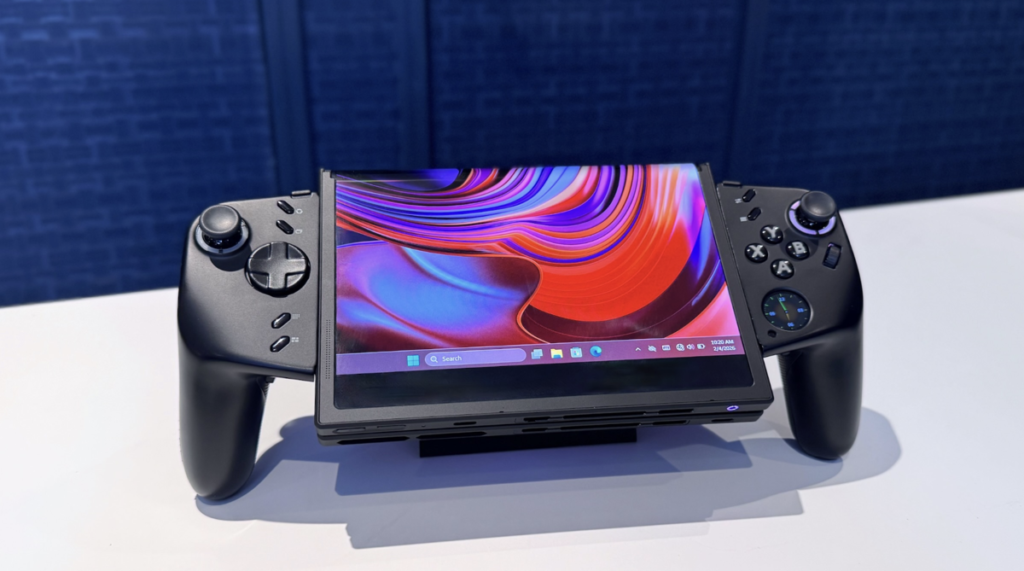
Table of Contents
Barcelona Becomes a Playground for Lenovo’s Concept Lab
Lenovo has arrived at Mobile World Congress 2026 with a strategy that can only be described as aggressive diversification. Following a dominant showing at CES earlier this year, the PC giant is using the Barcelona stage to signal a shift away from traditional chassis designs, leaning heavily into modularity, foldable displays, and dedicated AI hardware.
While the company announced a broad swath of consumer and enterprise laptops, the real narrative of Lenovo’s presence is found in its six new concept products. These aren’t just aesthetic exercises; several of them carry specific internal specifications that suggest Lenovo is testing the waters for production-ready hardware rather than mere prototypes.
The Legion Go Fold: A New Category of Gaming
The center of attention is undoubtedly the Legion Go Fold Concept. Coming shortly after a series of leaks, the device attempts to bridge the gap between a handheld console and a full-fledged productivity machine. It features a 7.7-inch POLED display that unfolds into an 11.6-inch canvas, usable in both portrait and landscape orientations.
Crucially, the device isn’t just a larger screen. It ships with a detachable wireless keyboard that transforms the unit into a clamshell-style Windows laptop. In a clever bit of engineering, one of the controllers doubles as a vertical mouse. Under the hood, Lenovo is utilizing Intel’s Lunar Lake architecture paired with 32GB of RAM, a combination that suggests the company is targeting a high-performance ceiling for this hybrid form factor.
Modularity and the Push for Repairability
Perhaps more significant for the long-term health of the industry is the ThinkBook Modular AI PC Concept. In an era where laptops are increasingly glued together, Lenovo is experimenting with a “Framework-style” approach, allowing users to swap ports and hardware modules as their needs change. The system uses integrated pogo-pin connectors for power and data transfer, supporting a detachable secondary display and a swappable keyboard.
This focus on longevity isn’t limited to concepts. The 2026 T-Series ThinkPad lineup features updated, more repairable designs, echoing the “Space Frame” philosophy seen in the ThinkPad X1 Carbon Gen 14 Aura Edition. It marks a clear pivot toward corporate sustainability goals, moving the needle from planned obsolescence toward user-serviceable enterprise hardware.
3D Creativity and AI Companions
For the creative market, the Yoga Book Pro 3D Concept introduces a glasses-free 3D display powered by an Intel Core Ultra 7 and Nvidia GeForce RTX 5070 graphics. By employing eye-tracking technology, the OLED panels render objects in three dimensions, accompanied by snap-on physical pads on the lower touchscreen to trigger specific menus.
Lenovo is also attempting to move AI off the screen and onto the desk. Two new prototypes, the AI Work Companion and the AI Workmate, aim to serve as physical anchors for the Qira AI agent. The Work Companion acts as a discreet secretary and burnout monitor, while the Workmate—a more anthropomorphic device—supports spatial interaction and can project content onto nearby surfaces, processing most AI inputs locally for improved privacy.
The Production Line: Yoga and ThinkPad Updates
Amidst the conceptual chaos, there is a steady stream of retail hardware. The Yoga 9i 2-in-1 Aura Edition takes center stage for consumers, sporting an Intel Core Ultra Series 3 chip and a return of the headphone jack—a small but welcomed victory for users. Priced at $1,949 and launching in May, it features a magnetic Yoga Pen Gen 2 that enables a specialized Canvas mode.
On the enterprise side, the new T-Series models are receiving significant quality-of-life upgrades, including larger speakers and an optional 5MP camera, ensuring that the workhorse of the corporate world keeps pace with the demanding requirements of hybrid video conferencing.


