Leaf Space Pivots from Ground Stations to Orbital Networking with TreeNet
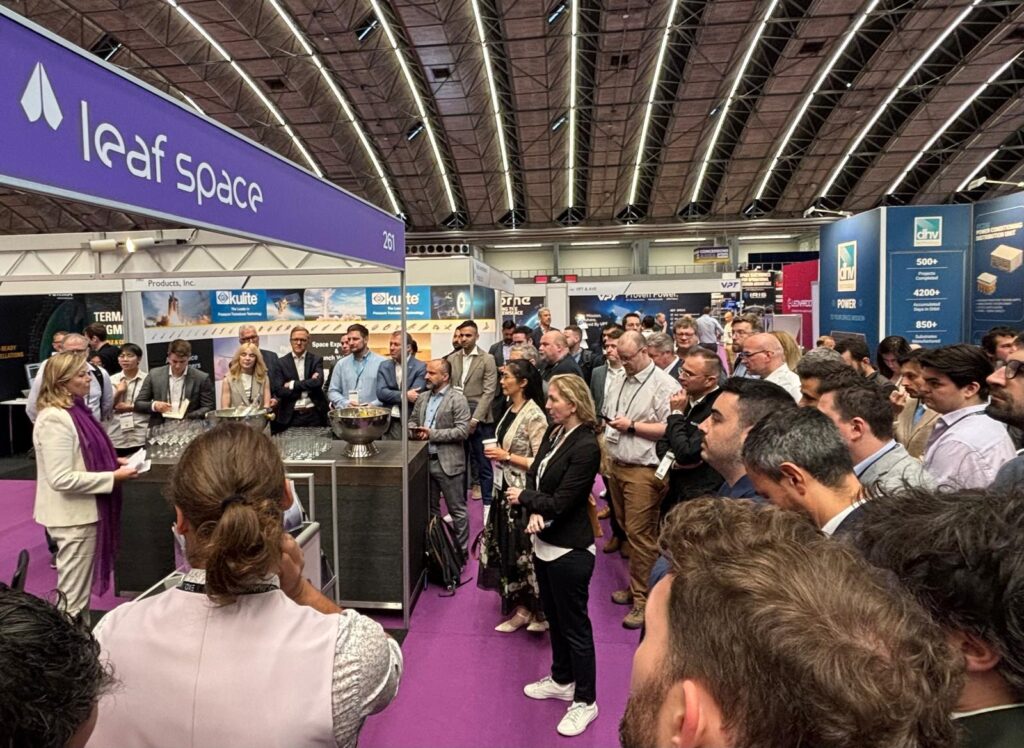
Table of Contents
Bridging the Gap Between Earth and Orbit
For years, the primary bottleneck in satellite operations hasn’t been the hardware in orbit, but the friction of getting data back to Earth. Leaf Space, the Italian ground segment operator, is attempting to solve this by treating the vacuum of space not as a series of isolated endpoints, but as a living network. The company recently unveiled TreeNet, a space connectivity service designed to transform individual satellites into nodes within a wider, interconnected communications web.
The announcement, made during the SmallSat Europe conference, marks a strategic evolution for Leaf Space. While the company built its reputation on Ground Segment-as-a-Service (GSaaS), TreeNet represents a push to extend that logic into the orbital plane. By creating a seamless layer of connectivity, Leaf Space aims to reduce the reliance on rigid, scheduled ground-station passes, allowing data to flow more dynamically across a constellation before eventually descending to Earth.
According to CEO Cristina Zanchi, the initiative is about building the missing infrastructure that bridges the gap between orbital operations and existing Earth-based connectivity. This isn’t just a technical upgrade; it is a shift toward a more internet-like architecture for space, where connectivity is an omnipresent utility rather than a scheduled event.
The Alpha Phase: Partnering with the High-Cadence Players
To move TreeNet from a conceptual framework to a functional reality, Leaf Space has entered into a strategic partnership with D-Orbit and EnduroSat. The first phase, dubbed “Alpha,” will see the deployment of four satellites equipped with TreeNet nodes. These launches are slated for the first half of 2027.
The selection of these two partners was not accidental. Giovanni Pandolfi Bortoletto, Leaf Space’s Chief Product Officer and co-founder, noted that D-Orbit and EnduroSat were chosen specifically for their high launch cadence. In the fast-moving world of NewSpace, the ability to iterate quickly is more valuable than a perfect first launch. By leveraging the existing deployment pipelines of these companies, Leaf Space can stress-test the TreeNet nodes in a real-world environment without waiting years for a dedicated launch window.
For D-Orbit, the integration of TreeNet offers a path to simplify mission operations. The ability to maintain in-orbit connectivity allows for more agile, data-driven use cases, potentially reducing the latency between a satellite’s observation and the operator’s receipt of that data. Similarly, Bulgaria-based EnduroSat views this as a way to enhance its “mission-as-a-service” offerings. The demand for an “always-on” connectivity layer has become a primary requirement for modern commercial satellite constellations, and TreeNet is designed to fill that void.
From Ground Segment to Space Backbone
The trajectory of Leaf Space mirrors the broader trend in the space industry: the move toward modular, scalable infrastructure. Founded in 2014 by Pandolfi Bortoletto and Jonata Puglia, the company initially explored launch capabilities before pivoting to ground infrastructure. Today, they manage approximately 40 antennas across 20 global sites, providing critical telemetry and command services to a diverse array of satellite operators.
This ground-up experience provides Leaf Space with a unique advantage. Most orbital networking startups are designing from the satellite backward; Leaf Space is designing from the ground station upward. Having already secured a 35 million euro ($41 million) Series B round in 2023, the company is now positioned to scale this network rapidly.
The commercial ambitions are aggressive. Pandolfi Bortoletto indicated that following the Alpha tests, the company is targeting a rapid industrial ramp-up, with a goal of producing and deploying at least 100 nodes per year starting in the first year of full commercial operations, which is expected by the end of 2027.
If successful, TreeNet could fundamentally change how small-sat operators manage their fleets. Instead of waiting for a satellite to enter the line-of-sight of a specific antenna in Italy or Australia, operators could potentially route data through other TreeNet-enabled nodes, creating a resilient, redundant mesh network in Low Earth Orbit (LEO).