Kuwait Air Defenses Triggered Amid Escalating U.S.-Iran Kinetic Exchange
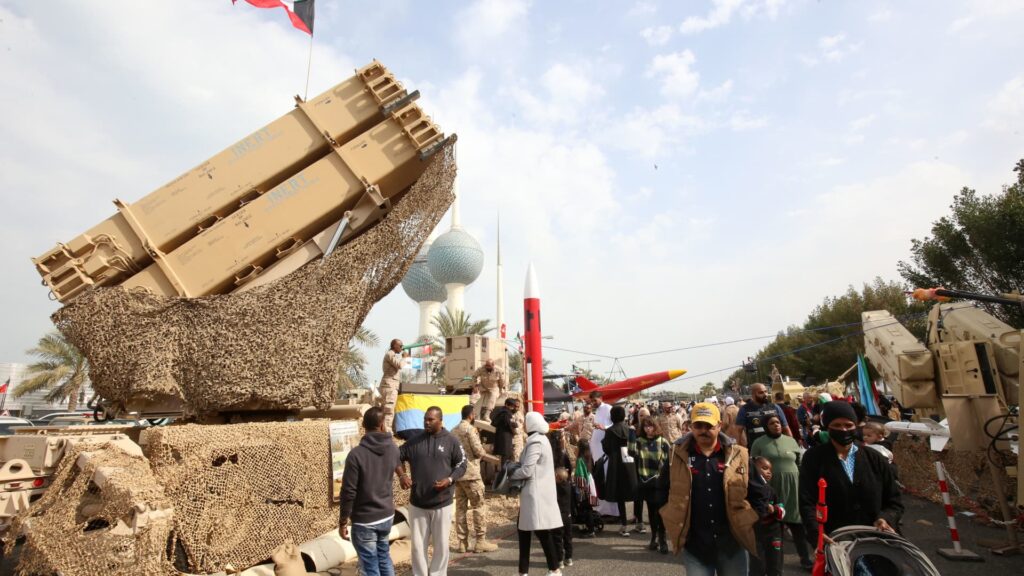
Table of Contents
Interceptions in Kuwait Amid Regional Volatility
Kuwait’s armed forces activated national air defense systems on Thursday, reporting the interception of multiple “hostile missile and drone threats.” In a statement released via X, the military clarified that the loud explosions reported by residents across the country were not the result of successful strikes, but rather the sound of defensive kinetic interceptors neutralizing incoming projectiles.
While the Kuwaiti military did not explicitly name the origin of the threats, the timing coincides with a sharp escalation in direct military engagement between the United States and Iran. The activation of these defenses underscores the precarious security architecture of the Persian Gulf, where the proximity of regional allies to Iranian-backed assets creates a high-friction environment for air superiority and missile defense.
Kinetic Escalation in the Strait of Hormuz
The instability follows a series of targeted U.S. strikes conducted overnight. A U.S. official confirmed that these operations targeted a specific military site deemed a direct threat to U.S. personnel and the flow of commercial maritime traffic through the Strait of Hormuz—one of the world’s most critical energy chokepoints.
The Iranian response was immediate. The Islamic Revolutionary Guard Corps (IRGC), reporting via the state-run Tasnim news agency, claimed to have launched a retaliatory strike against a U.S. air base. This operation was allegedly triggered by a U.S. attack conducted in the vicinity of Bandar Abbas airport. The IRGC issued a stern warning that any further incursions would meet a “more decisive” response, signaling a move toward a more aggressive posture in the region.
Economic Warfare and the Persian Gulf Strait Authority
Beyond the physical battlefield, the U.S. has intensified its campaign of economic attrition. The U.S. Treasury Department announced a new wave of sanctions targeting the Persian Gulf Strait Authority, the Iranian government agency responsible for regulating transit and collecting fees from vessels navigating the Strait of Hormuz.
By targeting this specific entity, the U.S. is effectively attempting to delegitimize the financial mechanisms the IRGC uses to fund its operations. The Treasury warned that any international entity cooperating with the Authority could be viewed as providing material support to the IRGC, thereby exposing themselves to secondary sanctions. This move shifts the conflict from a purely military skirmish to a broader attempt to isolate Iran’s maritime revenue streams.
Market Reaction and Energy Volatility
The intersection of kinetic strikes and financial sanctions has already reverberated through global energy markets. Oil prices saw a sudden spike, with both Brent international benchmarks and U.S. West Texas Intermediate (WTI) futures climbing over 3%. Traders are pricing in the risk of a total blockade or significant disruption in the Strait of Hormuz, which carries roughly one-fifth of the world’s total oil consumption.
The Diplomatic Paradox
Despite the current volatility, the U.S. administration is attempting to maintain a dual-track approach of “maximum pressure” and open diplomacy. During a recent Cabinet meeting, Secretary of State Marco Rubio stated that the U.S. would give diplomatic talks with Iran “every chance to succeed,” noting that some progress had been made in recent discussions.
However, Rubio’s comments framed these negotiations within the context of President Donald Trump’s willingness to utilize military options. The current strategy appears to be a calibrated use of force intended to bring Iran to the negotiating table from a position of weakness, though the activation of air defenses in neutral territories like Kuwait suggests that the risk of miscalculation remains dangerously high.


