Jerome Powell Warns of Institutional Erosion as Fed Faces Political ‘Stress Test’
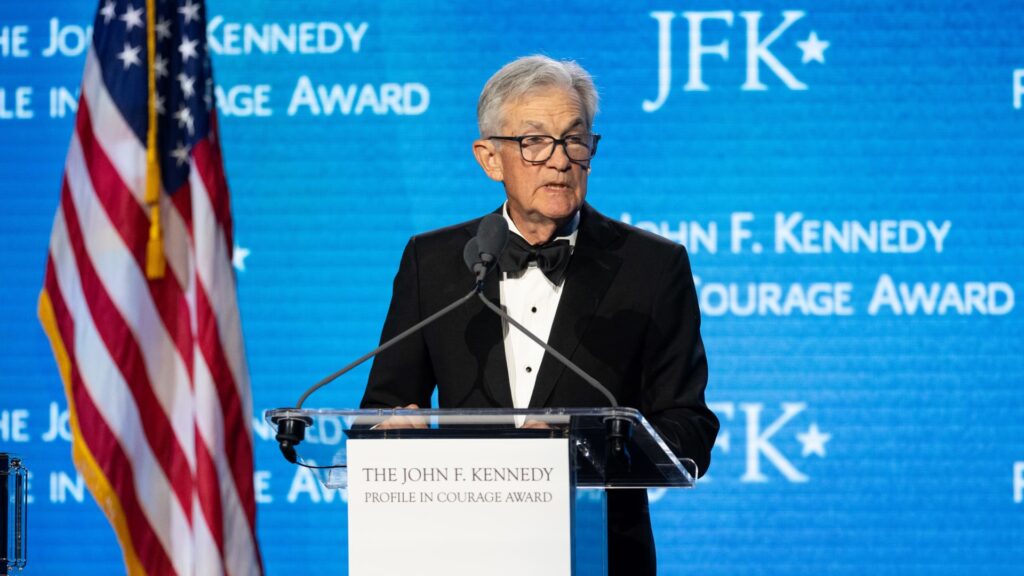
Table of Contents
The Fragility of Central Bank Autonomy
Jerome Powell, the former Chair of the Federal Reserve, has issued a stark warning regarding the stability of U.S. democratic institutions, suggesting that the central bank is currently navigating a political “stress test” that could have long-term repercussions for the American economy. Speaking at the John F. Kennedy Library Foundation in Boston, Powell argued that the push for greater executive influence over monetary policy isn’t just a disagreement over interest rates, but a fundamental threat to the public’s trust in the financial system.
Powell, who transitioned out of the chair role on May 15, framed the current environment as one where the Fed, alongside the judiciary and academic institutions, is being pressured to align with the political whims of the White House. This tension has manifested in a series of escalations from the Trump administration, including explicit calls for Powell’s resignation and targeted attempts to remove Fed Governor Lisa Cook.
“If any administration finds a way to remove Fed officials over policy differences, then future administrations will do so as well,” Powell stated while accepting the John F. Kennedy Profile in Courage Award. He noted that the danger lies in a precedent where the central bank becomes a tool for short-term political gain rather than a steward of long-term economic stability. According to Powell, the fallout would be a total loss of faith that decisions are made based on what is best for the broader American public.
Weaponization of Oversight
A critical point of contention in Powell’s remarks was the perceived weaponization of legal and investigative tools to coerce policy changes. He specifically pointed to a January probe launched by federal prosecutors into the $2.5 billion renovation of the Federal Reserve’s headquarters in Washington, D.C. While the investigation was eventually dropped in April, Powell characterized the move as a retaliatory tactic.
The timing of the investigation, Powell suggested, was not coincidental. It coincided with a period of intense frustration from President Trump regarding the Fed’s reluctance to slash interest rates at the speed and magnitude the administration demanded. By linking the probe to policy disputes, Powell is signaling a concern that administrative oversight is being used as leverage to force a specific monetary outcome.
This dynamic represents a significant shift in the relationship between the executive branch and the Fed. Historically, the Federal Reserve has operated with a degree of insulation that allows it to make unpopular decisions—such as raising rates to combat inflation—without fear of immediate political termination. Powell’s testimony suggests that this firewall is currently being dismantled.
A Transition in Leadership
The timing of these remarks comes as the Federal Reserve undergoes a leadership transition. Kevin Warsh was sworn in as the new Fed chair on May 22, stepping into a role that is now more scrutinized and politically contested than at any point in recent history. While Powell has stepped down from the chairmanship, he remains a member of the Fed’s Board of Governors, allowing him to maintain a vantage point on the internal pressures facing the institution.
Powell’s final reflections emphasize the asymmetric nature of institutional trust: it takes decades to build and only moments to destroy. “Democratic institutions take much time, effort, and patience to build but can be torn down all too quickly,” he warned, suggesting that the current friction is not merely a clash of personalities between a president and a banker, but a systemic risk to the machinery of U.S. governance.
As the new leadership under Kevin Warsh takes hold, the industry will be watching closely to see if the Fed can maintain its data-driven approach to monetary policy or if it will succumb to the political pressures Powell describes as a defining test for the agency’s survival as an independent entity.