Japan’s First Mayor to Take Maternity Leave Exposes Legal Blind Spot in Political Infrastructure
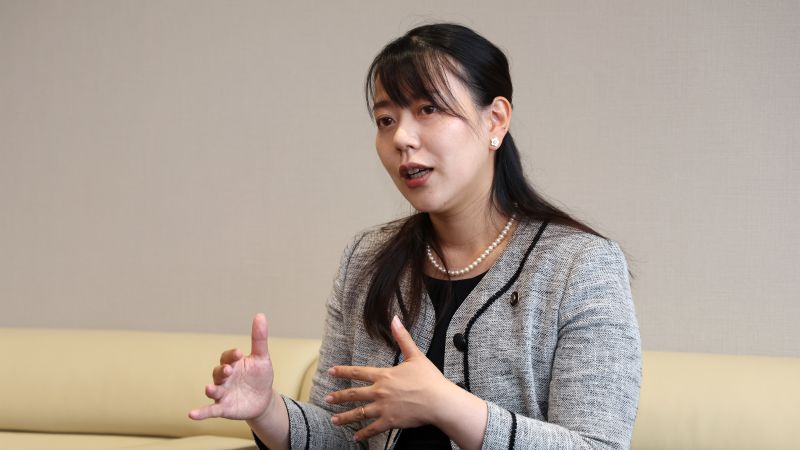
Table of Contents
A Precedent in a Patriarchal System
Shoko Kawata, the 35-year-old mayor of Yawata, Kyoto Prefecture, is stepping into a historical vacuum. By announcing her intention to take 16 weeks of maternity leave surrounding the birth of her first child in mid-September, Kawata is believed to be the first incumbent mayor in Japan to do so. While the move may seem like a personal milestone, it has effectively stress-tested the Japanese political infrastructure, revealing that the nation’s legal frameworks for labor rights largely stop at the door of elected office.
In Japan, public employees enjoy established maternity leave protections. However, elected officials exist in a legal gray zone. There is no statutory framework guaranteeing leave for those holding high-level political mandates. Kawata’s decision to appoint a deputy to manage the city of 70,000 people during her absence is not just an administrative necessity, but a quiet challenge to a system that historically assumes its leaders are men without caregiving responsibilities.
The Friction Between Tradition and Modernity
The reaction to Kawata’s announcement has been a study in contrast. On social media, a vocal minority argued that a public official’s absence is a waste of taxpayer funds—a sentiment rooted in an era where political service is viewed as an all-consuming vocation. Conversely, Kawata reports that her direct interactions with government staff and Yawata residents have been overwhelmingly supportive, with many encouraging her to prioritize her health and child.
According to Sawako Shirahase, a sociology professor at the University of Tokyo, this tension stems from “very old-fashioned assumptions” that govern Japanese bureaucracy. Because the legal framework does not explicitly envision a mayor taking maternity leave, the process becomes an exercise in improvisation rather than a standard procedure. This systemic gap reflects a broader cultural struggle where professional ambition and motherhood are often treated as mutually exclusive.
The Demographic Crisis and Political Inertia
Kawata’s struggle for balance arrives at a critical moment for Japan. The country is currently fighting a losing battle against a plummeting birth rate, with 2025 recording a record low of 671,236 births. Despite government subsidies for housing and childbirth, the underlying issue remains an ingrained overwork culture. The phenomenon of karoshi, or death by overwork, continues to haunt the Japanese corporate and political landscape, deterring young people from starting families.
The gender disparity in leadership remains stark. While the number of female mayors has grown from roughly 50 to nearly 80 across 1,700 municipalities as of early 2026, women still hold less than 15% of the seats in the House of Representatives. Stefanie Schwarte, a researcher at the Japan Center of Ludwig-Maximilians-Universität, notes that the increasing tenure of female mayors—some now serving third or fourth terms—is a signal that the glass ceiling is cracking, even if the support structures remain primitive.
Bridging the Professional Gap
For Kawata, the goal is to act as a catalyst. By maintaining a presence via email while delegating operational authority to a deputy, she is attempting to model a hybrid version of leadership that accommodates biological and familial needs. World Bank data suggests that only about 56% of Japanese women participate in the labor force, compared to 72% of men, highlighting a persistent gap in professional accessibility.
The case in Yawata suggests that until the legal framework evolves to recognize the humanity of elected officials, the burden of change will continue to fall on individuals willing to risk public criticism to set a new precedent. Kawata is not merely taking a break; she is exposing the fact that in the eyes of the law, the role of ‘leader’ has not yet been updated to include the role of ‘parent’.