ixigo’s New AI-First App Overhaul Replaces Traditional Search With TARA
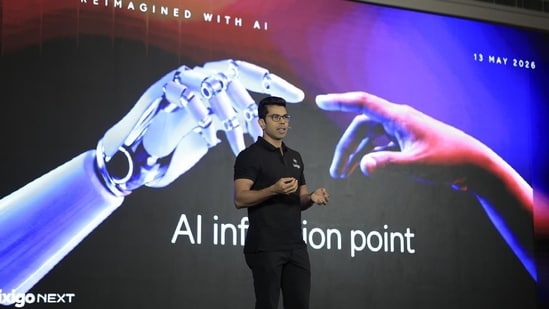
Table of Contents
The days of juggling multiple browser tabs, manually comparing flight fares, and wrestling with rigid search filters may be coming to an end. Online travel platform ixigo is pivoting away from the traditional ‘search-and-click’ model, introducing a fundamental redesign of its mobile experience centered entirely around artificial intelligence. Announced at the ixigo NEXT tech event, the company isn’t just adding a chatbot to an existing interface; it has rebuilt its app from the ground up to be AI-led.
At the heart of this transformation is TARA, a multimodal AI assistant designed to handle the heavy lifting of journey planning. Unlike legacy travel apps where AI is often a bolted-on feature, TARA is integrated into the core architecture of the ixigo ecosystem. This allows the assistant to move beyond simple queries and actually understand user intent through voice, text, and touch. To ensure accessibility across its primary markets, TARA currently supports English, Hindi, and Hinglish, with the company planning to expand its linguistic capabilities in the coming months.
For the average traveler, this means a shift from keyword-based searching to natural conversation. Instead of selecting ‘4-star hotel’ and ‘city center’ from a dropdown menu, users can simply tell TARA they want a room with a view of a specific landmark or a property with particular amenities. TARA can orchestrate complex, multi-city itineraries through a fluid dialogue, removing the friction typical of the booking process. Because TARA has access to user history and booking patterns, the recommendations are contextual rather than generic.
One of the most impressive demonstrations of TARA’s capabilities is its ability to handle indirect prompts. For instance, a user stating, “I forgot my anniversary, help me,” triggers the AI to analyze previous preferences and suggest romantic short trips or luxury staycations. This moves the app from being a mere utility tool to a proactive travel concierge.
Beyond the discovery phase, ixigo is introducing what it calls “agentic” travel services. In the world of AI, ‘agents’ are systems that can execute tasks autonomously. In ixigo’s case, these agents monitor flights in the background, track delays, and manage the tedious process of cancellations and refunds without requiring the user to restart the process manually. These agents also coordinate with hotels prior to arrival to confirm room readiness, potentially eliminating the dreaded ‘waiting in the lobby’ experience.
To streamline the actual travel day, the company has launched ‘Trip Mode.’ This serves as a centralized dashboard that aggregates all post-booking essentials. From real-time baggage belt updates and boarding gate changes to weather alerts and lounge availability, everything is housed in one scannable interface. Furthermore, the integration with WhatsApp allows boarding passes to be delivered instantly, with seamless synchronization to Apple Wallet, Google Wallet, and Digi Yatra-supported services.
This move signals a broader industry shift. As we’ve seen with recent [AI smartphone comparisons](https://gizstreet.com/ai-smartphone-comparisons), the trend is moving toward ‘intent-based’ interfaces. Rajnish Kumar, Group Co-CEO at ixigo, emphasized that the future of travel platforms lies in systems that understand the traveler’s needs before, during, and after the journey. By removing the barriers of manual input, ixigo is betting that a conversational interface will lead to higher conversion rates and better user retention.
While the industry has seen many [Android update guides](https://gizstreet.com/android-update-guides) focusing on OS-level AI, ixigo is proving that app-level vertical AI can fundamentally change how a specific industry—in this case, tourism—operates. The competition will be fierce, as giants like Expedia and Booking.com also integrate LLMs, but ixigo’s ‘AI-first’ rebuild gives it a structural advantage in speed and integration.
Looking ahead, the rollout of TARA is expected to bring even deeper integrations with local transport and hyper-local experiences. As the AI learns more about user behavior, the ‘agentic’ features will likely expand to include automatic price-drop booking and personalized local guide recommendations, making the manual travel agency almost obsolete.