Israel’s Push Beyond the Litani: The Strategic Shift in Southern Lebanon
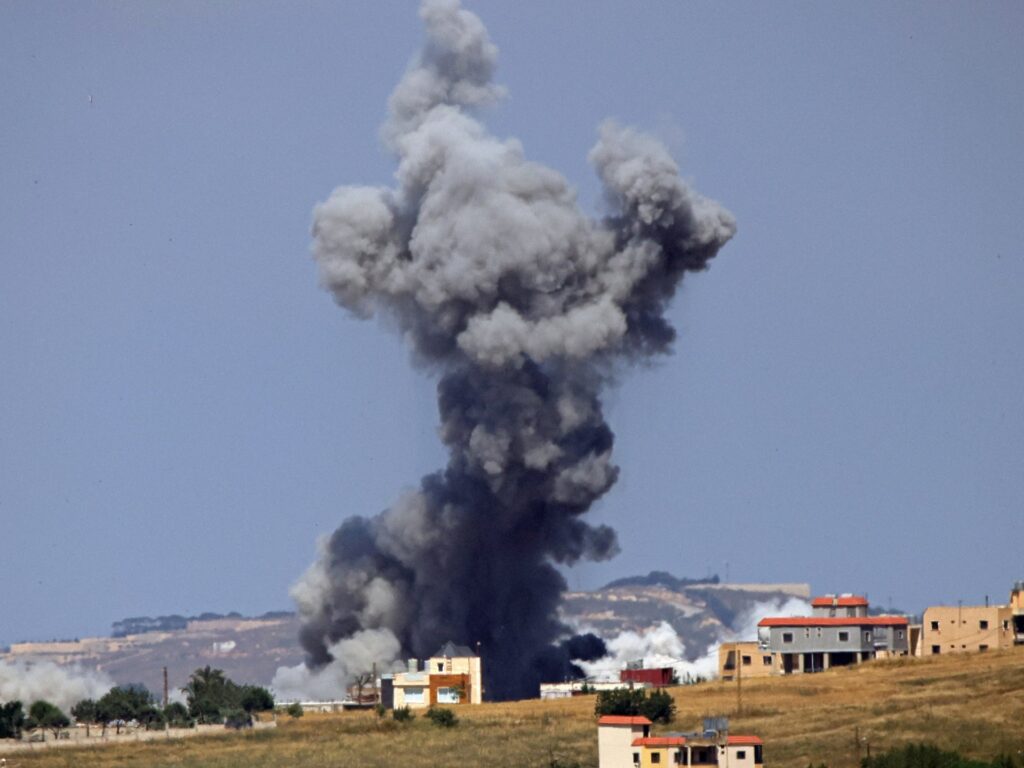
Table of Contents
The Litani Line Has Been Crossed
Israeli military operations in southern Lebanon have shifted from a targeted border-security mission into a deeper territorial incursion, with forces now operating well beyond the Litani River. The advance, which has seen troops reach the outskirts of Nabatieh and seize the historically significant Beaufort Castle, represents the most extensive Israeli presence in Lebanese territory in over 25 years.
While the Israeli government initially framed its objectives as clearing Hezbollah militants from the immediate border zone south of the Litani, the reality on the ground has evolved. Military units are now issuing evacuation orders as far north as the Zahrani River—roughly 10 kilometers beyond the previously established operational limit. Currently, Israeli forces occupy approximately 2,000 square kilometers, effectively controlling nearly one-fifth of Lebanon’s total landmass.
The Battle for Nabatieh and the Shia Heartland
The push toward Nabatieh is not merely a tactical maneuver to gain ground; it is a move toward the political and social center of gravity for Hezbollah’s constituency. By reaching the towns of Zawtar al-Sharqiyah and Choukine, the Israeli military is placing direct pressure on a primary hub of Hezbollah’s logistical and communal infrastructure.
Imad Salamey, a professor of international relations at the Lebanese American University, notes that the significance of Nabatieh is as much social as it is strategic. Control of the city would allow Israel to disrupt the connective nodes between southern Lebanon, the Bekaa Valley, and Beirut, potentially dismantling the communal support systems that sustain Hezbollah’s operational capabilities.
This shift is further evidenced by the blanket evacuation orders issued for Nabatieh and the coastal city of Tyre. Analysts suggest that by displacing these populations, Israel may be attempting to reshape the demographic and political landscape of the south, weakening the image of Hezbollah as a protective force for its people.
Beaufort Castle and the High Ground
To the east, the capture of Beaufort Castle by the Golani Brigade provides Israel with a critical tactical advantage. The Crusader-era fortress sits on a strategic hilltop that offers commanding views and fire control over the surrounding valley and key supply routes linking the south to the western Bekaa Valley.
Defense Minister Israel Katz confirmed the seizure of the site, which carries heavy symbolic weight. Having occupied the fortress for nearly two decades before the 2000 withdrawal, the return to Beaufort Castle signals a return to a strategy of territorial dominance and observation that defined the previous era of conflict.
Diplomatic Friction and the Iranian Link
These military advances are occurring simultaneously with US-mediated talks intended to secure a permanent ceasefire and the disarmament of Hezbollah. However, the widening of the operational zone to the Zahrani River has cast doubt on the viability of these negotiations. Hezbollah has condemned the talks, arguing that the ongoing attacks render diplomatic agreements meaningless.
The situation has also complicated the tenuous relationship between Washington and Tehran. Iranian officials have increasingly linked their own diplomatic progress with the U.S. to the situation in Lebanon, explicitly stating that an Israeli withdrawal from southern Lebanese territory is a prerequisite for any meaningful advancement in negotiations to end the broader US-Israel-Iran conflict.
As the Israeli military maintains that its current operations are aimed at “destroying terrorist infrastructure,” the expansion of the evacuation zones suggests a long-term strategic ambition that extends far beyond a simple buffer zone.