Internal DHS and FBI Documents Reveal New Federal Focus on ‘Anti-Tech Extremism’
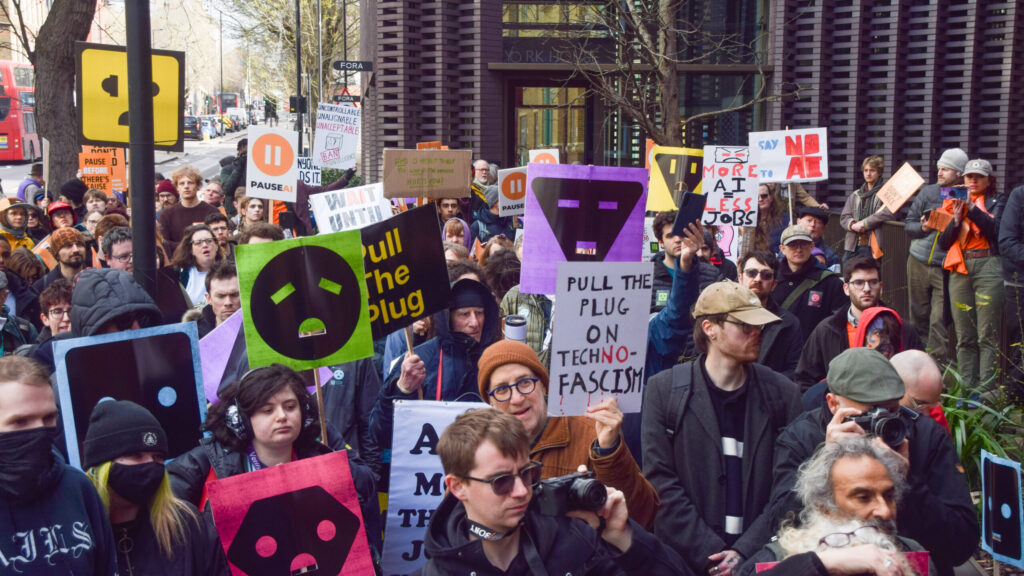
Table of Contents
A New Category of Threat
Federal intelligence agencies and domestic law enforcement are quietly expanding their surveillance parameters to include a new, broadly defined category of targets: “anti-technology extremists.” According to more than 1,000 pages of unpublished reports from the Department of Homeland Security (DHS), the FBI, and various regional fusion centers, the U.S. government is increasingly concerned that opposition to artificial intelligence and the physical infrastructure supporting it could trigger widespread civil unrest.
The shift comes at a time of heightened tension over AI-driven job displacement and the rapid, often unregulated, proliferation of massive data centers across the American landscape. However, the internal documents suggest that the government’s focus is moving beyond monitoring protests toward the criminalization of specific ideological leanings.
The Rise of ‘Anti-Tech Violent Extremism’
A particularly revealing report from the New York Intelligence and Counterterrorism Bureau introduces a term previously absent from public DHS or FBI extremism guides: “anti-tech violent extremism.” The bureau warns that the “chaotic atmosphere” created by the rollout of emergent AI over the next five years could fuel large-scale protests in urban centers like New York City, which the agency fears may devolve into violent activity.
This designation appears to be a catch-all for a diverse range of ideologies. On one end of the spectrum, the reports cite the “Zizian” ideology—a fringe, cult-like belief system centered on the existential risk of AI, which has already seen members charged with murder. On the other, the reports seem to cast a wide net over more mainstream concerns regarding AI alignment and the societal impact of automation.
The Intelligence Bureau explicitly warns that “paranoid views regarding AI” could proliferate, suggesting that even rational debates about the existential consequences of a “godlike incarnation of AI” could be viewed through the lens of domestic extremism.
Targeting the Physical Backbone: Data Centers
The surveillance effort is not limited to ideological monitoring; it extends to the physical infrastructure of the internet. Fusion centers—the 80 state-and-federal intelligence hubs created after 9/11—are increasingly circulating warnings about threats to data centers.
In Western Pennsylvania, a fusion center report claims that “adversarial actors,” ranging from state-sponsored entities to “environmental extremists,” may target data centers to disrupt the U.S. economy or exploit infrastructure for cryptocurrency mining. Similarly, the Northern Virginia Regional Intelligence Center has flagged “anti-government, anti-authority violent extremists” (AGAAVEs) as potential threats to these facilities.
However, the criteria for what constitutes “suspicious activity” around these sites have drawn sharp criticism from legal experts. The Northern Virginia report lists behaviors such as “photography,” “observation,” and “expressed/implied threat” as red flags. Spencer Reynolds, senior counsel at the NAACP Legal Defense Fund, argues that these standards are dangerously permissive. “These intelligence reports are part of a long tradition of agencies identifying protest or even simply having strong opinions as precursors to violence,” Reynolds noted, suggesting that such vague indicators allow law enforcement to inject personal bias into their investigations.
Political Alignment and Surveillance
This surge in anti-tech monitoring coincides with a broader political mandate. The efforts align with National Security Presidential Memo 7 and strategies outlined by counterterrorism officials, which have prioritized the targeting of ideologies deemed “anti-capitalist” or contrary to the administration’s goals. Given the current White House’s heavy investment in AI and data center expansion, any movement that challenges the viability or ethics of this industry is increasingly being viewed as a national security threat rather than a political or social movement.
As the line between legitimate activism and “extremism” blurs in the eyes of the FBI and DHS, the infrastructure of the AI boom is becoming a primary flashpoint for the next era of domestic surveillance.