Intel’s ‘Wildcat Lake’ and Project Firefly: The PC Industry’s Counter-Attack Against the MacBook Neo
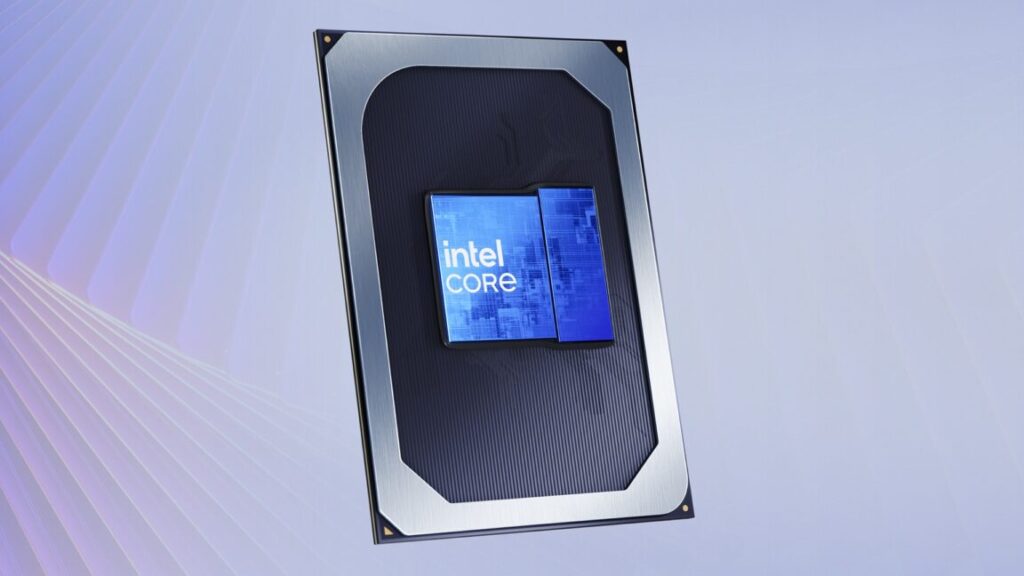
Table of Contents
The Budget Laptop Paradox
For years, the Windows laptop market has operated on a predictable, if flawed, hierarchy. At the top, premium machines competed with the MacBook Pro on raw power and build quality. At the bottom, the sub-$700 category was a graveyard of compromises: plastic chassis, dim screens, and processors that struggled with basic multitasking. Apple disrupted this equilibrium with the MacBook Neo, delivering a cohesive, high-performance experience at a price point that left legacy PC manufacturers scrambling.
The industry’s initial reaction was a mix of denial and desperation. The CEO of Asus publicly downplayed the Neo’s value proposition, while other manufacturers leaned on discounted older inventory to match Apple’s pricing. However, a shift is now occurring. Rather than simply cutting costs on existing hardware, PC makers are beginning to deploy a more surgical response centered on Intel’s latest silicon and a strategic shift in how these machines are actually built.
Wildcat Lake: Architecture Over Rebranding
The centerpiece of this strategy is the Intel Core Series 3 processors, codenamed “Wildcat Lake.” To understand why this matters, one has to look at Intel’s previous approach to budget chips, which often consisted of rebranded older architectures that were inefficient and lagged behind in performance-per-watt. Wildcat Lake is different. It is a purpose-built budget chip leveraging Intel’s 18A manufacturing process and the latest CPU and GPU architectures.
By utilizing the 18A node, Intel is attempting to close the efficiency gap with the Apple A18 Pro powering the MacBook Neo. The goal isn’t necessarily to outperform the Neo in synthetic benchmarks, but to provide a stable, responsive experience that doesn’t require the drastic thermal throttling common in cheap Windows laptops. Early adopters are already surfacing; Lenovo has teased IdeaPad Slim models featuring these chips, with some configurations pushing 16GB of RAM and 120Hz displays—specs that would typically be reserved for mid-tier professional machines.
Project Firefly and the Move Toward Standardization
Silicon is only half the battle. The second prong of the attack is “Project Firefly,” an Intel initiative primarily rolling out through its Chinese arm. Firefly is essentially a return to the “reference design” philosophy. By providing PC makers with standardized motherboard layouts and thermal specifications, Intel is attempting to lower the R&D overhead for entry-level laptops.
This isn’t a total surrender of design autonomy, but it allows companies like Lenovo—which is launching the Lecoo Air 14 under this program—to slash development costs. In theory, these savings can be passed to the consumer, making a $400–$500 laptop viable without the usual build-quality degradations. It echoes Intel’s previous successful pushes, such as the Ultrabook initiative in the early 2010s or the Centrino branding, both of which forced the industry toward specific hardware standards to drive consumer adoption.
The ‘UniBook’ Litmus Test
The true test of this strategy is appearing in the form of aggressively priced hardware from challengers like Chuwi. Their new “UniBook”—featuring a Core 3 304 processor, 8GB of RAM, and a 1200p IPS display—is advertised at $449. While Chuwi’s US availability remains sporadic and its long-term reliability is often questioned compared to Tier-1 vendors, the UniBook represents the specific target the industry needs to hit.
The challenge for Asus, HP, and Lenovo will be maintaining this consistency. A spec sheet can promise 120Hz and a new Intel chip, but the MacBook Neo’s primary appeal is the seamless integration of software and hardware. Intel can provide the blueprint and the silicon, but whether PC makers can avoid the historical trap of “cheap but unpleasant” remains the defining question for the next generation of budget computing.