Intel’s Diamond Rapids Targets 192 Cores but Drops Hyper-Threading in High-Stakes Architecture Pivot
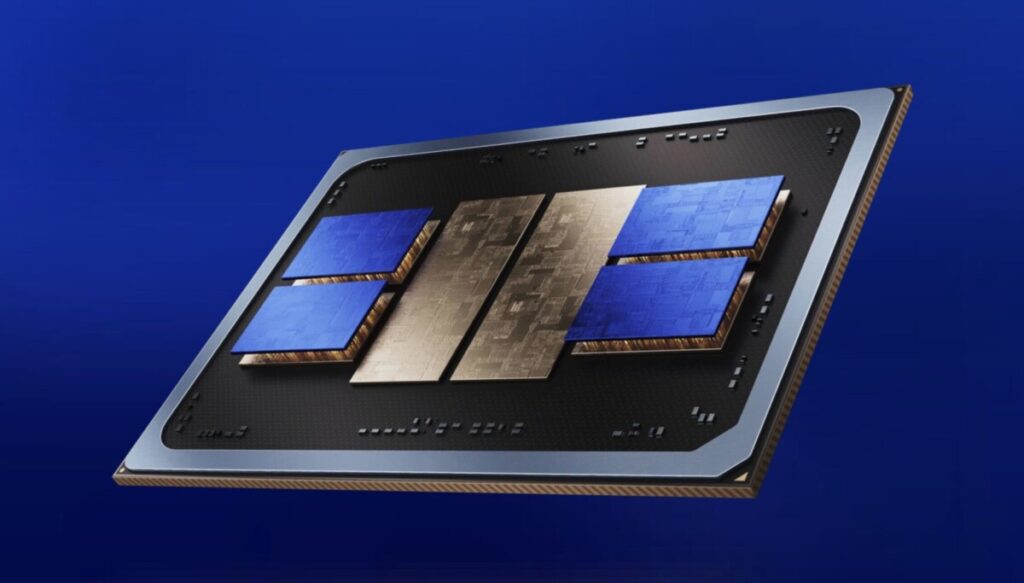
Table of Contents
A Massive Core Bump with a Controversial Cut
Intel has unveiled the first significant details of its next-generation Xeon server platform, codenamed Diamond Rapids, during its presence at Computex in Taipei. The headline figure is a jump to 192 cores—a 50 percent increase over the previous generation. However, the most disruptive aspect of the announcement isn’t what Intel added, but what it removed: Simultaneous Multithreading (SMT), known commercially as Hyper-Threading.
For over two decades, Hyper-Threading has been a staple of Intel’s performance strategy, allowing two threads to utilize idle execution units within a single clock cycle. While it never doubled raw throughput, it provided critical efficiency gains for multi-threaded workloads. Intel has already phased out the technology in its consumer-facing hybrid architectures, but the decision to cut it from the Xeon line marks a fundamental shift in how the company views server throughput.
Interestingly, the removal of SMT appears to be a calculated, if temporary, gamble. Leaks and industry chatter suggest that the subsequent generation, Coral Rapids, may reintroduce the technology. This suggests Diamond Rapids is as much an architectural experiment as it is a product launch.
The Chiplet Shift: Borrowing the AMD Playbook
Under the hood, Diamond Rapids signals that Intel is fully embracing the modular, chiplet-based design philosophy that AMD pioneered with its Rome architecture in 2019. The new CPUs will be fabricated using Intel’s 18A-P process, a refined version of its 2nm-class node that is critical to the company’s roadmap to regain transistor density leadership.
Based on renders from Intel’s press materials, the chip utilizes Foveros packaging to stitch together four vertically stacked compute assemblies served by two I/O dies. This arrangement mirrors the layout of the recently launched Clearwater Forest, where four 24-core compute tiles sit atop a base die. In the case of Diamond Rapids, those compute chiplets are significantly beefier, with four 48-core clusters driving the 192-core total.
The placement of the L3 cache on the base die frees up critical real estate on the compute tiles, a design choice that bears a striking resemblance to Fujitsu’s Monaka processor. While Intel has not explicitly confirmed the location of the memory controllers, industry analysts expect them to reside on the I/O dies to minimize NUMA (Non-Uniform Memory Access) nodes, which would otherwise create latency bottlenecks in high-performance computing (HPC) environments.
Market Positioning and the Licensing Headache
Intel is positioning Diamond Rapids not for general-purpose virtualization or storage servers—where Granite Rapids will likely dominate—but for high-demand Infrastructure-as-a-Service (IaaS) and high-performance threads. It is effectively a direct competitor to AMD’s 256-core Venice Epyc processors.
However, the lack of SMT creates a complex problem for the enterprise software layer. Hypervisor licensing for platforms like VMware or Red Hat often revolves around core and thread counts. When a CPU provides two threads per core, the value proposition is clear. With Diamond Rapids, customers are effectively getting half the threads per dollar compared to legacy Xeon deployments. Unless vendors like Oracle—who have already adapted their Ampere-based instances to core-pair licensing—pivot their models, the adoption of Diamond Rapids in virtualized environments could be sluggish.
Bandwidth and the Road to Hot Chips
To compensate for the loss of SMT and to feed 192 cores, Intel is leaning heavily into memory bandwidth. Diamond Rapids will feature a massive 16-channel DDR5 memory bus. While official speeds remain undisclosed, current trajectories for Clearwater and Granite Rapids suggest support for 8800 MT/s or even 9600 MT/s via MRDIMMs. This could push bandwidth to roughly 1.2 TB/s per socket, placing Intel on par with Nvidia’s LPDDR5X-equipped Vera CPUs.
Despite the impressive specs, Intel faces a timing challenge. Diamond Rapids is currently slated for a 2027 release, meaning AMD may have a significant window to establish a lead with Venice. For a deeper dive into the clock speeds and instructions per cycle (IPC) gains, the industry is looking toward the Hot Chips symposium in August, where Intel is expected to present the full technical breakdown of the architecture.