Insta360 Luna Ultra: A Leica-Powered Gamble to Replace Your Vlogging Rig
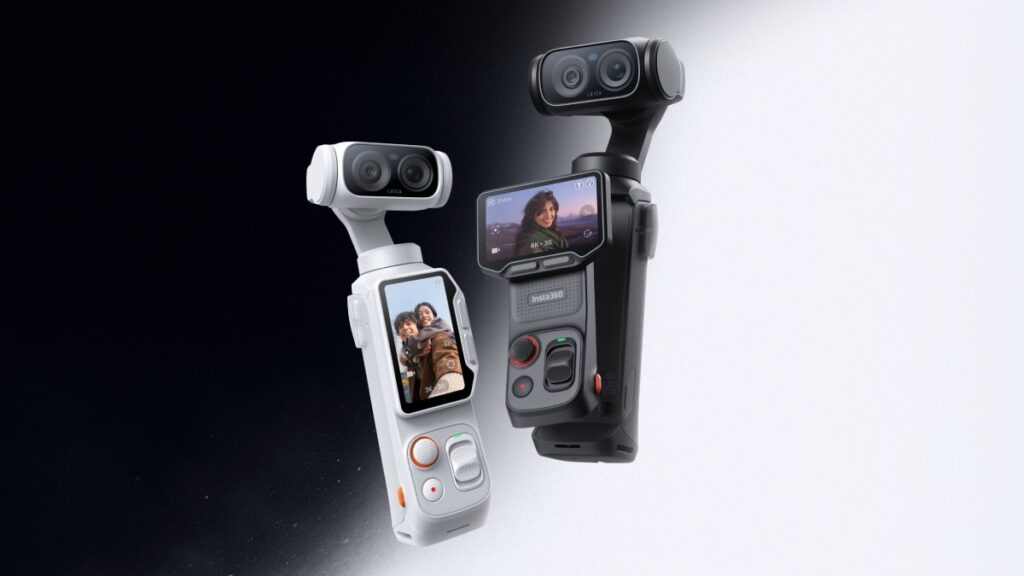
Table of Contents
The Convergence of Cinema and Portability
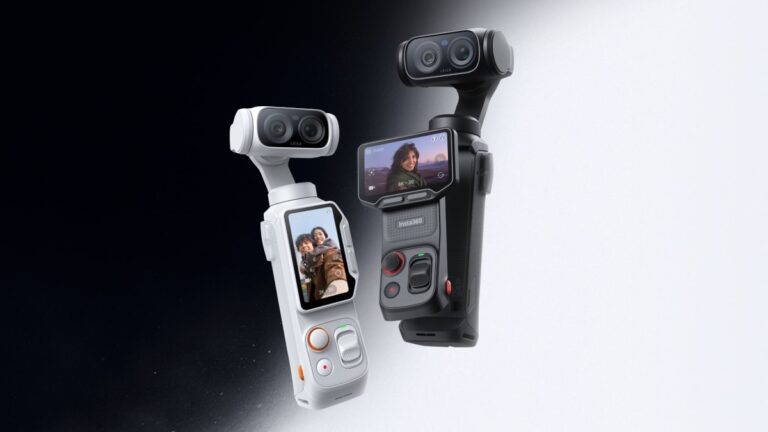
For years, the “vlogging rig” has been a clunky affair: a mirrorless camera, a separate three-axis gimbal, an external microphone, and a clumsy monitor setup. Insta360 is attempting to collapse that entire ecosystem into a single, handheld device. The Insta360 Luna Ultra isn’t just another action cam; it is a sophisticated piece of optical engineering that leverages a deep partnership with Leica to challenge the dominance of DJI’s Pocket series and even entry-level Sony ZV line.
- Optical Power: Dual-camera system featuring a Leica Summicron 1-inch main sensor and a dedicated telephoto lens.
- Hardware Innovation: A detachable 2-inch OLED touchscreen that allows for remote monitoring and flexible mounting.
- Performance: 8K video resolution powered by a triple-chip architecture, including a 4nm Qualcomm AI processor.
- Pricing: Starts at $769.99, positioning it as a premium tool for professionals and high-end creators.
Deconstructing the Optical Engine: The Leica Advantage
The headline feature of the Luna Ultra is undoubtedly the glass. In the world of imaging, the sensor size determines your dynamic range and low-light performance. By utilizing a 1-inch sensor for the main camera, Insta360 is moving away from the small-sensor limitations of traditional action cameras. This sensor is paired with a Leica Summicron lens, which is renowned in the photography world for its contrast and color accuracy.
Technical specifications reveal an f/1.8 aperture and a 20mm-equivalent focal length. For the average creator, this means a wider field of view that still maintains a natural perspective without the “fish-eye” distortion common in GoPro-style devices. But the real surprise is the addition of a secondary telephoto camera. With a 1/1.3-inch sensor and a 60mm-equivalent focal length, the Luna Ultra provides a legitimate way to capture b-roll and portraits without sacrificing the stability of the gimbal.
Zoom Capabilities and Image Fidelity
While many compact cameras rely on digital cropping—which effectively destroys image quality—the Luna Ultra employs a hybrid zoom approach. It supports up to 12x zoom for both photos and videos. By switching between the 20mm and 60mm lenses, the device maintains a higher level of detail than its competitors, though the transition between lenses is where the triple-chip processing system earns its keep, smoothing out the focal shift to prevent jarring jumps in footage.
The Engineering Behind the Stability
A camera is only as good as its stability. The Luna Ultra features a refined three-axis mechanical gimbal. Unlike electronic image stabilization (EIS), which crops the image and can create a “jello” effect, a mechanical gimbal physically moves the camera to counteract shake.
The precision here is noteworthy. Insta360 claims a stabilization accuracy of ±0.005 degrees. To put that in perspective, that is a level of precision typically reserved for professional cinema rigs. With a maximum control speed of 210 degrees per second, the gimbal can react almost instantaneously to rapid movements, making it ideal for fast-paced street photography or high-energy travel vlogs.
The Detachable OLED: A Workflow Game Changer
One of the most frequent complaints about gimbal cameras is the small, fixed screen that makes it difficult to judge framing or see your shot when the camera is mounted on a tripod. Insta360 solved this by making the 2-inch OLED touchscreen detachable.
This isn’t just a gimmick. By detaching the screen, users can effectively create a wireless monitor. This allows a creator to mount the camera in a difficult position—such as a low-angle shot or a high-reach mount—and monitor the frame from a comfortable distance. The OLED panel ensures that the image is visible even in direct sunlight, a common pain point for creators working outdoors.
Silicon and Intelligence: The Triple-Chip Architecture
Processing 8K video in a device this small creates an immense amount of heat and requires significant computing power. To manage this, the Luna Ultra uses a three-chip system. Two dedicated imaging processors handle the heavy lifting of color grading and noise reduction, while a Qualcomm 4nm AI chip manages the “smart” features.
The AI chip is the brain behind the AI-powered tracking. This system allows the camera to lock onto a subject and follow them smoothly, regardless of the gimbal’s physical orientation. For solo creators, this removes the need for a camera operator, as the device can effectively “film itself” while the user moves through a scene.
If you are currently using a smartphone with a separate gimbal, the Luna Ultra replaces three devices: your phone, your gimbal, and your external monitor. The inclusion of Dolby Vision means your footage is ready for professional HDR displays without extensive post-production. Furthermore, the 240-minute battery life suggests a shift toward “all-day” shooting, reducing the dependency on power banks during long shoots.
Pricing and Package Analysis
The Luna Ultra is priced as a professional tool rather than a toy. It is available in two primary configurations:
| Bundle | Price (USD) | Key Inclusions |
|---|---|---|
| Standard Bundle | $769.99 | Luna Ultra Camera, Protective Cover, Wrist Strap |
| Creator Bundle | $969.99 | Standard Bundle + Battery Handle, Mic Pro Transmitter, Wide-Angle Lens |
For most users, the Creator Bundle is the logical choice. The Battery Handle is critical for those intending to hit the 240-minute mark, and the Mic Pro Transmitter addresses the only major weakness of compact cameras: built-in audio quality. While the internal mics are adequate, the external transmitter allows for a professional audio profile that matches the 8K visual quality.
Market Context: Where Does the Luna Ultra Fit?
To understand the Luna Ultra, we have to look at the current state of the “Pocket Camera” market. For several years, the DJI Osmo Pocket series has held a virtual monopoly on the handheld gimbal market. However, DJI’s focus has primarily been on ease of use and portability.
Insta360 is pivoting toward image quality. By partnering with Leica and implementing a dual-sensor system, they are targeting users who find the Pocket 3 a bit too “consumer-grade” but find a full-frame mirrorless setup too cumbersome. The Luna Ultra is essentially a bridge between the action cam and the professional cinema camera.
Potential Trade-offs
No device is perfect. The move to 8K recording, while impressive on paper, creates significant storage and processing demands. Users will need high-speed V90 microSD cards to avoid buffer overflows. Additionally, while the Leica glass is superb, the 1/1.3-inch sensor on the telephoto lens will naturally struggle more in ultra-low light compared to the 1-inch main sensor, a technical limitation of physics that software can only partially mitigate.
Frequently Asked Questions
How does the 8K resolution impact battery life?
Recording in 8K puts a significant strain on the processors. While the total battery life is rated at 240 minutes, this is typically achieved at 1080p or 4K. Users recording in 8K should expect a shorter window of operation and are strongly encouraged to use the Battery Handle found in the Creator Bundle.
Is the detachable screen wireless?
Yes, the screen connects wirelessly to the camera body. This allows you to place the camera in a spot where you cannot see it (like inside a car or on a low tripod) and use the screen as a remote viewfinder to ensure your composition is correct.
Does it support vertical video for TikTok and Reels?
Absolutely. The three-axis gimbal is designed to rotate the camera into a vertical orientation, allowing for native 9:16 recording without needing to crop 4K footage in post-production.
What is the difference between the 1-inch and 1/1.3-inch sensors?
The 1-inch sensor in the main lens is physically larger, meaning it captures more light and provides a shallower depth of field (better background blur). The 1/1.3-inch sensor in the telephoto lens is smaller to keep the device compact, which is why it’s better suited for daylight shots than nighttime videography.
Can I use the Luna Ultra as a webcam?
Yes, like most modern Insta360 devices, the Luna Ultra can be connected to a PC or Mac via USB-C to serve as a high-definition webcam with active gimbal tracking to keep you in frame during calls.
Final Verdict on the Hardware Strategy
The Insta360 Luna Ultra is a bold statement on what a handheld camera should be in 2025. By combining Leica’s prestige, Qualcomm’s AI processing, and a modular screen design, Insta360 has created a tool that minimizes the friction between thinking of a shot and capturing it. While the price point is high, the value proposition lies in the reduction of gear. For the creator who is tired of carrying a backpack full of stabilizers and monitors, the Luna Ultra offers a compelling, all-in-one alternative that doesn’t ask the user to compromise on image quality.