Hyundai’s Georgia Metaplant is More Than an EV Factory—It’s a Bet on Software-Defined Manufacturing
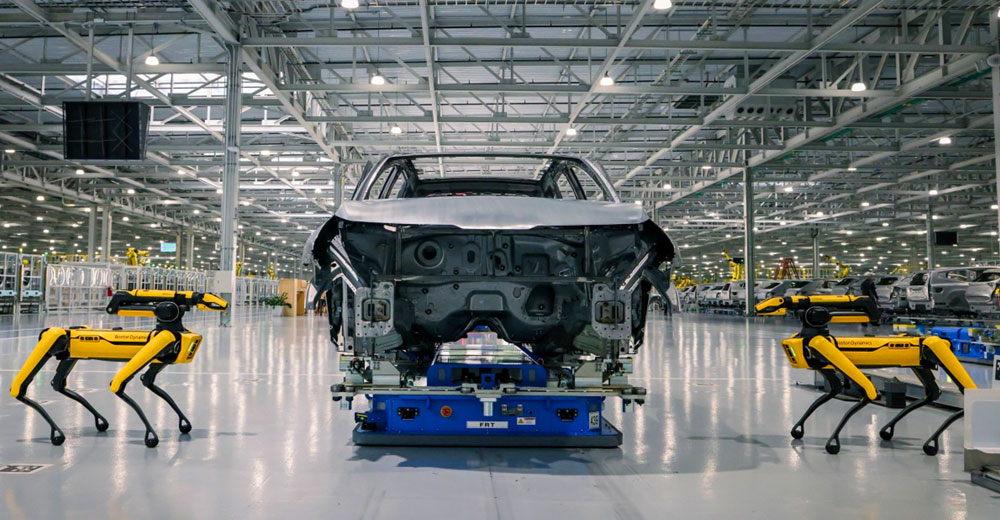
Table of Contents
Beyond the Assembly Line
For decades, the automotive assembly line has been a monument to rigid efficiency. You build a chassis, weld the frame, and paint the shell in a linear, immutable sequence. But inside Hyundai’s massive new Metaplant America in Georgia, that linearity is being dismantled. The facility isn’t just designed to churn out the Ioniq series; it’s an experiment in what the company calls “smart manufacturing,” where the boundary between the hardware of the car and the software of the factory has blurred.
The scale is staggering, but the real story lies in the flexibility. Unlike traditional plants that require months of downtime to retool for a new model, the Metaplant utilizes a modular approach. By integrating AI-driven logistics and a high degree of robotic autonomy, Hyundai is attempting to create a facility that can pivot its output based on real-time market demand—a necessity in an EV market that has seen volatile swings in consumer appetite over the last 18 months.
The Boston Dynamics Integration
The most visible departure from the norm is the presence of Boston Dynamics’ Spot. While most factories use static robotic arms bolted to the floor, Hyundai has deployed these quadruped robots for autonomous facility inspections. Spot isn’t there for optics; it’s integrated into the plant’s digital twin system, scanning for thermal anomalies and detecting leaks or equipment failures that a human operator might miss during a standard walkthrough.
This creates a feedback loop. The data gathered by mobile robotics is fed back into the plant’s central operating system, allowing engineers to optimize the floor layout in a virtual environment before implementing physical changes. This transition to a “software-defined factory” mirrors Hyundai’s broader strategy for its vehicles, where over-the-air updates and centralized electronic architectures are replacing the fragmented wiring harnesses of the internal combustion era.
Addressing the Supply Chain Bottleneck
The Georgia site is also a strategic hedge against the geopolitical instability of battery sourcing. By co-locating battery production and vehicle assembly, Hyundai is slashing the logistical overhead and carbon footprint associated with transporting massive battery packs across borders. This vertical integration is a direct response to the Inflation Reduction Act (IRA) in the U.S., ensuring that a higher percentage of the vehicle’s value is produced domestically to qualify for federal tax credits.
However, the shift isn’t without friction. Moving toward a fully automated, AI-reliant floor requires a fundamental shift in labor. The roles are transitioning from manual assembly to systems oversight. The challenge for Hyundai will be managing this transition with the workforce, as the “metaplant” concept demands a level of technical literacy that far exceeds the requirements of the traditional 20th-century factory.
The Competitive Pivot
Hyundai is no longer just competing with Toyota or Volkswagen; it is competing with Tesla’s Giga-factories and the lean, iterative manufacturing styles of BYD in China. The Metaplant is Hyundai’s answer to the “unboxed” process—an attempt to reduce complexity and waste by rethinking the car as a series of integrated modules rather than a long sequence of additions.
By treating the factory itself as a product that can be updated, iterated, and scaled, Hyundai is betting that the winner of the EV race won’t be the company with the best battery chemistry, but the one with the most agile production ecosystem.