Hypershell’s New Exoskeletons Aim for Endurance, Not Superpowers
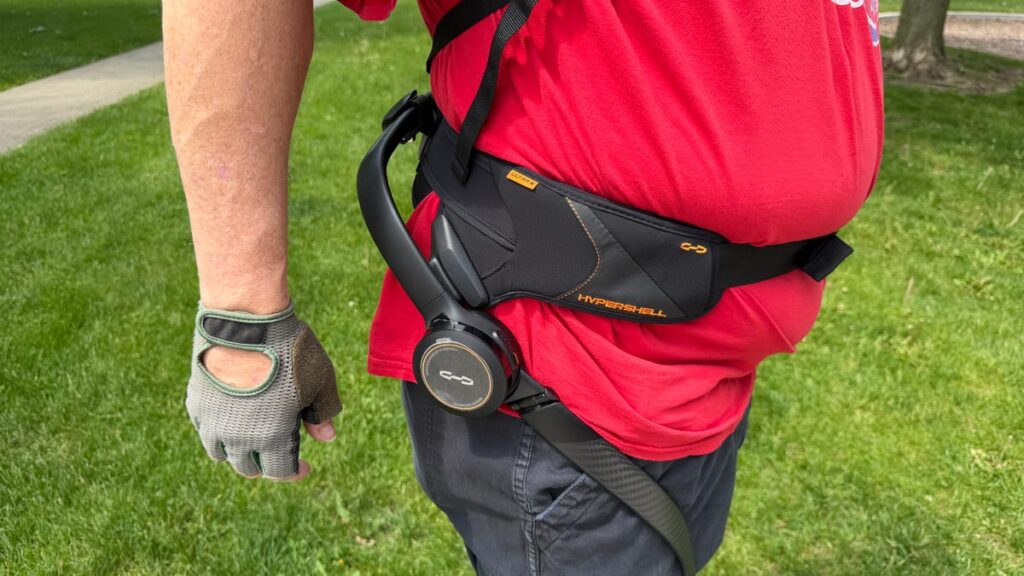
Table of Contents
The Gap Between Sci-Fi and the Trail
Standing on a narrow trail in the Grand Canyon, the promise of wearable robotics feels almost cinematic. Strapped into the Hypershell X Ultra S, a $1,999 carbon-fiber and titanium exoskeleton, the expectation is a transformation—a sudden surge of mechanical strength capable of erasing the struggle of a steep climb. However, the reality of current consumer robotics is more nuanced. While the device offers a tangible assist, it operates as a tool for endurance rather than a total replacement for human effort or a cure for physical disability.
For those dealing with chronic conditions, such as spinal stenosis—which narrows the spinal canal and puts pressure on nerves—the appeal of an exoskeleton is obvious: the hope of closing the gap between their current mobility and the effortless pace of an athlete. But as Angus Fan, Hypershell’s Chief Product Officer, noted in a recent interview, the company isn’t aiming for superhero status just yet. “The tech will be ready eventually,” Fan explained, “but for now, we have more humble aspirations of endurance extension.”
Hardware Breakdown: Carbon Fiber and Constraints
The Hypershell ecosystem arrives with three distinct tiers: the top-of-the-line X Ultra S ($1,999), the X Max S ($1,499), and the entry-level X Pro S ($999). The hardware is designed for minimal bulk, weighing in at just under five pounds. The system anchors at the waist with a battery pack situated in the small of the back, powering two motorized arms that buckle to the thighs.
The build quality is high, leveraging premium materials to maintain a lightweight profile, which is critical for a device intended to help you move. However, the form factor introduces practical frictions. The battery pack creates a physical barrier at the lower back, making sitting down or riding in a vehicle uncomfortable unless the user maintains a perfectly rigid posture. Additionally, the thigh straps effectively render front and lower cargo pockets inaccessible, necessitating a shift toward vests or alternative storage solutions.
The Mechanics of Assist
At its core, the Hypershell functions through simple biomechanics. A 5,000-mAh battery powers motors at the hips that assist with the leg’s pumping motion. When the user lifts their leg, the device reduces the perceived weight; when pushing down, the machine provides a supplementary thrust to propel the user forward. This is designed to extend the user’s range—roughly 30 kilometers (18.6 miles) per charge—rather than increase their peak power output.
Control is handled via a Bluetooth-connected app and a physical button on the right hip. The system offers four primary modes:
- Eco and Hyper: These adjust the level of assistance provided during movement.
- Transparent: A neutral mode that puts the motors in idle, allowing for unassisted movement.
- Fitness: A counter-intuitive mode that provides resistance to the user, effectively turning the hike into a strength-training session.
Real-World Performance and Limitations
In a high-stress environment like the Grand Canyon, the limitations of the technology become apparent. For a user exceeding the manufacturer’s suggested weight limits, the device still fits and functions, but the “assist” is relative. It does not grant the ability to effortlessly scale a 100-foot climb, but it does mitigate the fatigue that typically sets in during long-duration treks.
The distinction is critical: the X Ultra S is an endurance multiplier. It helps a healthy hiker go further or a fatigued hiker maintain a steady pace for longer. However, it does not bypass the fundamental physiological requirements of hiking. The struggle of the climb remains; the exoskeleton simply makes the struggle slightly more sustainable.