Hungary’s New Government Moves to Oust President Sulyok Amid Constitutional Standoff
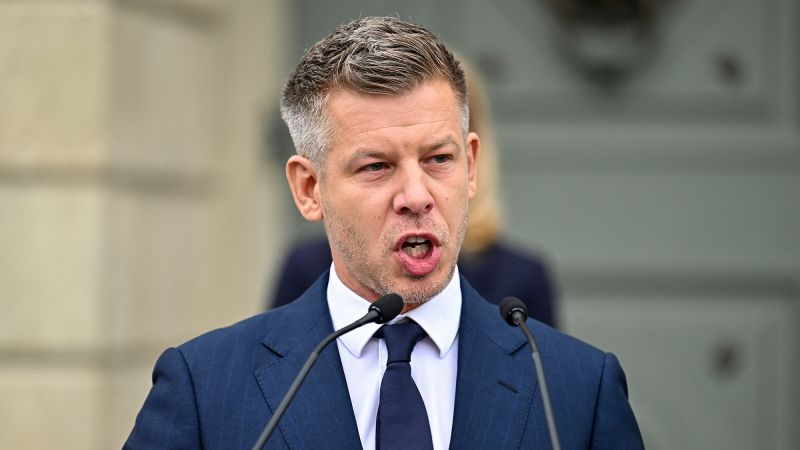
Table of Contents
A Collision Course in Budapest
The political transition in Hungary has shifted from a democratic electoral victory to a full-blown constitutional confrontation. Prime Minister Peter Magyar has signaled that his government is prepared to launch formal legal proceedings to remove President Tamas Sulyok from office, following the head of state’s steadfast refusal to resign.
The tension stems from the legacy of the previous nationalist administration. President Sulyok was appointed in early 2024 by lawmakers from Viktor Orban’s Fidesz party. Since the center-right Tisza party ousted Orban in the April elections, Magyar has made the removal of Orban-era appointees a cornerstone of his mandate, viewing them as remnants of a system that eroded democratic norms over the last 16 years.
Following a meeting on Monday, Magyar did not mince words regarding the fate of the presidency. “I have told the president that if he maintains his stance and does not resign, I will inform… Tisza’s lawmakers about our legislative proposals today and we will immediately start the necessary procedures,” Magyar stated. The Prime Minister’s rhetoric suggests a swift move toward a legislative purge, which he describes as a necessary step to remove “puppets” involved in the dismantling of the rule of law.
The Leverage of the Two-Thirds Majority
The core of Magyar’s strategy lies in the Tisza party’s commanding two-thirds parliamentary majority. In the Hungarian system, such a supermajority allows the government to amend the constitution—a powerful tool that could be used to bypass traditional presidential protections and force Sulyok out of office.
While the Hungarian presidency is largely ceremonial, it is not powerless. The president holds the authority to refer laws back to parliament for reconsideration or send legislation to the Constitutional Court for review. For Magyar, who is attempting to push through a sweeping reform agenda to reverse Orban’s policies, a president loyal to the former administration represents a significant strategic bottleneck. A single referral to the court can delay critical legislation for months, effectively stalling the new government’s momentum.
The Defense of the Mandate
President Sulyok, a 70-year-old former lawyer and former head of Hungary’s top court, has remained unmoved by the Prime Minister’s pressure. In a statement posted to Facebook, Sulyok warned that Magyar’s approach is not a restoration of democracy, but rather a catalyst for instability.
“The constitutional crisis that will follow is going to deepen the division in society and will harm the international reputation of Hungary’s democracy,” Sulyok wrote. His position is bolstered by the Fidesz party, which has condemned Magyar’s demands as an “unlawful ultimatum.” Fidesz argues that Sulyok is fulfilling a lawful mandate that extends until 2029 and that there is no legal basis for his removal outside of a criminal conviction or gross negligence.
The Broader Implications for European Stability
This standoff is more than a local power struggle; it is a test of how Hungary will navigate its post-Orban era. For years, the European Union has clashed with Budapest over democratic backsliding. The irony of the current situation is that the new government, while seeking to restore the rule of law, is contemplating the use of constitutional amendments to remove a seated official—a tactic that mirrors the very methods the previous administration used to consolidate power.
If Magyar proceeds with the legislative route, the process is expected to take approximately one month. However, the move could alienate international observers who were hoping for a more stable, procedurally traditional transition of power in Central Europe.