Huawei’s Mate X Gamble: Can Foldables Break the Smartphone Innovation Plateau?
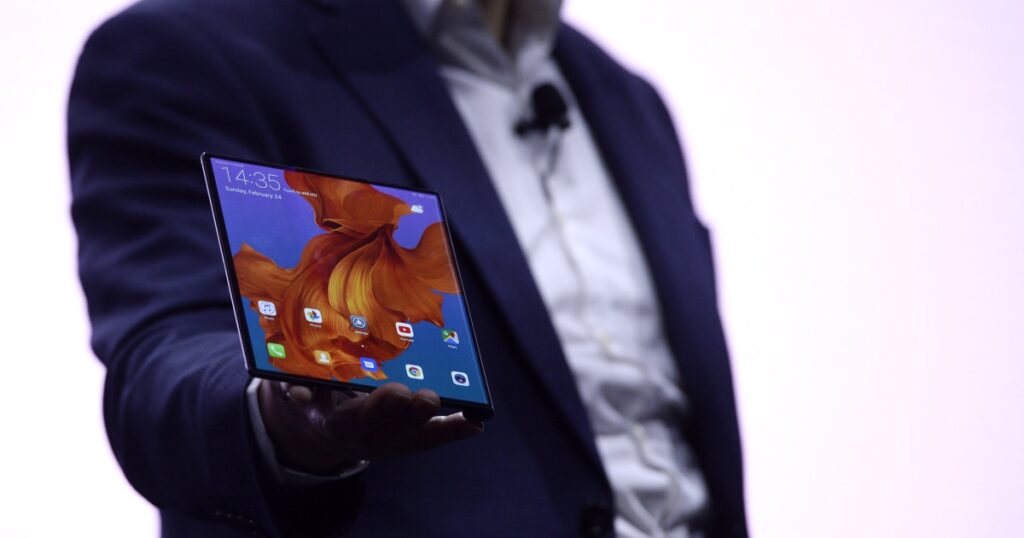
Table of Contents
A Pivot Toward the Foldable Era
On the eve of Mobile World Congress (MWC) in Barcelona, Huawei officially pulled back the curtain on the Mate X, a device that attempts to solve a fundamental tension in mobile design: the desire for a cinematic, large-scale display without sacrificing the pocketability of a traditional smartphone.
The Mate X isn’t just a curiosity of engineering; it is a direct shot across the bow of Apple and Samsung. While the industry has long been mired in an ‘innovation malaise’—characterized by incremental camera upgrades and slightly faster processors—Huawei is betting that a radical change in form factor is what will trigger the next great upgrade cycle.
Unfolded, the device transforms into an 8-inch tablet. However, unlike the Samsung Galaxy Fold, which utilizes a screen that folds shut, the Mate X employs a wrap-around design. This allows the user to interact with the device’s interface even while it is closed, effectively providing a usable screen in both states. Richard Yu, CEO of Huawei’s consumer business group, noted that the device is the culmination of three years of intensive research into hinge mechanics, aiming to eliminate the gap that often plagues folding displays.
The Price of Innovation
The engineering feat comes with a steep premium. The Mate X is slated to retail for 2,299 euros (approximately $2,600), comfortably eclipsing the pricing of the Galaxy Fold. This pricing strategy positions the Mate X not as a mass-market consumer product, but as a luxury halo device designed to signal technical leadership.
Integration with 5G is central to the Mate X’s value proposition. By pairing a tablet-sized screen with the ultra-low latency and high bandwidth of next-generation networks, Huawei is pitching a future where cloud computing and high-definition streaming happen on a device that still fits in a pocket. Yet, the timing is precarious. While the hardware is ready, the global rollout of 5G infrastructure is still in its nascent stages, meaning the phone’s most touted feature may be underutilized for several years.
Navigating a Geopolitical Minefield
Huawei’s ascent into the top three global smartphone sellers—trailing only Samsung and Apple according to IDC data—has not been without friction. The company’s aggressive expansion into European markets like Germany, France, and Spain has been shadowed by persistent allegations from Washington that Huawei serves as a conduit for Chinese intelligence operations.
These security concerns have created a stark dichotomy in the company’s global footprint. While Gartner estimates Huawei now captures about 13% of the European market, it remains virtually invisible in the United States. The geopolitical tension reached a fever pitch with criminal charges filed against the company and CFO Meng Wanzhou, involving allegations of trade secret theft from T-Mobile.
For Huawei, the Mate X is an attempt to move the conversation away from cybersecurity and back toward hardware supremacy. By dominating the ‘foldable’ narrative, they hope to establish a brand identity that transcends political volatility.
Market Dynamics and the Innovation Gap
The launch comes at a critical juncture for the industry. Both Apple and Samsung have faced flagging sales as consumers hold onto their devices longer, realizing that the jump from one generation to the next is no longer transformative. Foldables represent the first genuine departure from the ‘black slab’ aesthetic that has dominated since 2007.
However, analysts remain cautious. Thomas Husson of Forrester suggests that a ‘critical mass’ of consumers may be a long way off, arguing that Huawei must still find a unique brand voice that differentiates it from its rivals rather than simply acting as a challenger. Whether the Mate X becomes the blueprint for the next decade of mobile computing or remains an expensive curiosity depends on how quickly the industry can move from novelty to utility.


