Huawei’s Mate X Bets on Foldables and 5G to Break the Apple-Samsung Duopoly
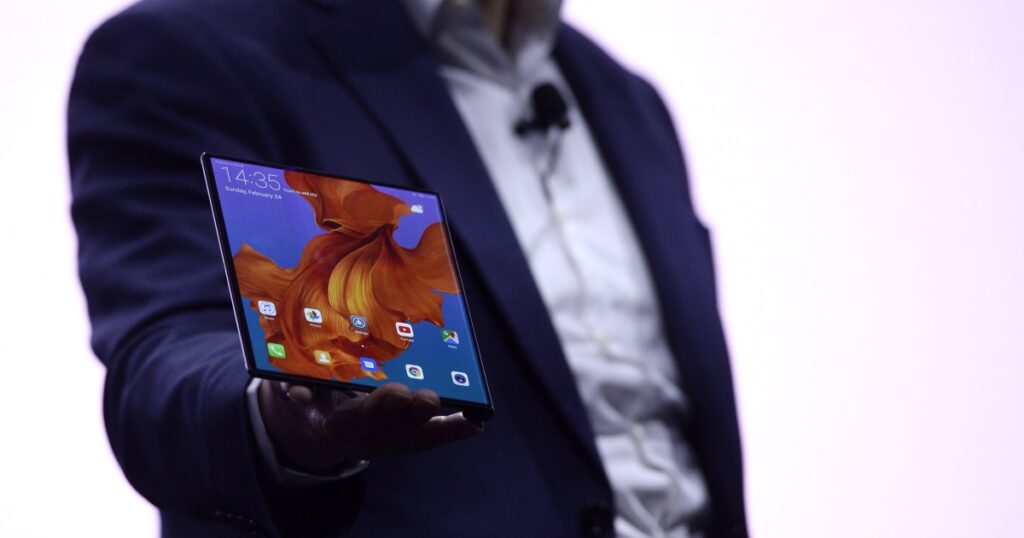
Table of Contents
A High-Stakes Pivot to Foldables
On the eve of MWC Barcelona, Huawei shifted the industry conversation from incremental spec bumps to radical form factors with the unveiling of the Mate X. The device is not merely a new product launch; it is a calculated attempt by the Chinese giant to disrupt the rigid hierarchy of the global smartphone market, currently dominated by Apple and Samsung.
The Mate X enters a market plagued by an innovation malaise, where consumers are increasingly holding onto their devices longer as the leap between annual models narrows. By introducing an 8-inch foldable display, Huawei is attempting to merge the utility of a tablet with the portability of a handset, targeting a premium segment that values cutting-edge engineering over modest upgrades.
Richard Yu, CEO of Huawei’s consumer business group, framed the device as a direct response to the contradictory demands of modern users: the desire for massive screen real estate coupled with a need for long-lasting battery life. “How can we bring the more big innovation to this smartphone industry?” Yu asked during the launch, signaling that Huawei is no longer content being a fast follower in the Android ecosystem.
Engineering the Fold: Mate X vs. Galaxy Fold
The Mate X represents a distinct architectural departure from its primary competitor, the Samsung Galaxy Fold. While Samsung’s device utilizes a screen that folds shut, the Mate X features a wrap-around display that remains functional on the exterior when closed. This design choice ensures that users aren’t left with a dead slab of plastic and glass when the device is folded.
The technical achievement lies in the hinge. According to Huawei, engineers spent three years refining the mechanism to ensure a seamless closure without the gap that has plagued early foldable prototypes. When unfolded, the device transforms into a small tablet, offering a level of multitasking potential that traditional smartphones cannot match.
However, this innovation comes at a steep premium. The Mate X is slated for a mid-year release with a price tag of 2,299 euros (approximately $2,600), significantly undershooting the mass market and comfortably pricing itself above the already expensive Galaxy Fold.
The Geopolitical Shadow
Despite the technical prowess of the Mate X, Huawei is fighting a battle that extends far beyond hardware specifications. The company’s global ambitions are currently colliding with U.S. national security concerns. Washington has spent years lobbying European allies to exclude Huawei equipment from the rollout of 5G networks, citing risks of digital espionage on behalf of the Chinese government.
These tensions have transitioned from diplomatic warnings to legal actions. The company and its CFO, Meng Wanzhou, have faced severe scrutiny, including U.S. criminal charges alleging fraud and the theft of trade secrets—specifically technology used by T-Mobile for smartphone testing. This legal cloud creates a paradox for Huawei: while it is achieving record-breaking shipment numbers, its brand reputation in the West remains precarious.
The Fight for Market Dominance
Market data from International Data Corp (IDC) illustrates why Huawei is pushing so aggressively. While Samsung and Apple remain the top two global sellers, Huawei has consistently hovered in the third spot, occasionally leaping into second place during specific quarters. The company’s strategy has been a two-pronged attack: saturating emerging markets with affordable handsets while siphoning high-end buyers in Europe and China with luxury flagship models.
In Europe, this strategy is paying dividends. Gartner estimates that Huawei now captures roughly 13% of the European market, having invested millions into brand partnerships across Germany, France, and the UK. Yet, the U.S. remains a fortress. As analyst Tuong Nguyen notes, the barrier to entry in the States is no longer just about product quality, but about the systemic branding of China as a cyber-adversary.
For the Mate X to be a true success, Huawei must prove that it can innovate independently of the patterns established by its rivals. The device is a bold statement of intent, but its ultimate impact will depend on whether the world views Huawei as a visionary tech leader or a geopolitical risk.


