House Appropriations Bill Sets Space Force Budget at $55.5B, snubbing Trump’s Reconciliation Gamble
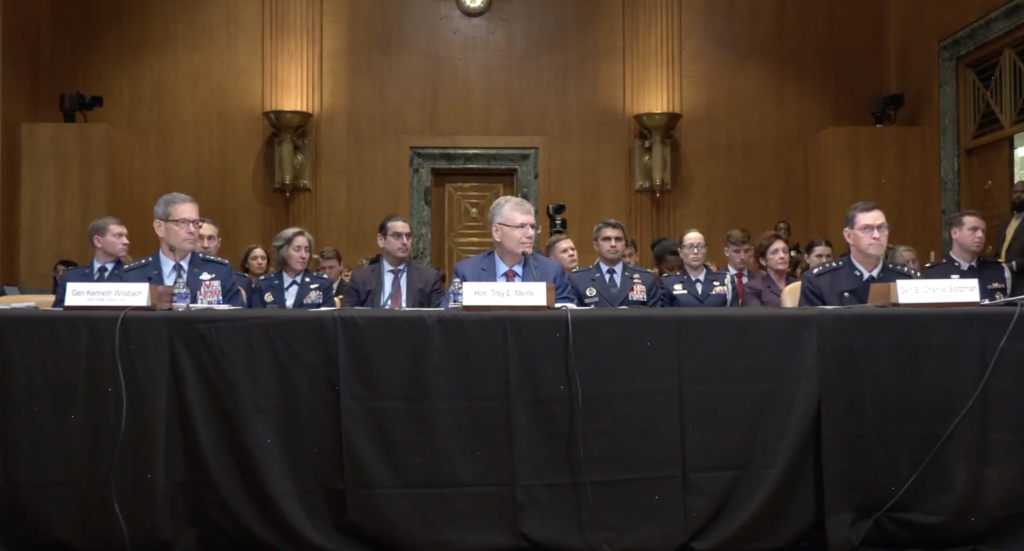
Table of Contents
A Fiscal Divide in Orbit
The U.S. House defense appropriators are signaling a cautious approach to the Pentagon’s most ambitious spending goals. In a newly unveiled $1.07 trillion fiscal 2027 spending bill, the subcommittee has carved out $55.5 billion for the U.S. Space Force—a massive leap from previous years, but one that comes with a significant caveat: the bill completely ignores billions in requested funding that the Trump administration hoped to secure via a separate budget reconciliation package.
The draft legislation, set for a June 11 markup, adheres to the administration’s regular appropriations requests but draws a hard line at the roughly $350 billion in additional defense spending sought through the reconciliation process. By bypassing these funds, House appropriators are effectively betting that the fast-track legislative path—which allows the Senate to pass bills with a simple majority—is no longer a viable strategy for the 2027 cycle.
This skepticism isn’t isolated to the House. During a recent Senate appropriations hearing, Senator Mitch McConnell (R-KY) stated it was “safe to conclude” that another reconciliation bill would not materialize, a sentiment echoed by Senator Susan Collins (R-ME). For the Pentagon, this represents a precarious moment where strategic planning is clashing with legislative reality.
The ‘Golden Dome’ Funding Gap
The most immediate casualty of this fiscal disconnect is the “Golden Dome,” the administration’s envisioned layered missile defense architecture. The program has historically relied on the reconciliation loophole, securing $21 billion through the fiscal 2026 process. The administration was banking on another $17.5 billion via the same method for 2027.
However, the House appropriations bill provides a mere $397.9 million for Golden Dome. The disparity is jarring, illustrating a fundamental disagreement over how to fund high-priority, high-cost defense infrastructure when traditional discretionary caps are in play.
Similar pressures are mounting for the proposed Space Data Network. Designed as a massive LEO (Low Earth Orbit) constellation to streamline data transfer between military and commercial assets, the network requested over $3 billion through reconciliation. Without those funds, the project’s timeline and scale may be forced into a significant retreat.
Growth Despite the Cuts
Despite the absence of reconciliation funds, the $55.5 billion figure is still a staggering increase—nearly 80% higher than the $31 billion enacted for fiscal 2026. This growth reflects the escalating priority of the space domain in national security strategy. The breakdown of the proposed funding reveals a heavy lean toward modernization and innovation:
- Research, Development, Test and Evaluation (RDT&E): $35.3 billion
- Procurement: $9.6 billion
- Operations and Maintenance: $8.8 billion
- Military Personnel: $1.78 billion
If the administration were to somehow secure the additional reconciliation funds, the total Space Force budget would surge past $71 billion, but for now, the House is sticking to a more traditional fiscal framework.
Congressional Pushback on Polar Surveillance
The bill also highlights a continuing tension between the Pentagon’s desire to streamline and Congress’s desire for redundancy. The administration had proposed terminating the Next-Generation Overhead Persistent Infrared Polar satellite program for fiscal 2027. This program is critical for tracking missile launches over the polar regions, a gap in coverage that many lawmakers find unacceptable.
In a direct rebuke of the Pentagon’s proposal, appropriators have included $200 million to keep the program alive. This move mirrors recent action by the House Armed Services Committee, which authorized $415 million for the same effort in the National Defense Authorization Act (NDAA) markup last week.
The defense appropriations subcommittee will move to mark up the spending bill on June 11, with the full House Appropriations Committee expected to take up the measure on June 24. Whether the final version maintains this cautious stance or bends to the administration’s reconciliation desires will likely determine the pace of U.S. space superiority for the next three years.