HMD Luma 2 Leaks Reveal a Battery-First Strategy for the Budget Market
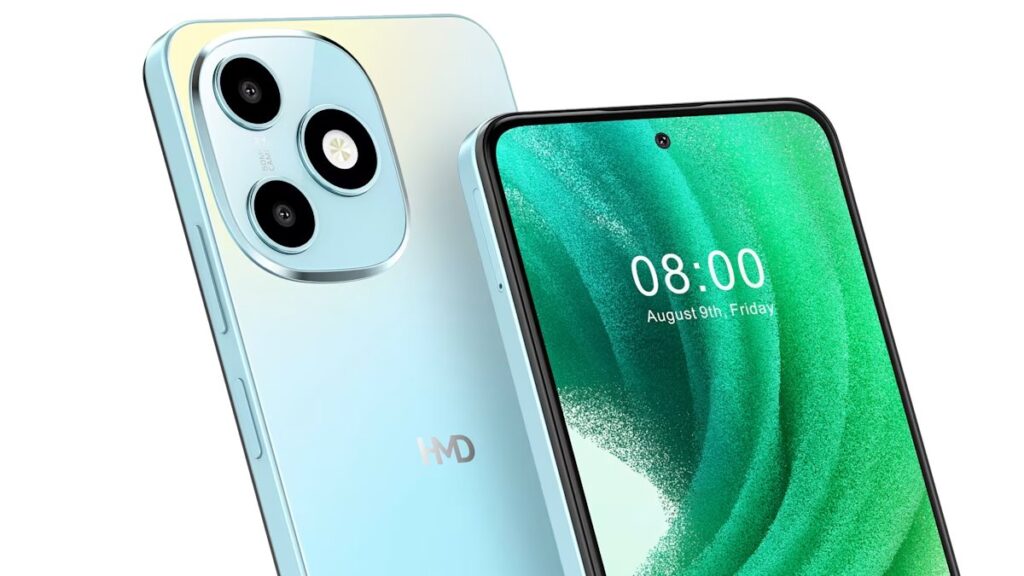
Table of Contents
A New Play for the Endurance Segment
HMD Global is doubling down on the utility side of the budget smartphone market. New leaked renders and specifications for the upcoming HMD Luma 2 suggest that the company is prioritizing raw endurance over high-end processing power, a move that aligns with the needs of emerging markets where battery longevity is often a primary purchasing driver.
The leaks, surfaced by industry tipster @smashx_60, indicate that the device may be released under the model number M-Kopa X4. This nomenclature points toward a potential partnership or specific distribution strategy involving M-Kopa, a company known for providing asset-financed solar energy and smartphones in Africa. If the Luma 2 is indeed aimed at these markets, the hardware choices begin to make more sense.
The Battery-First Hardware Philosophy
The standout specification is a massive 6,000mAh battery. While high-capacity cells are not uncommon in the budget tier, pairing a 6,000mAh unit with a Unisoc T7280 chipset suggests a device designed for extreme efficiency. The T7280 is not a powerhouse, but its lower power draw combined with the oversized cell should theoretically push the Luma 2 into multi-day usage territory, even with the large 6.75-inch HD+ panel.
However, there is a notable bottleneck in the charging infrastructure. The leak suggests the Luma 2 will support 18W fast charging. While 18W was considered “fast” several years ago, charging a 6,000mAh battery at that speed will be a slow process, likely taking several hours to reach a full charge. This tradeoff suggests HMD is prioritizing the duration of the charge over the speed of the refill.
Display and Performance Specs
The device appears to feature a 6.75-inch IPS LCD screen with a 120Hz refresh rate. The inclusion of a high refresh rate on an HD+ panel is an interesting choice; while it will make scrolling through social media and system menus feel fluid, the resolution will likely be stretched thin across such a large screen, resulting in a lower pixel density that may be noticeable to the keen eye.
Under the hood, the Luma 2 is expected to offer 4GB of physical RAM, expandable via “Virtual RAM” to 8GB—a common marketing tactic in budget devices that utilizes a portion of the internal UFS 2.1 storage to supplement memory. Storage options are tipped at 128GB or 256GB, with a MicroSD slot allowing for up to 1TB of additional space, ensuring the device remains viable for users who store large amounts of local media.
Aesthetic and Connectivity
The leaked renders reveal a clean, modern design available in three distinct colorways: Ice Blue, Light Sand, and Midnight Lake. The camera setup appears modest, featuring a 50-megapixel primary sensor paired with an AI lens and an 8-megapixel front-facing camera. In this price bracket, the 50MP sensor is likely used for pixel-binning to improve low-light performance rather than providing high-resolution detail.
From a connectivity standpoint, HMD is keeping the 3.5mm audio jack—a feature increasingly stripped from mid-range and flagship phones but essential for the budget demographic. The device also carries an IP54 rating, providing basic protection against dust and splashes, which is critical for a phone marketed for durability in varied environments.
The Android 16 Question
Perhaps the most surprising detail in the leak is the mention of Android 16. Given that Android 15 is the current focus for the industry, a jump to version 16 would be highly unusual for a budget device launching in the current window. It is possible this is a typo in the leak or an indication that the Luma 2 is slated for a late-cycle release, though the latter seems unlikely given the hardware specifications.