Google’s Agentic Pivot: Why the Era of the Standalone App is Ending
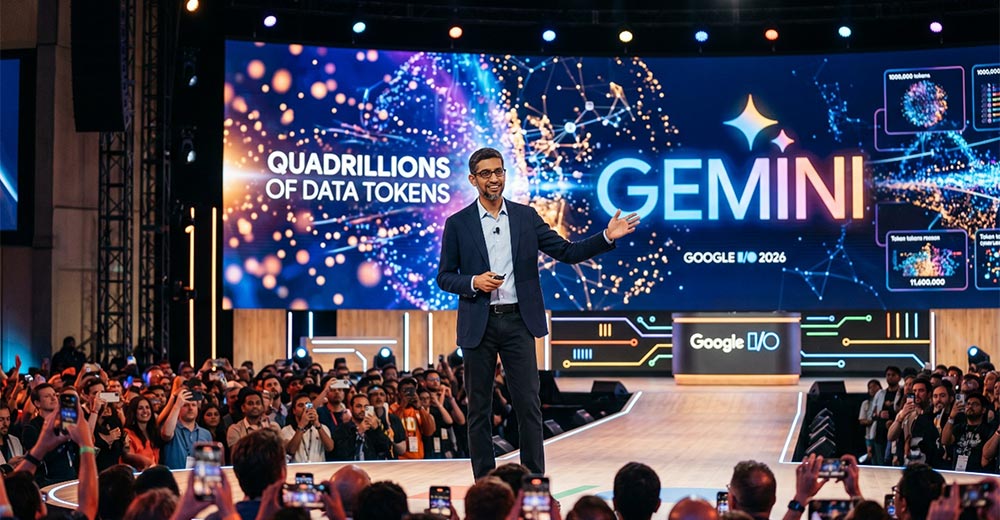
Table of Contents
The End of the App Grid
For nearly two decades, the primary interface of the smartphone has been the grid—a collection of discrete, siloed icons that users tap to perform specific tasks. But the revelations from Google I/O 2026 suggest that Google is no longer interested in the grid. The company is pivoting toward an ‘agentic’ ecosystem where the standalone app is relegated from a destination to a background service.
The center of this shift is the evolution of Gemini. While previous iterations focused on chat and retrieval, the new framework focuses on action. Google is moving toward a model where the user no longer opens a ride-sharing app, a calendar app, and a restaurant app to plan a night out. Instead, a single agentic layer orchestrates these services in the background, interacting with APIs without the user ever seeing a traditional user interface (UI).
From Interfaces to Intent
This transition represents a fundamental change in how software is consumed. In the current paradigm, the app developer controls the user experience through a carefully designed UI. In the agentic paradigm, the ‘interface’ is the natural language request of the user, and the AI determines the most efficient path to execution.
Industry analysts note that this puts immense pressure on mid-tier utility apps. If Gemini can natively handle flight bookings, grocery ordering, and scheduling by communicating directly with a business’s backend, the need for a polished, branded app disappears. The value shifts from the experience of the app to the quality of the data provided by the service provider.
The Android OS Reimagined
Internal leaks and demonstrations at I/O indicate that Android is being restructured to support this ‘headless’ operation. We are seeing the introduction of a new system-level layer that allows AI agents to execute multi-step workflows across different service providers without requiring the user to grant manual permissions for every single single interaction.
This is not merely a voice-assistant upgrade. It is a structural rewrite of the mobile operating system. By treating apps as ‘skill sets’ rather than ‘destinations,’ Google is effectively turning the Android home screen into a legacy artifact. The goal is a frictionless flow where the AI manages the ‘how’ and the user simply defines the ‘what.’
The Developer Dilemma
For developers, this is a precarious moment. The ‘app economy’ was built on the ability to capture user attention within a walled garden. When the AI becomes the primary gatekeeper, that attention is stripped away. Companies like Uber, Airbnb, and Expedia may find their brand visibility plummeting as they become invisible pipes feeding data into Google’s agent.
However, this opens a new door for ‘agent-first’ startups. Rather than building a full-stack app with a complex UI, new developers are focusing on highly efficient API endpoints that allow AI agents to extract and execute tasks with zero latency. The competitive edge is no longer about who has the best UX design, but who has the most ‘agent-readable’ infrastructure.
Google’s trajectory suggests a future where the smartphone is less of a tool for launching software and more of a portal for managing an autonomous digital representative. While the transition will be gradual, the structural foundations laid at I/O 2026 signal that the age of the standalone app is drawing to a close.