Google Unveils ‘Googlebook’: A New Hardware Category Built Around Gemini Intelligence
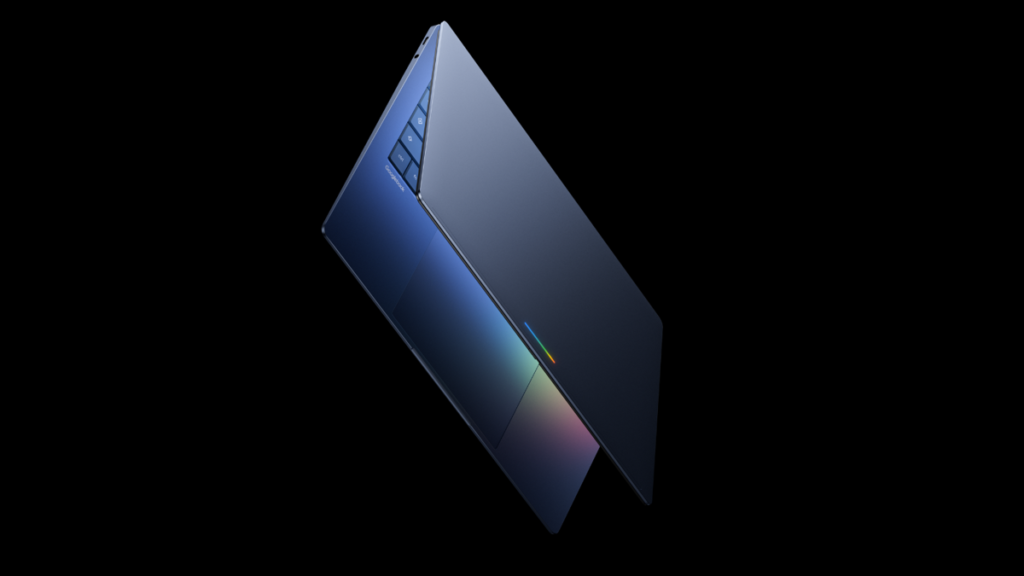
Table of Contents
The Shift from Operating Systems to Intelligence Systems
Google is attempting to redefine the laptop category. At the Android Show: I/O Edition on Tuesday, the company unveiled the Googlebook, a new line of hardware designed not just to run AI, but to be governed by it. While it shares some DNA with the ubiquitous Chromebook, Google is positioning this as a distinct leap forward—moving away from a cloud-first philosophy toward what they call an “intelligence system.”
Alex Kuscher, Google’s Senior Director, framed the move as a historical pivot. “Over 15 years ago, we introduced the Chromebook, a laptop built for a cloud-first world,” Kuscher stated in an official blog post. “Now, as computing shifts from an operating system to an intelligence system, we see an opportunity to rethink laptops again.”
The timing is no accident. Google is entering a fierce hardware arms race against Microsoft’s Copilot+ PCs and Apple’s M-series silicon, both of which have integrated neural processing units (NPUs) deep into their architecture. The Googlebook is Google’s answer to that trend, designed from the ground up to be the primary vehicle for Gemini.
The ‘Project Aluminum’ Question
The most intriguing detail for industry analysts is the ambiguity surrounding the software. While Googlebooks will support Android apps, Kuscher noted that the devices will run a “modern OS that’s designed for Intelligence,” pointedly avoiding the term “ChromeOS.”
This strongly suggests the official debut of Project Aluminum, a long-rumored internal effort to merge the ChromeOS and Android stacks into a single, unified platform. By collapsing the distinction between the two, Google can finally solve the fragmentation problem that has plagued Chromebooks for years, providing a native, high-performance environment for Android apps without the overhead of a browser-based wrapper.
Magic Pointers and Generative Widgets
To differentiate the Googlebook from a standard laptop with a chatbot, Google is introducing deep system-level AI integrations. The standout feature is the “Magic Pointer,” a cursor that uses Gemini to interpret on-screen context in real-time. According to Google, simply wiggling the cursor over specific elements allows the AI to take action. For instance, hovering over a date in an email could trigger a prompt to schedule a meeting, or selecting two disparate images—such as a room and a piece of furniture—could allow the AI to visually synthesize them into one image.
The hardware also introduces a prompt-based UI. A “Create your Widget” tool allows users to build custom functional elements on their desktop using natural language Gemini prompts, effectively letting users design their own productivity tools on the fly.
Ecosystem Synergy and Hardware Partners
Google is leaning heavily into the “better together” narrative. Googlebooks are designed to act as a seamless extension of the Android phone. Beyond running Android apps, the laptops feature a “Quick Access” system for searching phone files and the ability to cast mobile apps directly onto the desktop without installation.
While detailed specifications remain under wraps, Google confirmed that the first wave of devices will be produced by its core hardware partners: Acer, Asus, Dell, HP, and Lenovo. A distinctive “glowbar” lightstrip on the lid will serve as the visual signature of the Googlebook line. Google describes the chassis as a “Featherweight Design” with “Heavyweight Power,” signaling a push into the premium ultraportable market.
Given that high-end Chromebooks already push the $1,000 mark, it is likely that Googlebooks will target a higher price bracket, reflecting the specialized AI hardware and premium materials mentioned in the company’s press materials. The first units are expected to hit shelves in the fall of 2026.