Google Unveils ‘Googlebook’: A High-End AI Laptop Pivot Away from ChromeOS
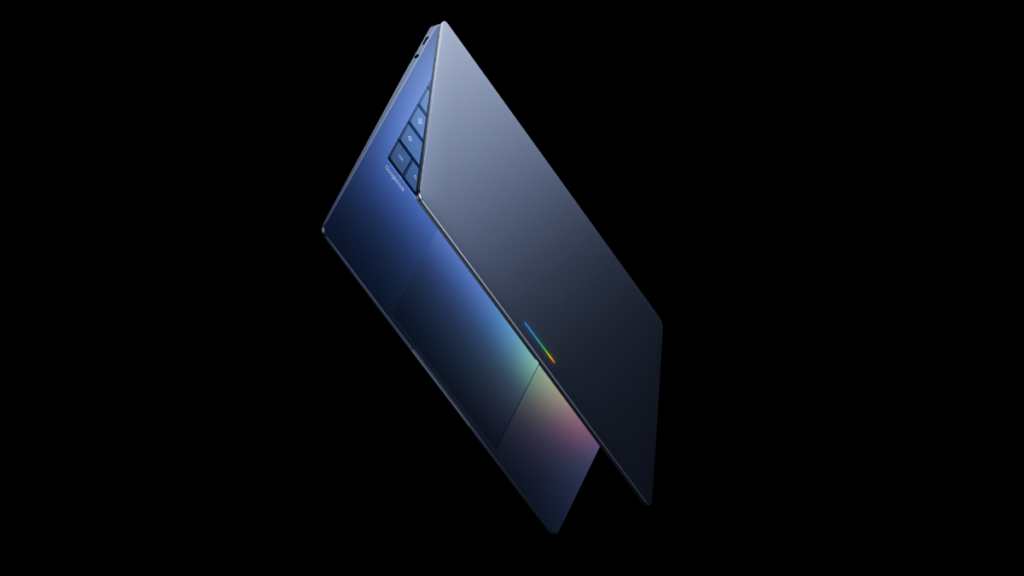
Table of Contents
A Departure from the Chromebook Formula
Google is attempting to redefine its presence in the laptop market. During the Android Show: I/O Edition on Tuesday, the company announced the Googlebook, a new category of hardware designed specifically to act as a physical vessel for Gemini, Google’s multimodal AI. While it shares some DNA with the Chromebook, the Googlebook represents a fundamental shift in how Google views personal computing—moving away from a cloud-first operating system toward what the company calls an “intelligence system.”
The move is a transparent attempt to capture the AI PC momentum currently being chased by Microsoft and Qualcomm. By positioning the Googlebook against the Copilot+ PC trend, Google is betting that the OS itself should be subservient to the AI assistant. Alex Kuscher, Google Senior Director, framed the transition as a historical evolution, noting that while the Chromebook was built for the cloud, the Googlebook is designed from the ground up for “Gemini Intelligence.”
The ‘Project Aluminum’ Mystery
The most significant technical revelation isn’t a spec sheet, but a hint at a new foundation. Google has avoided explicitly stating that the Googlebook runs ChromeOS. Instead, Kuscher described a “modern OS designed for Intelligence.” This strongly suggests that Google is finally deploying Project Aluminum, the long-rumored initiative to merge the Android and ChromeOS kernels into a single, unified platform.
For years, Chromebooks have struggled with a fragmented experience—running a browser-centric OS while awkwardly hosting Android apps via a container. A unified OS would allow Googlebooks to run Android applications natively with better performance and deeper system integration, effectively creating a laptop that feels like a scaled-up version of a Pixel tablet but with the productivity power of a desktop.
Magic Pointer and AI Integration
The centerpiece of the Googlebook experience is the “Magic Pointer.” Unlike a traditional cursor, the Magic Pointer is context-aware, utilizing Gemini to interpret what is on the screen in real-time. According to Google, a simple wiggle of the cursor allows the AI to identify elements—such as a date in a Gmail thread—and instantly suggest creating a Calendar event without the user needing to navigate through menus.
Further pushing the bounds of customizability, the hardware includes a “Create your Widget” tool. This allows users to generate functional system widgets via natural language prompts, essentially letting the AI write the interface code on the fly to monitor specific data points or automate recurring tasks.
Hardware Ecosystem and Market Positioning
While Google is handling the software and the “intelligence” layer, the hardware will be produced by a coalition of established partners. The first wave of Googlebooks will be manufactured by Acer, Asus, Dell, HP, and Lenovo. While specific benchmarks remain under wraps, Google’s press materials emphasize a “Featherweight Design” paired with “Heavyweight Power,” suggesting a focus on the ultraportable, premium segment similar to the MacBook Air or Dell XPS 13.
A distinctive visual marker for the new line will be a “glowbar” lightstrip integrated into the lid, signaling the device’s AI-active status. This branding move separates the Googlebook from the often-budget-oriented image of the Chromebook.
Closing the Gap Between Phone and PC
The Googlebook also serves as a bridge for the Android ecosystem. Beyond running Android apps, the devices feature a “Quick Access” system that allows users to search and manage files on their paired Android phones directly from the laptop’s file explorer. More impressively, Google is introducing a seamless casting feature that allows mobile apps to be mirrored and interacted with on the Googlebook without requiring a separate installation, effectively treating the laptop as a high-powered extension of the smartphone.
Given that high-end Chromebooks already command prices between $750 and $1,000, the Googlebook is expected to sit at an even higher premium. The strategy is clear: Google is no longer content with owning the low-end education market; it wants the executive desk.


