Google Unveils ‘Googlebook’: A Hardware Pivot Toward an AI-First Operating System
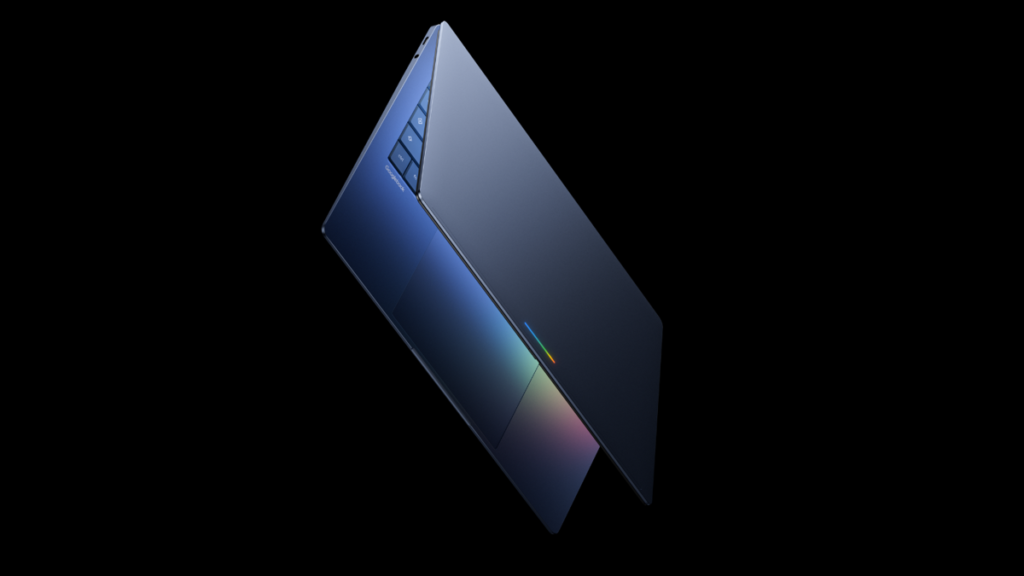
Table of Contents
A Departure from the Chromebook Era
Google is attempting to redefine the laptop category. During Tuesday’s Android Show: I/O Edition, the company announced the Googlebook, a new breed of hardware designed specifically to center the user experience around Gemini, Google’s large language model. While the move might look like a simple branding exercise, the technical implications suggest a fundamental pivot in how Google views the relationship between the cloud, the OS, and the local machine.
For over a decade, the Chromebook thrived by stripping the laptop experience down to a browser, offloading the heavy lifting to the cloud. But as AI shifts the paradigm from ‘search and retrieve’ to ‘generate and execute,’ Google is arguing that the browser-centric model is no longer sufficient. Alex Kuscher, Google Senior Director, framed the transition as a move from a traditional operating system to an “intelligence system.”
The most telling detail of the announcement is the operating system. While Google has not explicitly named the software, Kuscher described it as a “modern OS designed for Intelligence,” conspicuously avoiding any mention of ChromeOS. This strongly points toward the realization of Project Aluminum, the long-rumored convergence of Android and ChromeOS. By merging the two, Google can finally offer a cohesive experience where high-performance Android apps and AI-driven desktop productivity exist in a single, unified kernel.
The Gemini Interface: Beyond the Chatbot
The Googlebook isn’t just a laptop with a Gemini app installed; the AI is baked into the input methods. The standout feature is the “Magic Pointer,” a cursor that leverages multimodal AI to understand context in real-time. Rather than relying on static menus, users can wiggle the cursor over specific on-screen elements to trigger AI actions. For example, hovering over a date in a Gmail thread allows the system to instantly cross-reference the user’s calendar and propose a meeting, while selecting two disparate images—such as a room photo and a piece of furniture—allows the AI to visualize them together via generative fill.
Further pushing the customization angle is a “Create your Widget” tool. Instead of choosing from a pre-set library of clock or weather widgets, users can describe a functional tool via a Gemini prompt and have the OS generate a live, working widget on the fly. It is a bold bet on the idea that the OS should be fluid and generative rather than static and predefined.
Ecosystem Convergence and Hardware Partners
Google is leaning heavily into its Android dominance to make the Googlebook sticky. The hardware will feature deep integration with Pixel and other Android devices, allowing users to cast apps directly from their phones to the laptop without a dedicated installation. A “Quick Access” layer also enables a seamless file-system bridge, treating the phone’s storage as a native extension of the laptop’s directory.
While full technical specifications remain under wraps, the design language is clear. Every Googlebook will feature a signature “glowbar” lightstrip on the lid—a visual cue intended to signal the device’s AI-active state. Google has secured a broad coalition of launch partners, with initial models coming from Acer, Asus, Dell, HP, and Lenovo.
The pricing strategy remains the biggest question mark. Google describes these as “premium craftsmanship” machines with “featherweight design,” suggesting they are targeting the ultraportable market currently occupied by the MacBook Air and Microsoft’s Copilot+ PCs. Given that high-end Chromebooks already touch the $1,000 mark, the Googlebook is likely to enter the market at a significant premium, positioned not as a budget education tool, but as a professional AI workstation.


