Google Opens the Gates to NotebookLM: Research Tool Now Sources Its Own Data
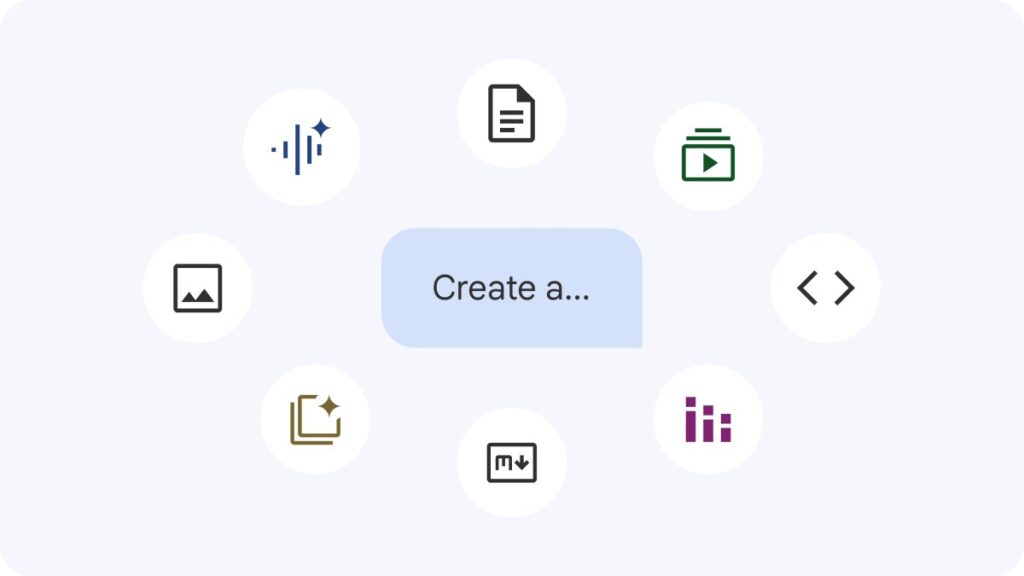
Table of Contents
From Closed-Circuit to Open Discovery
For most of its existence, NotebookLM has operated as a “closed-loop” system. Its primary appeal was the ability to upload a specific set of documents—PDFs, text files, or website URLs—and treat that curated set as the sole source of truth for the AI. It was a safeguard against the hallucinations that plague general-purpose LLMs, ensuring the AI only spoke from the provided text. But that strict boundary is now disappearing.
Google announced Monday a fundamental pivot in how NotebookLM handles information. The tool is no longer just a processor of your own data; it is now an active research agent. By integrating Gemini 3.5 as the default model and leveraging Google Search, NotebookLM can now help users build their knowledge bases from scratch within the chat interface.
In the previous workflow, the burden of curation was entirely on the user. You had to find the papers, scrape the data, and upload the files before the AI could provide any utility. Now, users can initiate a conversation about a project, and the tool will suggest primary sources, find related authors, and even surface high-quality material in foreign languages, effectively automating the initial discovery phase of research.
The “Antigravity” Influence and Expanded Outputs
This shift isn’t just about where the data comes from, but what the tool can do with it. Google is introducing “Antigravity”-powered software skills—a move that mirrors the company’s broader strategy of adding specialized coding and analytical capabilities to its search products to make them more viable for complex Q&A.
The most immediate impact of this update is the massive expansion of output formats. NotebookLM is moving beyond simple summaries and citations. Users can now provide granular instructions to generate structured data and visual assets, including:
- Visualizations: Charts and diagrams exported as .png and .svg files.
- Documents: Full exports in .docx, PDF, and Markdown.
- Structured Data: Machine-readable files in .csv and .json formats.
- Presentations: Direct compatibility with Microsoft Excel and PowerPoint.
This transforms NotebookLM from a reading assistant into a production tool. The ability to edit the output once generated allows researchers to refine the AI’s synthesis before exporting it into a professional format, bridging the gap between raw discovery and final presentation.
Solving the “Black Box” Problem
One of the persistent criticisms of AI research tools is the lack of transparency in how they arrive at a conclusion. To combat this, Google is augmenting its “Deep Research” mode. The updated interface will now display the specific steps the AI took during its search process. By showing the trajectory of its reasoning and the specific sources it parsed, Google is attempting to give users a verifiable audit trail for their research.
This level of transparency is critical for academic and professional environments where a “trust me” approach to AI-generated citations is unacceptable. By surfacing the logic and the source material side-by-side, NotebookLM aims to maintain its reputation as a tool for accuracy rather than just speed.
Availability and Access
The update is not hitting all users simultaneously. Access is currently restricted to Google AI Ultra subscribers and Workspace business customers with AI Ultra or AI Expanded Access. Google has indicated that it intends to expand these features to a broader user base, though a specific timeline for free-tier users remains unconfirmed.
As NotebookLM evolves, it increasingly looks less like a niche experiment and more like a direct challenge to the traditional workflow of research software. By marrying the controlled environment of a personal knowledge base with the vastness of Google Search, the company is attempting to create a seamless pipeline from curiosity to a finished, cited report.


