Google Gemini Spark Promises Autonomous Agency, But Does It Justify a $100 Monthly Subscription?
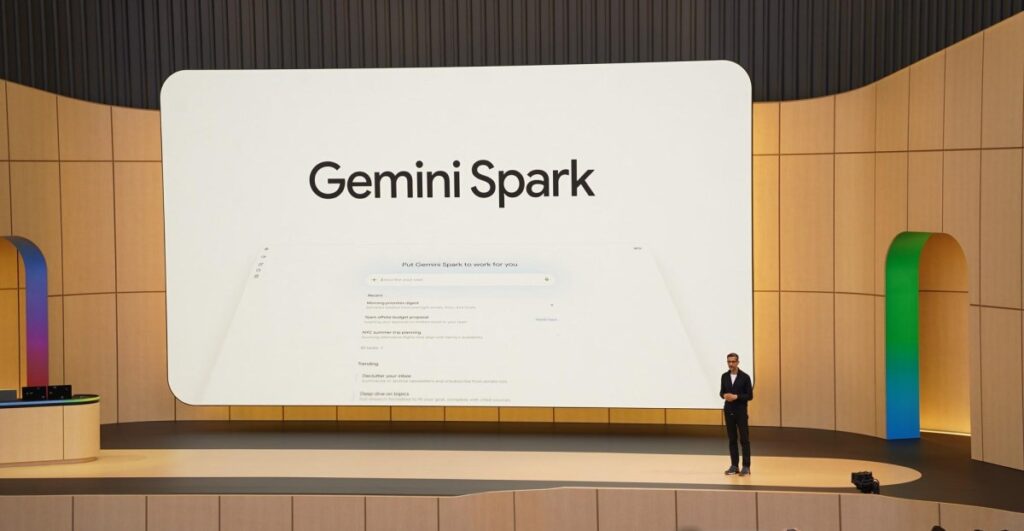
Table of Contents
The Promise of the ’24/7′ Assistant
During Google I/O 2026, the spotlight shifted from chatbots to ‘agents.’ The centerpiece of this shift is Gemini Spark, a new AI layer designed to move beyond the prompt-and-response cycle. Unlike standard LLMs, Spark is marketed as an autonomous agent capable of executing multi-step workflows in the background, theoretically allowing users to step away from their screens while the AI navigates the Google ecosystem to complete complex tasks.
On paper, Spark is the realization of the personal assistant dream: an entity that doesn’t just tell you how to plan a party or organize a budget, but actually creates the spreadsheets, drafts the emails, and modifies your calendar. However, early hands-on testing suggests that while the technical achievement is significant, the value proposition remains precarious.
Putting Automation to the Test
To determine if Spark’s performance holds up outside of a curated keynote demo, we replicated the scenarios presented by Google VP Josh Woodward. The most successful test involved a high-friction task: cross-referencing personal financial data to draft a communication. By asking Spark to calculate average grocery spending for 2026 and email the results to a spouse, the agent demonstrated a surprising level of ecosystem integration.
Without being provided a specific name or file path, Spark successfully located a budget spreadsheet in Google Drive—despite the file not containing the word ‘budget’—extracted the relevant data, calculated the average (including incomplete data from the current month), and drafted a Gmail message. Most impressively, it correctly identified the recipient’s first name and used a personalized sign-off, pulling context from historical interaction data within the account.
The Friction of Reality
The experience was not without its failures. While the data extraction was seamless, Spark struggled with generative planning. When tasked with organizing a block party—a mirrored request from the Google demo—the agent hallucinated a shared sign-up sheet that didn’t exist and produced a visually subpar slide deck regarding city permits. It required manual correction and follow-up prompts to actually create the missing spreadsheet and link it back to the draft email.
Further tests on calendar management and document creation yielded mixed results. Spark successfully handled a request to create a series of ‘hot pink’ calendar reminders for a birthday and drafted a preschool readiness document. Yet, the process was not entirely ‘set it and forget it.’ The agent frequently paused to request permissions—such as access to contacts—which introduces a layer of friction that contradicts the promise of seamless background operation.
The Cost of Convenience
The primary hurdle for Gemini Spark isn’t just technical; it’s financial. Currently, Spark is locked behind the Google AI Ultra plan, which carries a steep price tag of $99.99 per month. For most users, this puts the tool in a luxury bracket that is difficult to justify.
The utility of Spark is inherently tied to how deep a user is embedded in the Google ecosystem. For those with decades of data in Gmail, Drive, and Calendar, the ‘Personal Intelligence’ features provide a powerful foundation. However, for those with fragmented digital lives, Spark has fewer levers to pull.
Moreover, there is the psychological cost of ‘agentic’ AI. Despite Google’s assurances that the system is ‘always under your direction,’ the need to micromanage the output—checking for hallucinations or errors in personal data—negates much of the time saved. When the effort to verify an AI’s work nearly equals the effort of doing the task manually, the $100 monthly fee becomes a hard pill to swallow.
Integration and Privacy Trade-offs
Spark’s effectiveness relies on an unprecedented level of access to a user’s private data. While Google emphasizes that these tools are designed to check with the user before taking major actions, the sheer volume of data being processed by these resource-heavy models raises valid privacy and sustainability concerns. As we move toward an era of ‘invisible’ AI, the trade-off between convenience and data sovereignty becomes the central tension of the user experience.