Google Bets on Massive Water Replenishment Projects to Offset AI’s Thirst
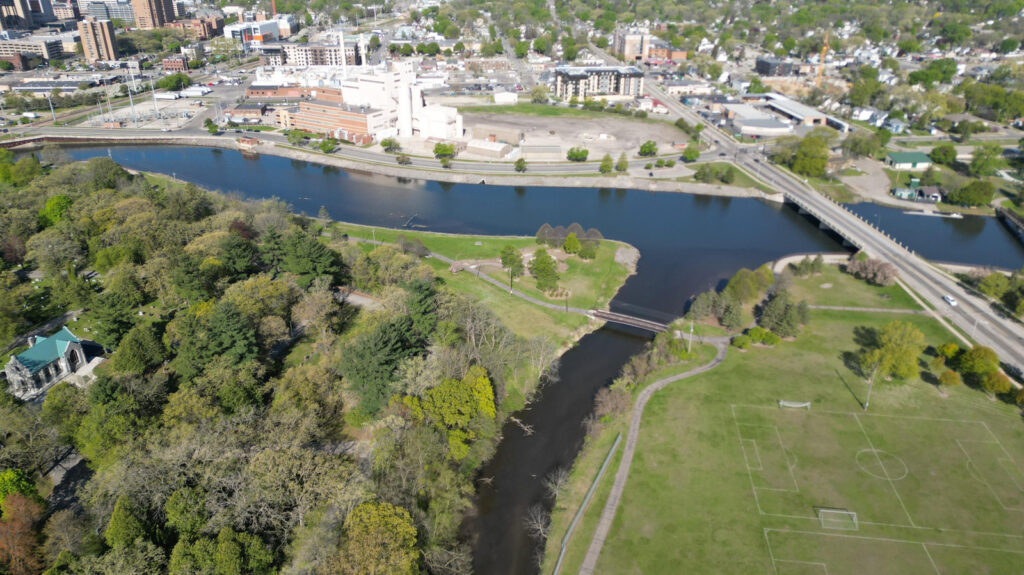
Table of Contents
The Growing Cost of Compute
As the race for generative AI dominance accelerates, the physical toll on planetary resources is becoming harder to ignore. Google has announced an ambitious expansion of its water stewardship commitments, pledging to replenish more water than its data centers consume by 2030. The move comes at a critical junction where the appetite for LLMs and cloud computing is colliding with increasing regional water scarcity.
To hit this target, Google is scaling its network to 165 stewardship projects across 97 watersheds. The company expects these initiatives to replenish approximately 19 billion gallons of water annually by the end of the decade. According to Google, this volume is more than double the company’s total water consumption for 2024, providing a buffer that allows for the continued growth of its infrastructure without compromising its net-positive goal.
The Friction Between AI and Local Communities
While the numbers look promising on a corporate balance sheet, the reality on the ground is often more contentious. The sheer scale of water usage in data centers has sparked a growing backlash from local residents and environmental advocates. High-profile critics, including consumer advocate Erin Brockovich, have pointed to the localized strain that these facilities place on municipal water tables.
The math of data center cooling is stark: a mid-sized facility can consume roughly 300,000 gallons of water per day—a volume equivalent to the daily usage of about 1,000 average American households. For Google, this water is essential for cooling the massive server arrays that power Search, YouTube, and its rapidly expanding suite of AI tools. Liquid cooling is generally preferred over air cooling because it is more energy-efficient, creating a complex trade-off between carbon emissions and water depletion.
Google has attempted to frame the impact in broader terms, stating that its U.S. data centers collectively use only one percent of the water Americans spend on lawn irrigation annually. However, this comparison does little to appease communities in drought-prone regions where every gallon is contested, particularly when that water is being used to power AI features that some residents view as unnecessary or intrusive.
Targeting Regional Watersheds
The company’s strategy relies on hyper-local interventions rather than a one-size-fits-all approach. Google is allocating $17 million toward a series of regional projects designed to restore natural water cycles. In Georgia, the investment focuses on enhancing wetlands at the Flint River Wildlife Management Area. In Iowa, the company is partnering with local farmers to transition 5,000 acres into perennial hay and pasture systems, which helps retain moisture in the soil.
Other initiatives include stormwater treatment using native plants in Michigan, the establishment of a one-mile water-quality corridor along the Zumbro River in Minnesota, and the restoration of 98 acres of wetlands adjacent to the Blue River in Missouri. Additional infrastructure projects are slated for Nebraska and Texas, where water stress is particularly acute.
Moving Toward ‘Water-Less’ Cooling
Beyond replenishment, Google is attempting to decouple its growth from water consumption entirely. The company is investing $500 million into the modernization of public water, wastewater, and reuse infrastructure. This includes a shift toward using treated wastewater—essentially reclaimed sewage water—to cool servers, reducing the reliance on potable drinking water.
The company is also pivoting its hardware strategy based on regional risk. In February, Google reported that new data centers in Texas are being built with “advanced air-cooling technology.” By bypassing liquid cooling in high-risk zones, Google hopes to mitigate the risk of local water shortages, though air cooling often requires more electricity to achieve the same thermal regulation, potentially impacting the company’s carbon neutrality goals.