GM Bets $900 Million on LMR Battery Chemistry to Slash EV Price Tags
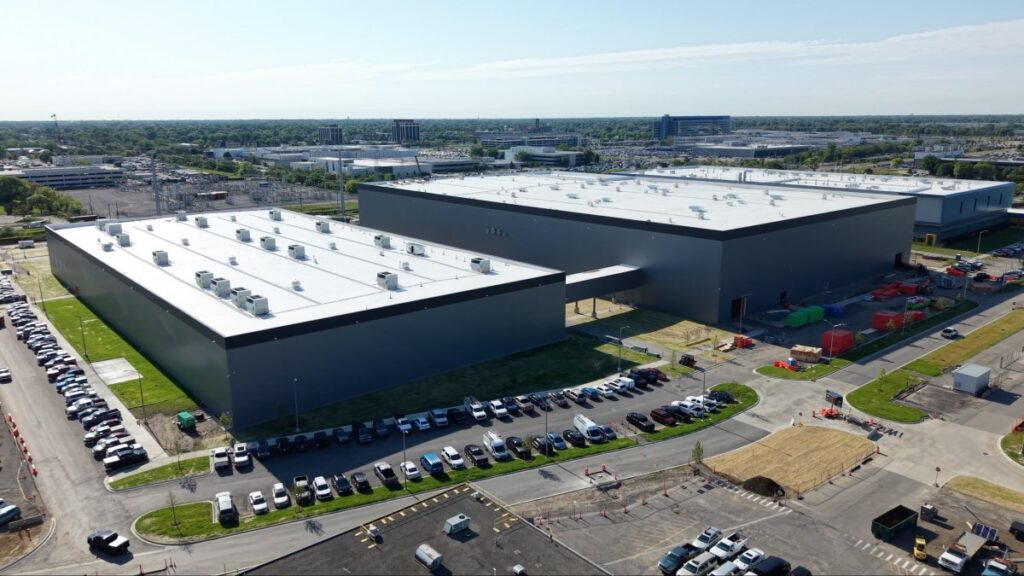
Table of Contents
Bridging the Gap from Lab to Line
General Motors is attempting to solve the industry’s most persistent hurdle—the high cost of electric vehicle (EV) batteries—with a massive $900 million strategic pivot toward Lithium-Manganese-Rich (LMR) chemistry. At the center of this effort is the newly established Battery Cell Development Center at GM’s Warren Technical Center, a facility designed to act as the critical bridge between theoretical R&D and the brutal realities of full-scale manufacturing.
The investment isn’t just about chemistry; it’s about scalability. For years, the automotive industry has struggled with the ‘valley of death’ where promising lab breakthroughs fail to translate into mass-produced cells. According to Kurt Kelty, GM’s VP of Battery and Sustainability, the new center allows the company to iterate on cell designs and production processes in a semi-industrial environment before committing them to the gigafactories. The goal is a drastic reduction in the bill of materials without sacrificing the range that consumers demand.
The Bottom Line: A $6,000 Price Drop
The financial implications for the consumer are concrete. GM estimates that transitioning to LMR chemistry could lead to significant price reductions across its portfolio. Specifically, the Chevrolet Silverado EV could see a price drop of approximately $6,000. This reduction is critical as GM faces increasing pressure from both legacy competitors and aggressive pricing strategies from Chinese manufacturers.
LMR batteries are seen as a middle ground, offering high energy density and lower costs by reducing the reliance on expensive cobalt and nickel. By optimizing this chemistry at the Warren Technical Center, GM hopes to maintain the long-range capabilities of its high-end trucks while making them accessible to a broader fleet and consumer market.
AI Integration in Vehicle Development
While batteries are the physical core of the strategy, GM is simultaneously overhaulng its digital workflow. The company is deploying a hybrid AI ecosystem, combining third-party large language models with proprietary in-house tools. This integration is not being used for consumer-facing chatbots, but rather as a backend accelerator for vehicle development cycles.
Sterling Anderson, GM’s Chief Product Officer, and Jason Fischer, Executive Director of Virtual Integration Engineering, have indicated that AI is being leveraged to compress the timeline from initial design to road-ready prototype. By simulating thousands of engineering variables virtually, GM aims to reduce the number of physical prototypes required and shorten the overall time-to-market for new models.
Market Ripple Effects and the SpaceX Factor
The broader EV and autonomy landscape remains volatile, with corporate maneuvering creating unexpected overlaps. Recent filings from SpaceX have sparked speculation regarding a potential merger or acquisition of Tesla. A specific clause in SpaceX’s S-1 document mentioning the issuance of significant equity for “future transactions” has analysts questioning if Elon Musk is preparing a financial vehicle for a massive consolidation of his empire.
Meanwhile, the autonomous vehicle (AV) sector is seeing a shift toward data-centric scaling. Uber is aggressively expanding its AV Labs division, planning to deploy 500 data-collection vehicles this year. This move signals Uber’s intent to move beyond being a mere platform for other AV providers and instead build the foundational data necessary to compete in the robotaxi space. This is further evidenced by the rapid scaling of partners like Avride, which has already completed 60,000 trips for Uber riders in Dallas and logged over 1.3 million miles of testing.
Capital Flows in Defense and Mobility
The appetite for high-risk, high-reward mobility tech remains strong in the venture capital space. Mach Industries recently closed a $300 million Series C at a $1.8 billion valuation to advance its autonomous defense vehicles, while Layup Parts secured $42 million to scale composite parts manufacturing. In Africa, Spiro is nearing a $1 billion valuation, underscoring that the transition to electric mobility is becoming a global imperative, spanning from luxury trucks in Detroit to last-mile delivery in emerging markets.


